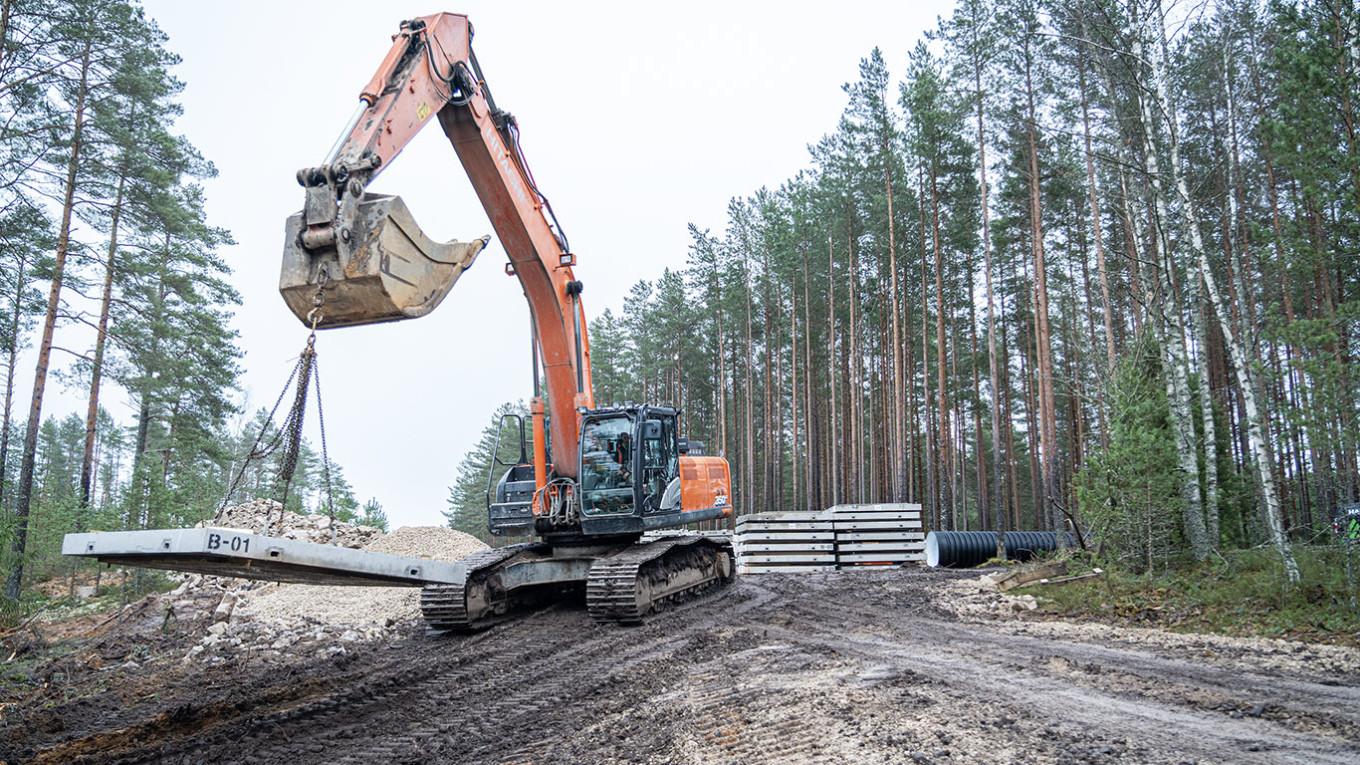
Estonia plans to construct 150 bunkers along its northeastern border with Russia’s Leningrad region as part of a broader Baltic defense initiative, the public broadcaster ERR reported Wednesday.
“One hundred of them will be on state land, and around 50 on municipal or private land,” Estonian Defense Minister Martin Herem reportedly told lawmakers.
Herem said the government is negotiating agreements with private landowners in the northeastern county of Ida-Viru, with options ranging from compensation to long-term leases and direct property buyouts.
The installations will form the so-called Baltic Defense Line, an agreement that Estonia, Latvia and Lithuania announced in 2024 to build a series of bunkers along their borders with Russia and Belarus to defend against potential attacks.
Earlier this month, the Financial Times reported that Estonia, a nation of 1.3 million people, had pivoted toward an “active defense” strategy after studying Russia’s military tactics in Ukraine.
Under the updated doctrine, Estonia has been relocating primary combat units to towns along the border with the Leningrad region. In Narva, construction is underway for facilities that can house up to 1,000 soldiers during a crisis situation.
Kremlin officials have downplayed the Estonian troop movements near the border while asserting that Russian intelligence maintains full surveillance over NATO deployments along the frontier.
A Message from The Moscow Times:
Dear readers,
We are facing unprecedented challenges. Russia's Prosecutor General's Office has designated The Moscow Times as an "undesirable" organization, criminalizing our work and putting our staff at risk of prosecution. This follows our earlier unjust labeling as a "foreign agent."
These actions are direct attempts to silence independent journalism in Russia. The authorities claim our work "discredits the decisions of the Russian leadership." We see things differently: we strive to provide accurate, unbiased reporting on Russia.
We, the journalists of The Moscow Times, refuse to be silenced. But to continue our work, we need your help.
Your support, no matter how small, makes a world of difference. If you can, please support us monthly starting from just $2. It's quick to set up, and every contribution makes a significant impact.
By supporting The Moscow Times, you're defending open, independent journalism in the face of repression. Thank you for standing with us.

Remind me later.