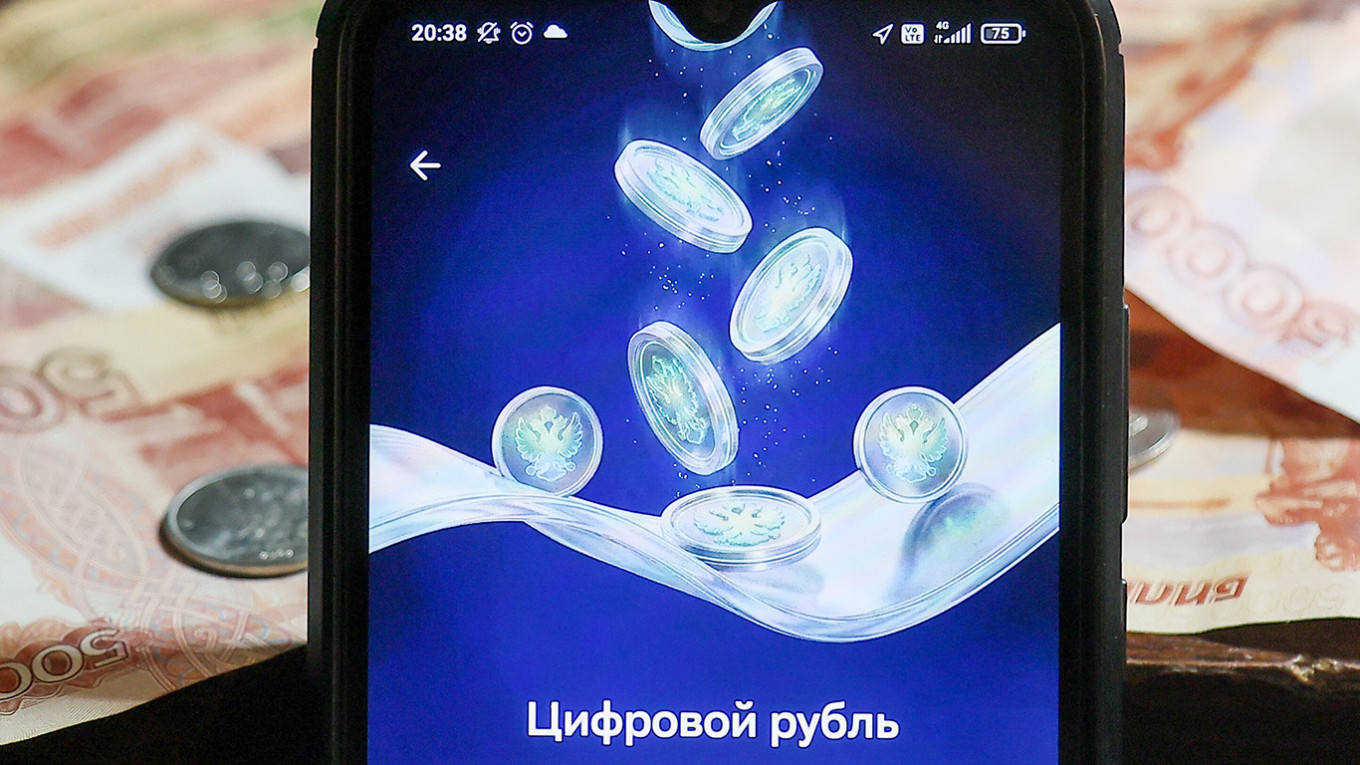
Russians deserve to know what their own Central Bank is asking them to opt into. The Russian central bank digital currency (CBDC) began its nationwide rollout in September.
The digital ruble is not an app, a card, or simple electronic cash. Instead, it is a direct connection to the Central Bank.
The risks of CBDCs are many. Under ordinary circumstances, governments have to go through commercial banks to access citizens’ money. But the default state of a CBDC is that the government has ultimate surveillance and control over people’s finances and how they use their money. Tracking purchases, freezing funds and locking people out of the economy become only a click away.
Rather than address these concerns head-on, Central Bank official Alla Bakina simply dismissed them as fake news. But how can that be true when the Central Bank itself has said it is investigating how to attach conditions to the digital ruble so that money can only be spent in ways the regime deems acceptable? Moreover, how can that be true when the Central Bank has already imposed restrictions limiting people to a monthly balance of 300,000 rubles ($3,660)?
You don’t need a crystal ball to see how such surveillance and control will be harnessed. Russians who dare to speak out against the Kremlin often find themselves on the state’s list of “terrorists and extremists” and their bank accounts frozen.
Anna Chekhovich, financial director of the Anti-Corruption Foundation (ACF), watched powerlessly as the regime went after her organization’s funds. It was only after the fact that she learned that the Anti-Corruption Foundation had been targeted by the Justice Ministry with accusations of money laundering. However, what appears much more likely is that the ACF was targeted for being critical of the regime. Since then, the regime has repeatedly frozen the accounts of both the organization and its employees, even going so far as to designate them as a terrorist organization in 2025.
In such cases, the state used the financial system to go after its opponents. The key difference with a CBDC, however, is that the state has immediate access to people’s money. No more tracking down banks or payment services. It’s in the government’s hands from the beginning.
And the Kremlin has rarely had less reason to loosen its grip. On Oct. 16, United States President Donald Trump waived nearly all of the new sanctions and tariffs Congress had passed to punish Russia’s war on Ukraine. A ruler who feels unchecked, who no longer fears consequences abroad, will not hesitate to use new tools at home to crush any type of dissent.
Despite the Central Bank’s best efforts to stress that the digital ruble is voluntary, it’s worth asking just how voluntary it really is or will become in practice. Banks and retailers are forced to support the CBDC. The regime recently began paying public employees with the digital ruble and the Central Bank announced that peer-to-peer cryptocurrency trading will be illegal starting in July 2027.
That is a lot of pressure for a currency few Russians say they want. In a 2025 state-run poll, 40% of Russians saw no benefit, and 37% struggled to identify how the digital ruble could possibly benefit them. Today, despite the launch of the digital ruble, Russians are using cash in record numbers.
History shows what can happen when demand falls short. In Nigeria, the hybrid authoritarian regime orchestrated a cash shortage in an attempt to spur CBDC adoption. It didn’t go well. Lines outside the banks turned into protests — and those protests turned into riots. In the end, CBDC adoption among the population rose from just 0.5% to 6%.
Nigeria is not an outlier. Around the world, more than 150 governments are exploring CBDCs, which is why the Human Rights Foundation built the CBDC Tracker in 2023 to document the proliferation of these digital currencies and the human rights concerns their implementation amplifies. One finding stands out above all else — the governments that are pursuing CBDCs more aggressively are authoritarian regimes.
Russians deserve to know that the digital ruble isn’t just another form of money. It’s tyranny technology being spearheaded by authoritarian regimes in a bid to secure control over money. That is what the Russian people are being asked to opt into.
A Message from The Moscow Times:
Dear readers,
We are facing unprecedented challenges. Russia's Prosecutor General's Office has designated The Moscow Times as an "undesirable" organization, criminalizing our work and putting our staff at risk of prosecution. This follows our earlier unjust labeling as a "foreign agent."
These actions are direct attempts to silence independent journalism in Russia. The authorities claim our work "discredits the decisions of the Russian leadership." We see things differently: we strive to provide accurate, unbiased reporting on Russia.
We, the journalists of The Moscow Times, refuse to be silenced. But to continue our work, we need your help.
Your support, no matter how small, makes a world of difference. If you can, please support us monthly starting from just $2. It's quick to set up, and every contribution makes a significant impact.
By supporting The Moscow Times, you're defending open, independent journalism in the face of repression. Thank you for standing with us.

Remind me later.