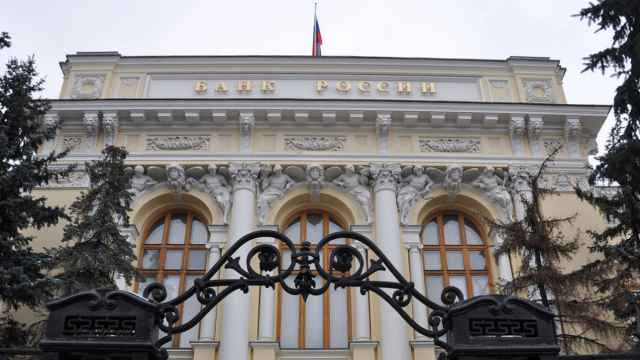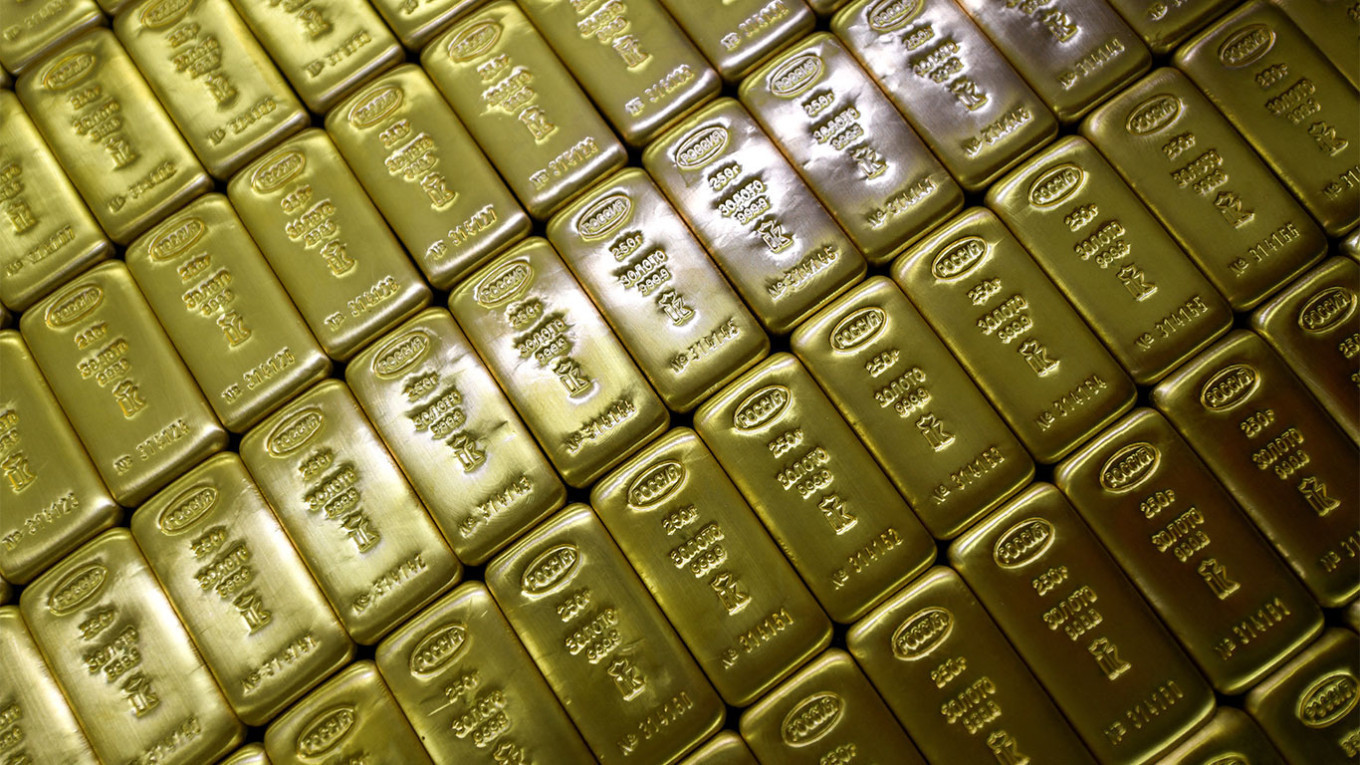
Russia’s Central Bank sold gold from its reserves for a 10th consecutive month in September as part of operations linked to financing a budget deficit expected to reach 7.3 trillion rubles this year, twice the original target.
Gold holdings fell by 200,000 troy ounces, or about 6.2 metric tons, to 72.8 million ounces, their lowest level since late 2019, according to Central Bank figures released Tuesday.
The Bank has reduced its holdings by 2 million ounces, or about 62 tons, since December, when it began its largest sustained sell-off in decades.
International Monetary Fund data show that Russia has drawn down its gold reserves more rapidly only once in its modern history, during the 1998 financial crisis, when the government defaulted on domestic debt and the ruble collapsed.
The Central Bank sold 3.8 million ounces, or about 118 tons, over three months that year. It later bought back some of the gold, leaving its holdings down 1.6 million ounces, or about 50 tons, for the full year, less than the decline recorded since the current sell-off began.
Russia subsequently built up its reserves, increasing its gold holdings more than fivefold from their late-1990s level. By early 2022, it held about 74 million ounces, or 2,300 tons, the world’s fifth-largest stockpile.
The latest sales are linked to Central Bank operations that mirror earlier transactions by the Finance Ministry involving the National Wealth Fund, Russia’s rainy-day fund, Reuters has reported.
Under that mechanism, the Central Bank sells gold into the market to offset earlier sales by the ministry from the fund to finance the budget deficit.
Alexander Potavin, an analyst at investment firm Finam, said falling oil and gas revenue had increased the government’s reliance on the fund’s assets, including gold.
The Finance Ministry uses accumulated reserves to cover budget shortfalls when revenue falls short, he said.
Gold sales could also help the Central Bank address shortages of foreign currency liquidity, Potavin said, adding that high global gold prices had probably encouraged it to step up sales.
Separately, Russian gold exports to China have risen sharply. About 100 tons of Russian-origin gold entered Hong Kong between January and July, three times the volume recorded in the same period a year earlier, according to Chinese customs data.
Those trade figures do not establish how much, if any, of the exported gold came from Central Bank reserves.
Russian suppliers have redirected exports eastward since losing access to London, the world’s largest gold trading hub, LSEG analyst Debajit Saha said.
Shipments to China surged in the first year of Russia’s full-scale invasion of Ukraine. Russian gold worth about $35 billion has since passed through Hong Kong, according to calculations by the Financial Times.
This article was translated with the help of artificial intelligence and was reviewed by a Moscow Times editor before publication. Learn more about our newsroom's AI policy here.
Read this article in Russian at The Moscow Times' Russian service.
A Message from The Moscow Times:
Dear readers,
We are facing unprecedented challenges. Russia's Prosecutor General's Office has designated The Moscow Times as an "undesirable" organization, criminalizing our work and putting our staff at risk of prosecution. This follows our earlier unjust labeling as a "foreign agent."
These actions are direct attempts to silence independent journalism in Russia. The authorities claim our work "discredits the decisions of the Russian leadership." We see things differently: we strive to provide accurate, unbiased reporting on Russia.
We, the journalists of The Moscow Times, refuse to be silenced. But to continue our work, we need your help.
Your support, no matter how small, makes a world of difference. If you can, please support us monthly starting from just $2. It's quick to set up, and every contribution makes a significant impact.
By supporting The Moscow Times, you're defending open, independent journalism in the face of repression. Thank you for standing with us.

Remind me later.