
Updated to include U.S. President Donald Trump’s comments.
U.S. President Donald Trump said on Sunday that Ukraine and Russia had agreed to what he described as an "energy ceasefire," hours after Ukrainian leader Volodymyr Zelenskiy had pushed back against U.S. pressure for a unilateral end to strikes on Russian refineries.
In a social media post, Trump said the energy ceasefire would take effect immediately, but did not elaborate further.
In an interview with Axios, Zelensky said Trump's post was the first he had heard of the deal, though a senior Ukrainian official told Reuters that Ukraine was ready to agree to such a ceasefire, if Russia was.
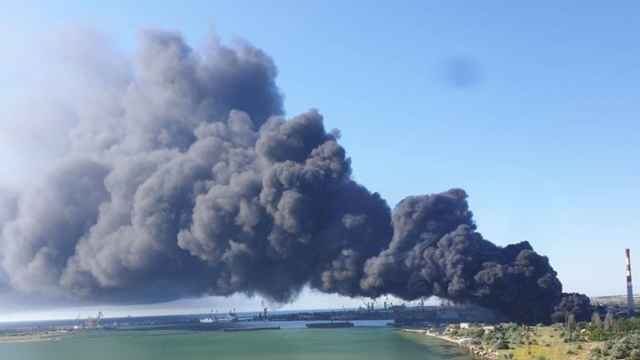
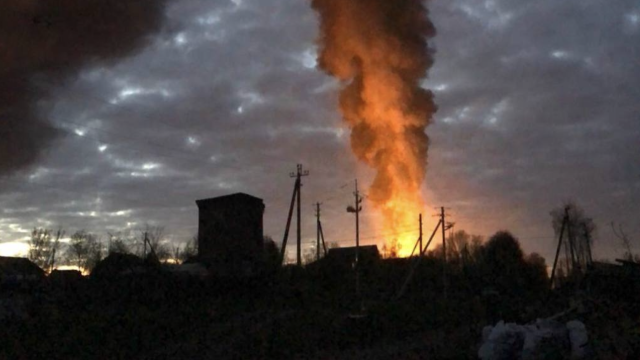
Earlier on Sunday, Zelensky said that Ukraine was ready to halt attacks on Russian oil refineries if Moscow ceased its own strikes on Ukrainian energy infrastructure.
On Saturday, Trump blamed Ukrainian strikes on Russian refineries for raising U.S. diesel prices and said Zelensky had "better damn well stop," adding that Ukraine should replace him as leader because he had missed several opportunities to strike a deal with Moscow.
The steep rise in global diesel prices, which followed the outbreak of the Iran war in February, has become a political liability for Trump's Republican Party ahead of next month's midterm elections, when opposition Democrats could gain control of one or both houses of Congress.
Zelensky on Sunday repeated Ukraine's long-standing position that it was willing to halt attacks on Russian refineries only as part of a mutual de-escalation of the conflict, which would require Moscow to cease its own strikes on Ukrainian power infrastructure.
Any such deal would need to come with "real guarantees," Zelensky said.
"The real cause of the war in Europe is Russia and Russia alone," Zelensky said, without alluding specifically to Trump's remarks. "It's possible to stop strikes on energy infrastructure as early as today, but [President Vladimir] Putin does not want to do so."
On Saturday, Zelensky responded angrily to Trump's announcement of a diesel supply deal with Russia, which he said would embolden Moscow's attacks on Ukraine.
Analysts said Trump's agreement with Moscow was unlikely to lead to sustained lower fuel prices, with the volumes still much lower than what Russia usually exports when its refineries are not under attack.
The diesel deal was also criticized by U.S. lawmakers, including one of Trump's fellow Republicans, Representative Don Bacon, who said it was time to apply more sanctions, not lift them.
On the streets of Kyiv, several residents expressed anger at Trump's suggestion that Ukraine should find a new leader willing to make a deal with Putin.
"No one has the right to tell us what to do, especially since elections cannot be held during wartime," said Sabina, a 40-year-old primary school teacher, referring to Ukraine's prohibition on elections under martial law for security reasons.
"In my view, it is a betrayal by our partners," she said, describing Trump's remarks.
Zelensky said he would continue discussions with European leaders on Sunday, and there were daily conversations around additional air defense packages, including ammunition for combat aircraft that are used to down Russia's jet-powered drones.
On Monday, Ukrainian Foreign Minister Andrii Sybiha is due to participate in a European Union Foreign Affairs Council meeting that is expected to discuss increasing sanctions pressure on Russia and advancing negotiations on Ukraine’s EU accession.
A Message from The Moscow Times:
Dear readers,
We are facing unprecedented challenges. Russia's Prosecutor General's Office has designated The Moscow Times as an "undesirable" organization, criminalizing our work and putting our staff at risk of prosecution. This follows our earlier unjust labeling as a "foreign agent."
These actions are direct attempts to silence independent journalism in Russia. The authorities claim our work "discredits the decisions of the Russian leadership." We see things differently: we strive to provide accurate, unbiased reporting on Russia.
We, the journalists of The Moscow Times, refuse to be silenced. But to continue our work, we need your help.
Your support, no matter how small, makes a world of difference. If you can, please support us monthly starting from just $2. It's quick to set up, and every contribution makes a significant impact.
By supporting The Moscow Times, you're defending open, independent journalism in the face of repression. Thank you for standing with us.

Remind me later.