
Lyudmila often has to call her sister about 40 times before the line connects. When she finally gets through, she can barely make out what her sister is saying.
"I hear occasional words, sometimes they're incomplete. The main thing is that I hear her voice," Lyudmila, whose name has been changed for safety reasons, told The Moscow Times.
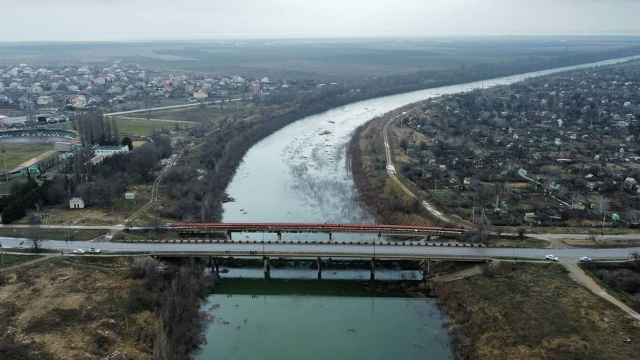
A refugee now living in Europe, Lyudmila comes from a village on the Ukrainian-controlled right bank of the Dnipro River in the Kherson region. Her sister lives across the river in the Russian-occupied town of Oleshky, where relentless bombardment has plunged the town into a deepening humanitarian crisis.
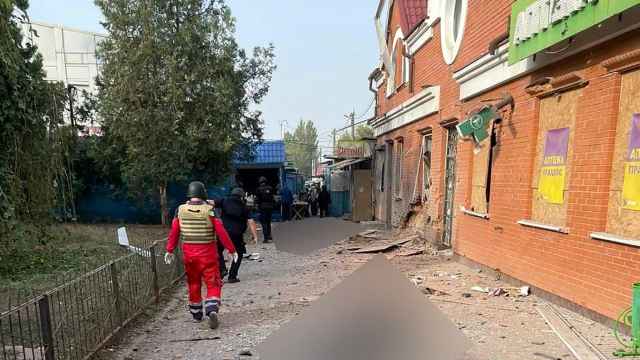
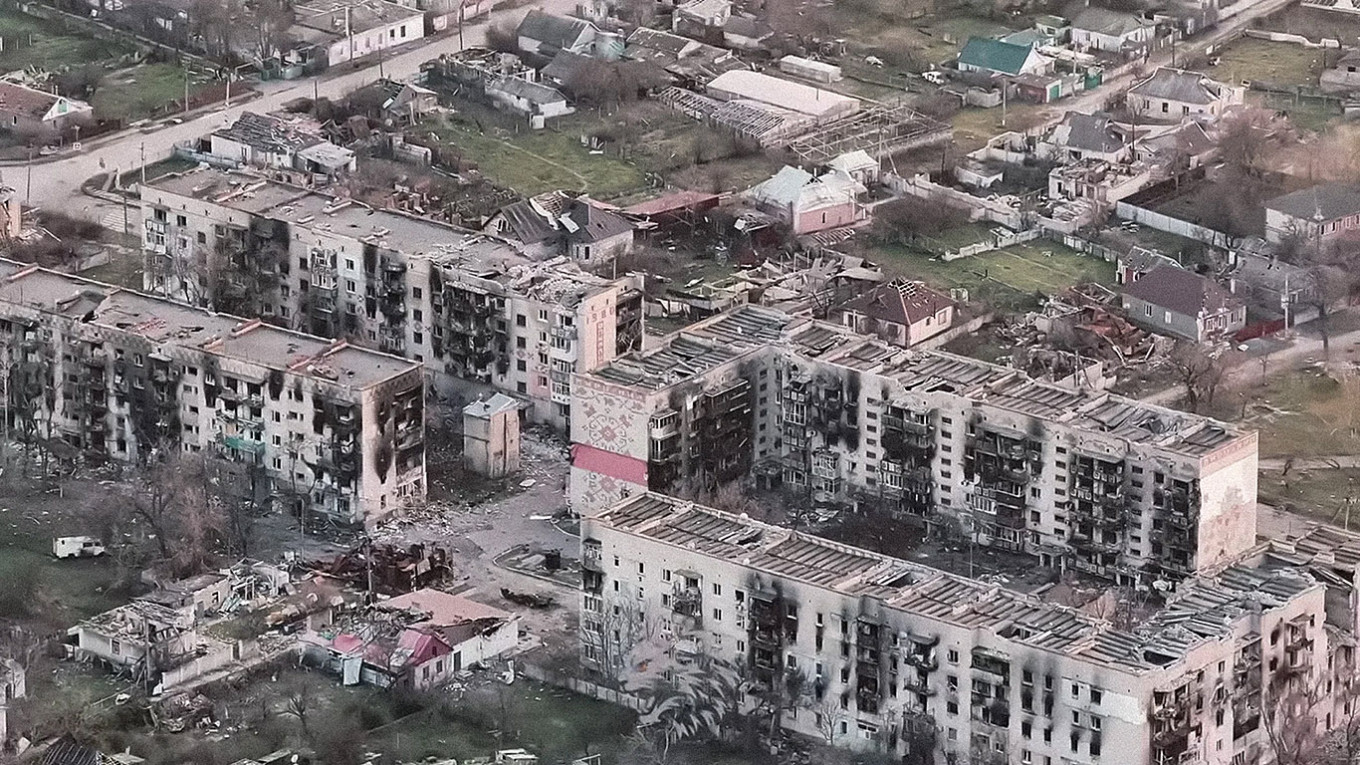
Conditions in Oleshky have continued to deteriorate since late 2025. Roads leading in and out of the town are heavily mined and badly damaged, leaving its 2,000 remaining residents, including an estimated 50 children, largely cut off from food, water, gas, electricity and medicine, residents and volunteers told The Moscow Times.
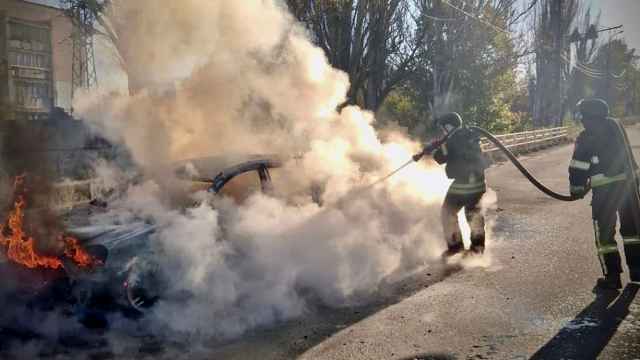
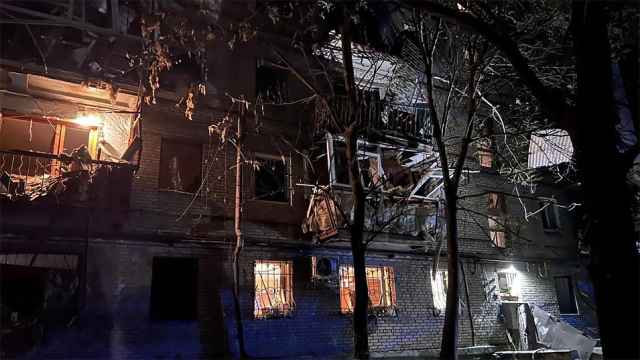
"She says everything is destroyed, houses are often burning and strikes land nearby every five to 10 minutes," Lyudmila told The Moscow Times.
With a pre-war population of 24,000, Oleshky served as a satellite town to Kherson city over the Dnipro River. It became a frontline town after Russian forces retreated across the Dnipro in late 2022.
Today, Russian forces use positions on the occupied bank to strike Ukrainian cities, while Kyiv targets Russian forces on the other side of the river in response, defense analyst Konrad Muzyka said.
Months of bombardment have destroyed much of the town’s infrastructure, according to a representative of a Russian organization that evacuates civilians from frontline areas.
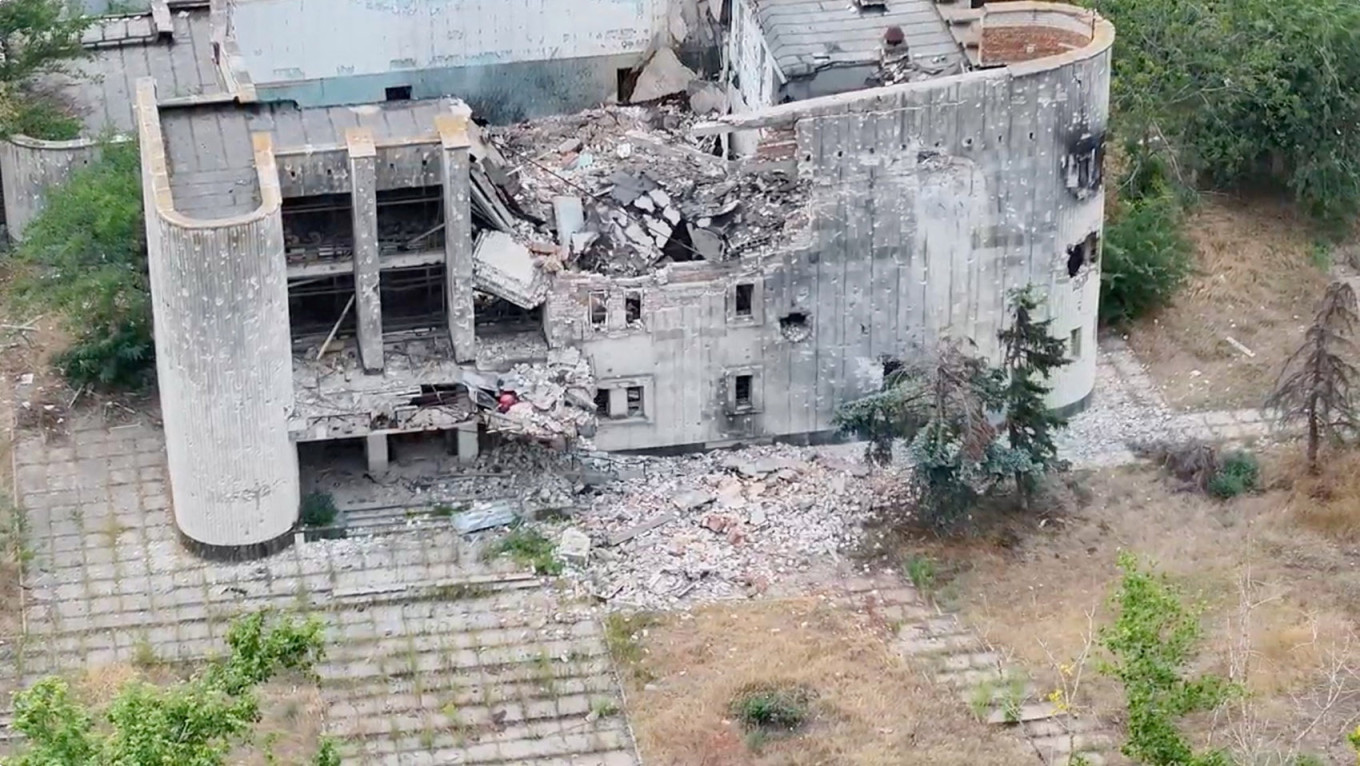
"Everything has been smashed by drones. Residential buildings without damage can be counted on one hand. It's practically impossible to get in or out," the representative told The Moscow Times, speaking on condition of anonymity to discuss a sensitive matter.
There have been no food deliveries by road since June, when a delivery driver hit a mine and died.
"For the past two months, people have been eating grass," said a resident who escaped the town on foot on Wednesday.
"Food can only be bought in Radensk," he told The Moscow Times, referring to a small settlement 23 kilometers (14 miles) away.
Every few days, Lyudmila's sister makes that journey by foot to buy food while her husband, who is recovering from a shrapnel wound sustained in a drone strike, waits anxiously at home.
"By the time she gets back, her legs are completely swollen," Lyudmila said.
"To blow up on a mine or die of hunger? People from Oleshky are forced to choose between two deaths," Ukraine's Commissioner for Human Rights Dmytro Lubinets said in a post last week.
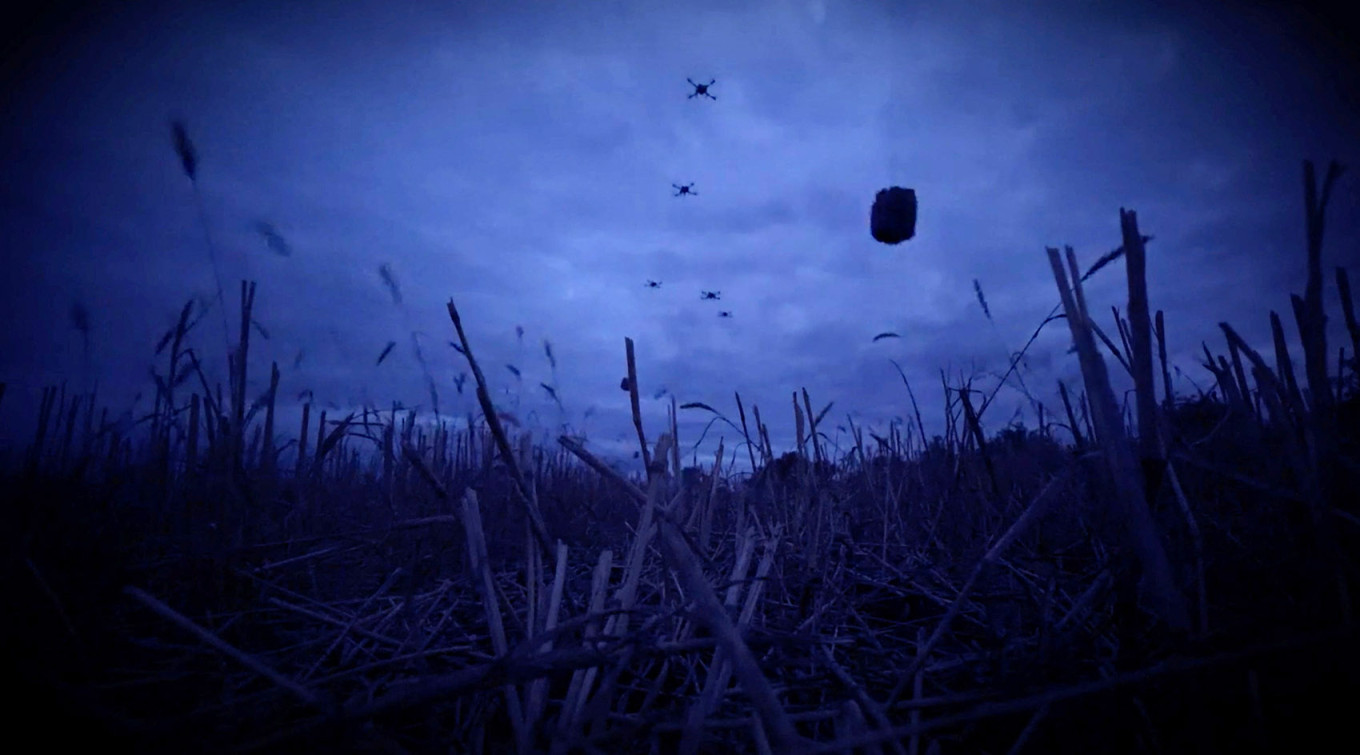
Drone footage shared by Lubinets earlier this week showed about two dozen of Oleshky's remaining residents trying to flee the city on electric bikes, bicycles and even on foot.
Tetiana Hasanenko, the exiled head of the Oleshky city military administration, said 12 people who fled the town last month had reached Ukrainian-controlled territory. Other evacuees remain in nearby towns in Russian-occupied southern Ukraine.
Ukraine blames Moscow for the deepening crisis in what Foreign Minister Andrii Sybiha described as a Russian "siege."
The Kremlin has acknowledged the situation in the town as "critical," but accused Kyiv of preventing civilians from leaving.
With Moscow prohibiting humanitarian bodies and international organizations from working in Ukraine's occupied territories, evacuating civilians is left to small volunteer groups. The groups often undertake days-long journeys through Russia and Belarus to repatriate people.
"We work wherever access is possible, but in Oleshky, it's the hardest," the volunteer, who was last in the town over a month ago, said.
Ukraine’s military used drones to deliver another batch of food and medicine to Oleshky on Sunday following an initial operation in late September. The latest delivery consisted of nearly 400 packages weighing almost 4 metric tons, Sybiha said.
Neither Lyudmila’s sister nor the resident who escaped on Wednesday received any of the aid, they said.
"Where they sent it and to whom is unknown. No one in their area received anything," Lyudmila said.
After the first delivery on Sept. 27, Hasanenko accused Russian forces of taking some of the supplies.
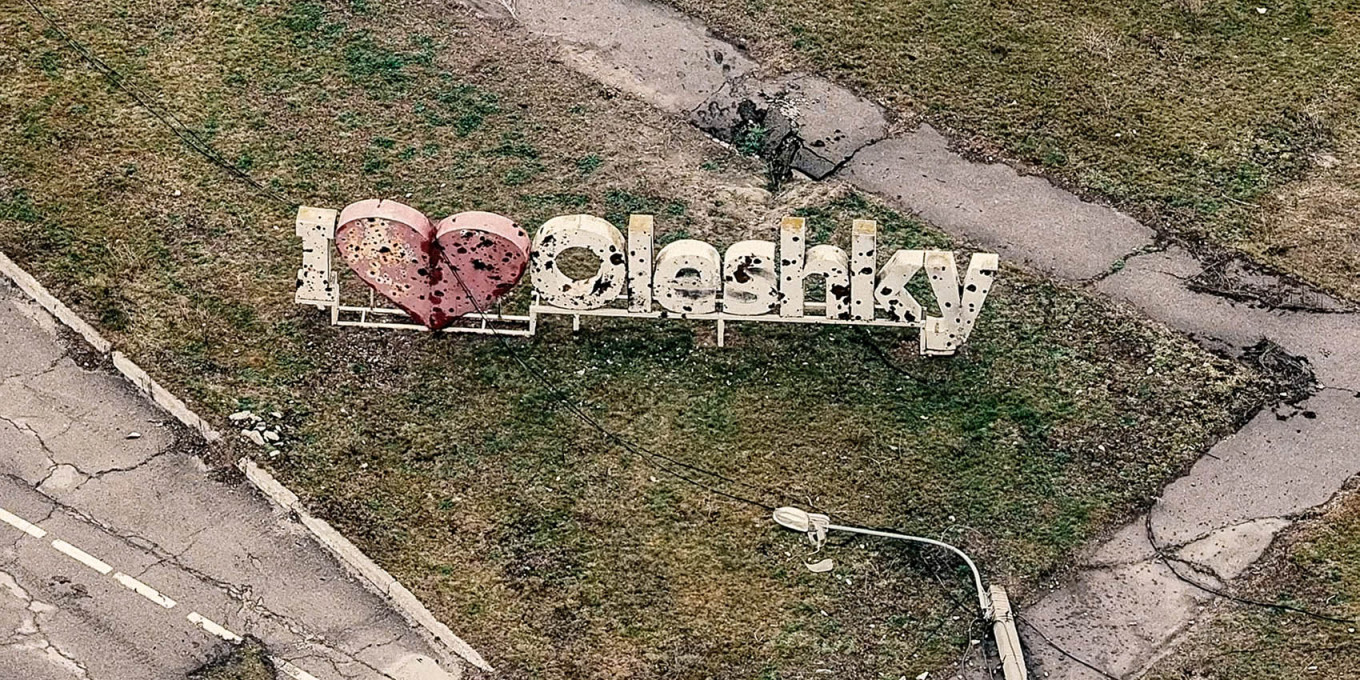
It is difficult to establish how many people have been killed in Oleshky. By the end of June, the UN Human Rights Monitoring Mission in Ukraine recorded at least 29 civilians killed and 54 injured in Oleshky and neighboring Hola Prystan in 2026.
Separately, Vladimir Saldo, the Russian-appointed governor of the occupied Kherson region, said Wednesday that 68 people had been killed across the entire region so far this year.
Efforts to arrange a safe evacuation from Oleshky have yet to produce a breakthrough, Ukraine’s human rights commissioner’s office said Thursday. It said talks with Russia were ongoing and that Kyiv had offered a localized ceasefire, a safe evacuation route and arrangements to receive residents in Ukrainian-controlled territory.
On the ground, people who spoke to The Moscow Times were reluctant to discuss military activity in detail. The man who escaped Oleshky said some people in the town blame Kyiv for the constant drone attacks.
"Ukrainian drones show no mercy, even to civilians," he said.
Others, like Lyudmila's sister, blame Moscow for occupying the town, and then turning it into a wasteland.
"The Russians came and created this crisis. Now, my sister and her husband are waiting for Ukraine to save them," she said.
A Message from The Moscow Times:
Dear readers,
We are facing unprecedented challenges. Russia's Prosecutor General's Office has designated The Moscow Times as an "undesirable" organization, criminalizing our work and putting our staff at risk of prosecution. This follows our earlier unjust labeling as a "foreign agent."
These actions are direct attempts to silence independent journalism in Russia. The authorities claim our work "discredits the decisions of the Russian leadership." We see things differently: we strive to provide accurate, unbiased reporting on Russia.
We, the journalists of The Moscow Times, refuse to be silenced. But to continue our work, we need your help.
Your support, no matter how small, makes a world of difference. If you can, please support us monthly starting from just $2. It's quick to set up, and every contribution makes a significant impact.
By supporting The Moscow Times, you're defending open, independent journalism in the face of repression. Thank you for standing with us.

Remind me later.