This article was adapted from the Threatologist newsletter.
Russia is menacing Europe. It is testing reactions and resolve, spreading instability and chipping away at the principles of collective defense. The only appropriate response is to acknowledge the seriousness of the threat and ramp up preparedness and defense spending — and to show Russia that the West will not shy away from confrontation.
This, at least, is the narrative that dominates the media and security landscape. There is strong justification for it: there is ample evidence of Russia pushing the boundaries and engaging in nefarious activities, and Russia has long held a low — and, until the war in Ukraine, entirely justifiable — opinion of the West’s resolve. But to what degree does the nature of the threat align with the perception?
Browse through any serious newspaper and it likely won’t be long before you encounter a headline warning of the threat that Russia poses to Western security. Over the last two weeks, the Estonian foreign minister has cautioned that Russia is escalating a campaign of sabotage and arson; the German chancellor has spoken about preparing for Russian hybrid attacks and the Danish intelligence services have claimed that Russia could be readying a limited military operation against a NATO country. Pick a different week and the details will change, but the underlying message will likely remain the same.
This rhetoric has a long history. For some commentators, there has always been a threat from the East and the transition from the U.S.S.R. to the Russian Federation meant little more than a change of clothes. Russia’s invasion of Ukraine was, therefore, little more than a vindication of long-held beliefs. Historian Mark Smith penned an entire book on what he termed “The Russia Anxiety,” which he characterized as “an historic syndrome that alternates between three sets of symptoms: fear of Russia, disregard of Russia and contempt for Russia.”
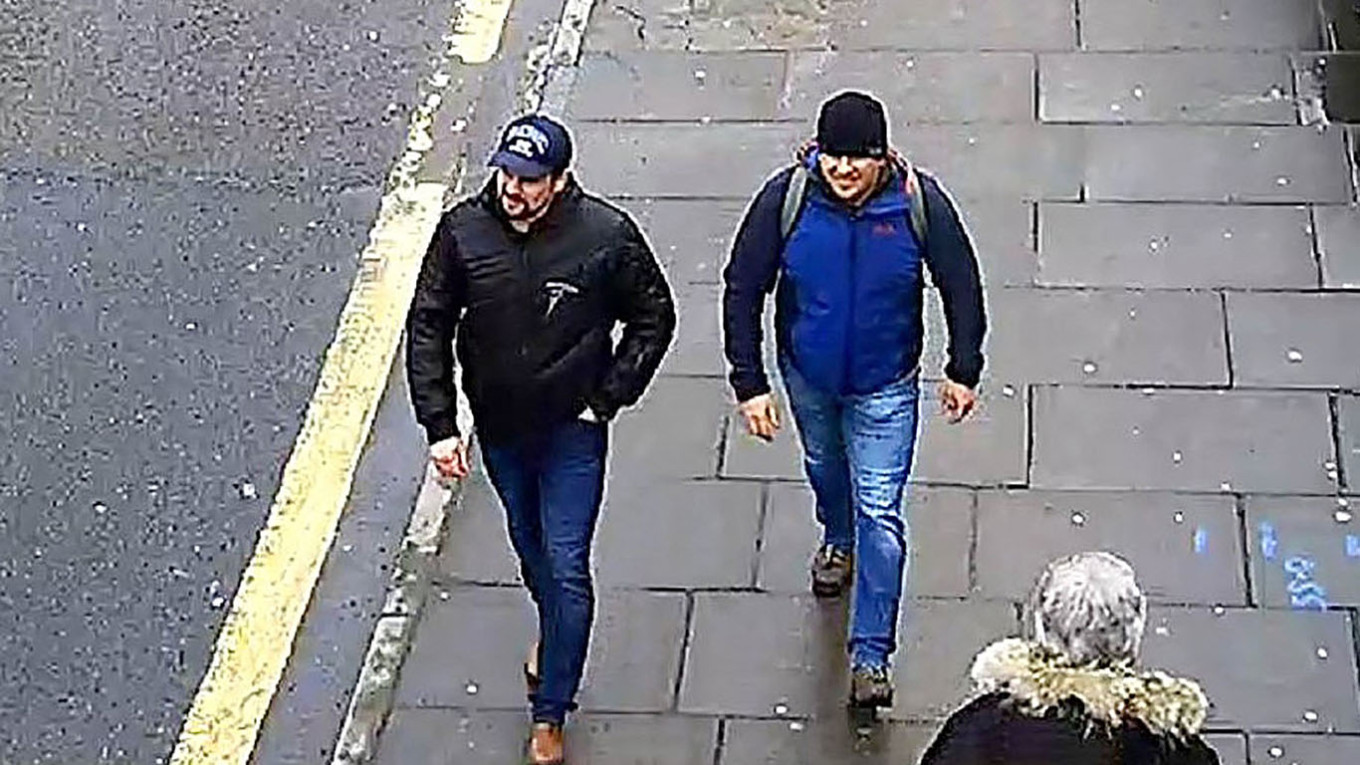
Over the years, Russia has provided ample material to fuel these concerns: from a British perspective, the poisonings of Alexander Litvinenko in 2006 and Sergei and Yulia Skripal in 2018 stand out as two of the most egregious examples. Since the start of Russia’s invasion of Ukraine, the number of nefarious incidents linked to Russia has proliferated, from an arson attack on a London warehouse involving the Wagner private military company to damage to undersea cables allegedly inflicted by the shadow fleet.
Much of this activity is bracketed under the label “gray zone” or “hybrid” operations (the different terms and the problems with how they are defined are a topic I’ll tackle later). These refer to hostile acts that seek to cause damage and spread instability but fall short of the threshold that would necessitate a military response. Since this threshold is by design not clearly demarcated, such activities test where they are and how far back they can be pushed. Hybrid operations are also marked by challenges of attribution, which can further complicate responses. Although there are reasonable doubts about whether it holds in the age of Trump, NATO’s Article 5 is the bedrock of Western collective security. Hybrid operations seek to remain below the threshold at which it can be invoked while at the same time further undermining confidence that it ever will be.
NATO’s Article 5 has been invoked precisely once in the history of the organization: After the terrorist attacks on the United States on Sept. 11, 2001. The response to those events is relevant in other ways too. The West transformed its security architecture in the wake of those attacks. It launched ruinous wars in Afghanistan and Iraq. It increased security at airports and most other places where people gather. It forced schools and universities to identify and report potential extremists. It policed thought as well as behavior. It created entire new security institutions.
However, questions were asked about whether this corresponded to the scale of the actual threat. Between 2001 and 2011, U.S. expenditure on domestic security alone increased by approximately $1 trillion and similar hikes were seen elsewhere. The total number of people killed globally by Muslim extremists operating outside war zones, by contrast, averaged 200-300 per year over that same period. The definitional parameters can be tweaked to produce different figures, but it is indisputable that in statistical terms terrorism was never a primary threat to Western lives. Certainly no jihadist groups ever seriously threatened to bring down a Western state or defeat its military. Yet the impact of terrorism on Western security postures was transformative.
The process of exaggeration, inflation, and securitization gave rise to a cottage industry of “critical terrorism” scholars who devoted entire journals, books, and conferences to challenging the shortcomings of Western counterterrorism approaches. Occasionally, parts of this community would smear other academics or lambast the sources of research funding while hypocritically submitting funding bids to the very same sources. But they also raised valid concerns about whether the response to terrorism corresponded to the actual threat it posed. A single person with a knife and a grudge could be transformed into a global menace by invoking the specter of jihadism. A small group could become a “threat to our way of life” without being able to secure control over territory as small as their own apartment.
There are lessons that we can draw from both the Global War on Terror and the responses to it. One of the flaws of the critical terrorism crowd was that it had very little to say about terrorism itself. Scan through its core journals and you’ll find that articles dealing with actual political violence are a relative rarity; its focus instead was on challenging the discourses around terrorism and the way that this was used to justify policy responses. The group also demonstrated only limited understanding of the state apparatuses that were tasked with challenging it. One of its doyens, Richard Jackson, once charged that “Policymakers are, for the most part, uninterested in evidence-based policy, or in the rigorous evaluation of counterterrorism policy, or in listening to reasonable, evidence-based suggestions about how to more effectively, and more ethically, respond to acts of terrorism”. This was always untrue and, ironically enough, an entirely unsubstantiated claim. Critical assessments of the West’s current security posture should not fall into the same trap of simply dismissing concerns about the threat posed by Russia and the motives of those who draw attention to it.
At the same time, we can recognize that two things can be true simultaneously: we can acknowledge that Russia is engaging in activities that give rise to genuine security concerns while also recognizing that the nature of the threat that it poses is being exaggerated and/or misunderstood.
The first part of this is uncontroversial: Russia has invaded its neighbor, so the threat that it poses is not purely abstract or theoretical, its potential to inflict harm far exceeds that of terrorists and there are numerous deleterious activities that can plausibly be linked to it.
The second part, however, is defensible even in the face of this. By bundling together very different types of activity and treating everything from a bin fire to an explosive-laden drone attack on an aircraft as the same thing, we lose sight of which activities pose a genuine security threat and which are merely a nuisance.
The cynical among you will rightly point out that this heightened rhetoric serves the interests of a security community that desires ever-more resources. Both state apparatuses and the think tank community that supports them benefit from heightened perceptions of threat, just as they did in the case of terrorism. But it is equally true that, among the same community, there are people who genuinely want to understand the nature of the threat and design responses to it. They are poorly served by discussions that cast Russia as a ubiquitous, all-powerful bogeyman — a narrative that benefits the Russian security apparatus more than it does its Western counterparts.
A Message from The Moscow Times:
Dear readers,
We are facing unprecedented challenges. Russia's Prosecutor General's Office has designated The Moscow Times as an "undesirable" organization, criminalizing our work and putting our staff at risk of prosecution. This follows our earlier unjust labeling as a "foreign agent."
These actions are direct attempts to silence independent journalism in Russia. The authorities claim our work "discredits the decisions of the Russian leadership." We see things differently: we strive to provide accurate, unbiased reporting on Russia.
We, the journalists of The Moscow Times, refuse to be silenced. But to continue our work, we need your help.
Your support, no matter how small, makes a world of difference. If you can, please support us monthly starting from just $2. It's quick to set up, and every contribution makes a significant impact.
By supporting The Moscow Times, you're defending open, independent journalism in the face of repression. Thank you for standing with us.

Remind me later.