
One of the most pressing questions surrounding the West’s financial support for Ukraine is whether the $300 billion in Russian state assets frozen by Western governments can be seized or otherwise put to use.
To answer that question, we first need to distinguish between Russia’s money and the piles of cash created by sanctions that do not, in fact, belong to Russia.
There is only one legal way to take Russia’s money, and that is through a “transfer” intended to pay down the reparations that Russia owes to Ukraine. This would work much as it does when a tax authority takes money from someone’s bank account to settle a tax debt. It does not involve theft of money. The person’s debt and bank balance simply fall by the same amount.
Likewise, if the European Union or the G7 transferred Russian assets to Ukraine, the amount that banks owe Russia would fall by the amount transferred. International law does not usually allow countries to do this, but many legal experts argue there is an exception when a state commits a grave violation, such as an act of aggression, and consequently owes reparations — a position supported by the Council of Europe.
Although transferring money to Ukraine under the present circumstances would be legal, Western politicians are reluctant to do so. They fear that other governments thinking about breaking international law — think China eyeing Taiwan — might stop purchasing bonds issued by countries who enforce international law this way.
To avoid those risks, the EU has been considering ways to finance Ukraine with the pools of cash generated by sanctions rather than seizing and transferring Russia’s underlying assets themselves.
These pools of cash are often described as “frozen Russian assets,” but they are not actually Russian money.
When depositors put money in a bank, they generally surrender ownership of the money itself. What they receive in return is a claim to withdraw an amount of money equal to what they deposited, sometimes with interest.
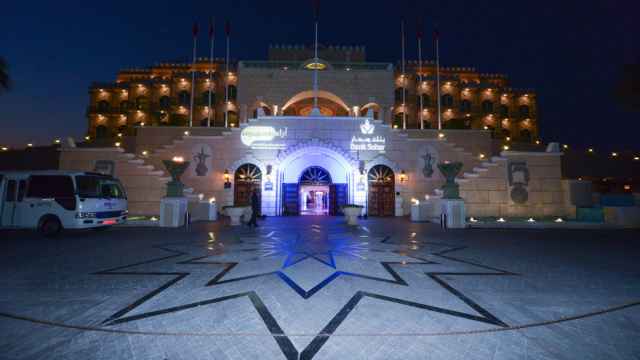
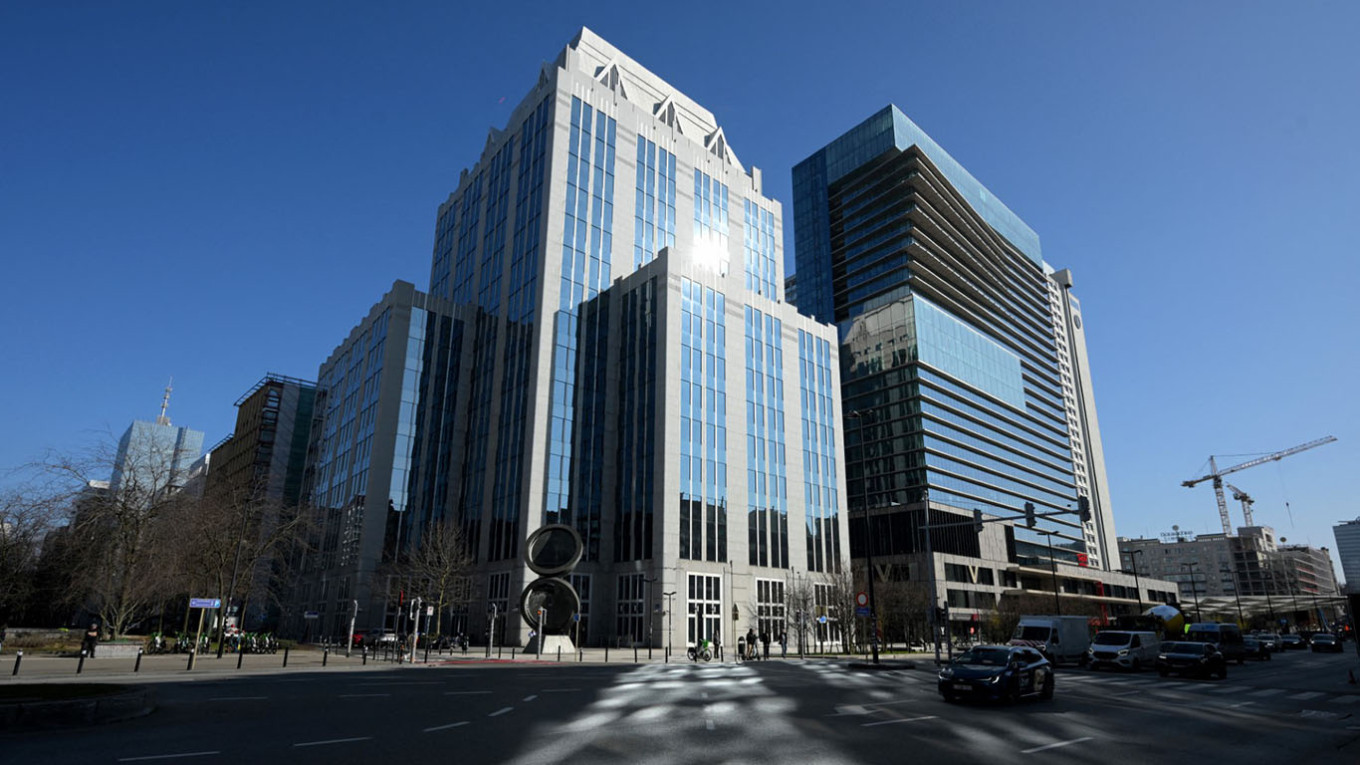
The largest custodian of the frozen Russian assets is Euroclear, the Belgium-based financial institution where Russia holds roughly 185 billion euros in various currencies, without the right to earn interest.
Sanctions do not literally freeze piles of money in place; they just prohibit banks from honoring the account holder’s instructions. What sanctions did was create an enormous pool of unused money — known as “extraordinary cash balances” — equivalent to what Euroclear and similar institutions owe Russia. While this cash belongs to the banks, they would immediately have to pay Russia an equivalent amount if sanctions were lifted.
What did Euroclear do with this windfall? It reinvested the accumulating balances, as required by its risk-management and regulatory policies, earning roughly 5.2 billion euros in interest income for itself in 2022 and 2023. Belgium taxed those earnings at its 25% corporate tax rate, generating approximately 1.3 billion euros in revenue, while Euroclear retained the remainder after costs.
The EU then decided that after Feb. 15, 2024, banks should not be allowed to keep war profits and demanded that they transfer future post-tax earnings from these cash balances to the EU to support Ukraine. Belgium continues to tax the earnings at 25% while most of the rest, sometimes as much as 3 billion euros a year, goes toward helping Ukraine.
But 3 billion euros does not go far in this war. So, the EU and the non-EU G7 nations decided in 2024 to bring forward decades of anticipated revenue by lending Ukraine approximately 45 billion euros through the Extraordinary Revenue Acceleration, or ERA, initiative.
The annual revenue the EU receives from Euroclear, after Belgium takes its share, is now being used to repay those loans. At the current rate, repayment will take roughly 40 years. If sanctions are lifted before then, the EU could lose as much as 18 billion euros, while the other G7 countries could lose as much as 27 billion euros.
The EU has also agreed to lend Ukraine an additional 90 billion euros for 2026 and 2027. Unlike the ERA loans, this package is financed through EU borrowing on capital markets and backed by the EU budget. Ukraine is expected to repay the loan only after receiving reparations from Russia. The EU has also reserved the right to use the frozen Russian assets to repay the loan, provided that it can do so under EU and international law.
Assuming Russia never voluntarily pays reparations, lifting sanctions and returning the Euroclear funds to Russia would deprive the EU of the most obvious source for repaying both the ERA loans and its new 90-billion-euro loan.
While the EU and G7 may one day write off their loans to Ukraine, it is inconceivable that they would do so at taxpayers’ expense simply to return the frozen funds to Russia.
Russia understands this and knows that recovering the assets will be extraordinarily difficult, if not impossible. Its immediate priority is therefore to stop the assets, or the cash and profits associated with them, from being used to support Ukraine.
That brings us to the current debate over what to do with the extraordinary cash balances that sanctions have inadvertently created in European banks. This money belongs to the banks. But if Euroclear were to lend out its 190-billion-euro cash pile and sanctions were dropped, it would need to come up with 190 billion euros immediately or risk insolvency.
In December, the EU came up with a brilliant way to use this money. It called this plan a “reparations loan,” but it has nothing to do with reparations. It’s just a clever way to use the roughly 210 billion euros that has piled up in European banks holding Russian assets to support Ukraine at no cost to European taxpayers.
Under the proposal, the EU would borrow this money from the banks interest-free and lend it to Ukraine. No Russian money would be taken — it would be a loan of the banks’ own cash to the EU. Russia’s bank balances would remain the same. If sanctions were lifted while the loan to Ukraine remained outstanding, the EU would repay the banks with public funds. In other words, the EU would guarantee the safety of Russia’s deposits.
Russia, desperate to stop Ukraine from receiving additional financing, portrayed the proposal as theft and threatened legal action. But you cannot sue a bank for lending out its own money when the account balance remains untouched.
Belgium, meanwhile, earns hundreds of millions of euros a year in tax revenue from the profits generated at Euroclear. Although the country says “every euro that we receive from Euroclear goes to Ukraine,” the fact is that Belgium’s entire contribution for Ukraine is financed by taxes on the money in Euroclear. Prime Minister Bart De Wever has called the money in Euroclear “the goose that lays the golden eggs.”
His government has refused to release the money unless the EU indemnified Belgium against the possibility, however remote, that Russia might win in court. This was actually fair. Any legal risk from an EU plan, no matter how improbable, should be borne by the EU as a whole.
The EU eventually agreed and offered Belgium and Euroclear “a full guarantee.” However, Belgium really didn’t want to let that golden goose go, and demanded “a full and uncapped guarantee.”
Legally, the meaning is the same. But De Wever must have known that the word “uncapped” would be politically unacceptable to Italy’s Prime Minister Giorgia Meloni and unpalatable to French President Emmanuel Macron, and so the reparations loan was shelved for the time being.
As a result, the Russian assets remained at Euroclear, where they continue to generate substantial tax revenue for Belgium and fully subsidize its contributions to Ukraine, while the EU turned to a 90 billion euro market-financed loan whose debt-service costs are expected to reach roughly 3 billion euros a year from 2028.
Now, the EU once again has to decide how it will fund Ukraine. It can pursue a transfer of Russian sovereign assets against future reparations to Ukraine. It can revive the reparations-loan proposal and collectively assume its miniscule legal and financial risks. Or it can borrow still more money from the markets and pass the bill to European taxpayers.
Whatever it chooses, you can be sure that Russia will cry foul and sue — and Belgium, determined to hold on to its golden goose, will keep echoing Moscow’s false talking points and trying to make toothless lawsuits look as scary as possible.

A Message from The Moscow Times:
Dear readers,
We are facing unprecedented challenges. Russia's Prosecutor General's Office has designated The Moscow Times as an "undesirable" organization, criminalizing our work and putting our staff at risk of prosecution. This follows our earlier unjust labeling as a "foreign agent."
These actions are direct attempts to silence independent journalism in Russia. The authorities claim our work "discredits the decisions of the Russian leadership." We see things differently: we strive to provide accurate, unbiased reporting on Russia.
We, the journalists of The Moscow Times, refuse to be silenced. But to continue our work, we need your help.
Your support, no matter how small, makes a world of difference. If you can, please support us monthly starting from just $2. It's quick to set up, and every contribution makes a significant impact.
By supporting The Moscow Times, you're defending open, independent journalism in the face of repression. Thank you for standing with us.

Remind me later.