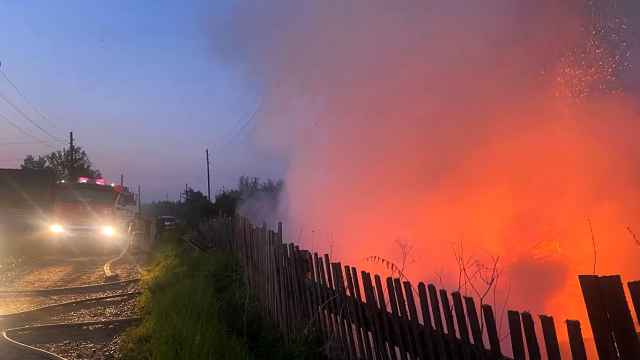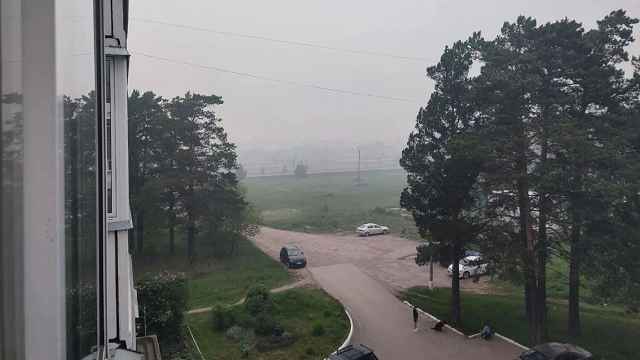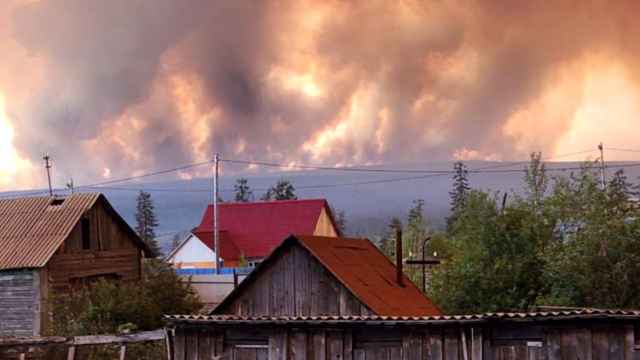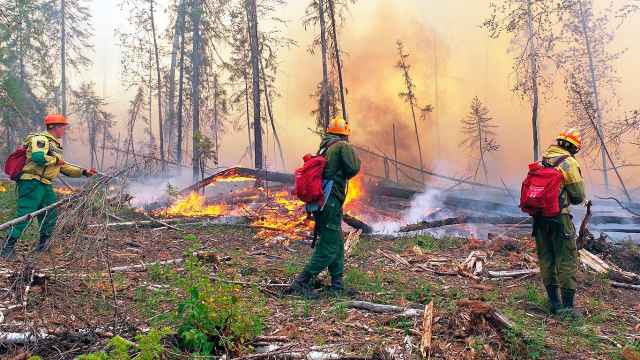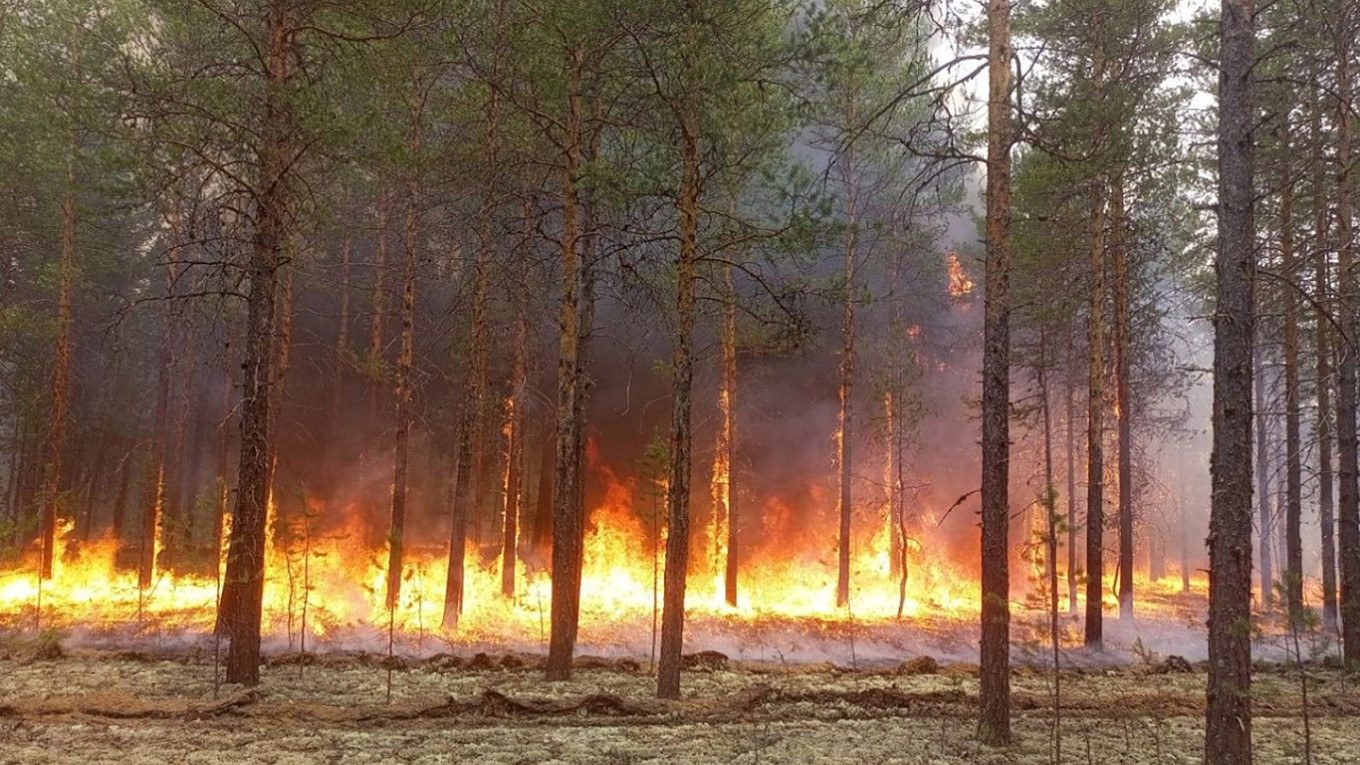
Wildfires across Siberia continued to expand as blazes in the Krasnoyarsk region and the republic of Sakha grew to nearly 3.5 million acres, roughly the size of the U.S. state of Connecticut, forest fire authorities said Monday.
In the Krasnoyarsk region, 128 active wildfires were burning across 405,800 hectares (1 million acres), according to the regional forest fire center. Sakha, Russia’s largest ethnic republic, had 36 active blazes covering 987,067 hectares (2.44 million acres) as of midnight Monday, federal authorities said.
Russia’s Aerial Forest Protection Service said more than 1.3 million hectares (3.3 million acres) of wildfires were burning across Russia.
Authorities have blamed the fires on summer heat and Siberian silk moth infestations, which have killed off vast swaths of trees and left behind highly flammable deadwood.
The Krasnoyarsk region declared a wildfire emergency on June 10, barring the public from entering woodlands, lighting campfires, burning trash or grass and conducting any other fire-hazardous work.
The spread is concentrated in four northern districts that cover around three-quarters of the Krasnoyarsk region’s territory, the Interfax news agency quoted the regional forest fire center as saying.
The EU’s Copernicus satellite monitoring unit said that wildfires in Krasnoyarsk, Sakha and the Yamalo-Nenets autonomous district have been burning with particularly high intensity since the end of July.
“[In] the Siberian Arctic, the peak emissions have been occurring slightly later than usual and at a time when the number of fires might be expected to decrease,” the Copernicus Atmosphere Monitoring Services said Friday.
A Message from The Moscow Times:
Dear readers,
We are facing unprecedented challenges. Russia's Prosecutor General's Office has designated The Moscow Times as an "undesirable" organization, criminalizing our work and putting our staff at risk of prosecution. This follows our earlier unjust labeling as a "foreign agent."
These actions are direct attempts to silence independent journalism in Russia. The authorities claim our work "discredits the decisions of the Russian leadership." We see things differently: we strive to provide accurate, unbiased reporting on Russia.
We, the journalists of The Moscow Times, refuse to be silenced. But to continue our work, we need your help.
Your support, no matter how small, makes a world of difference. If you can, please support us monthly starting from just $2. It's quick to set up, and every contribution makes a significant impact.
By supporting The Moscow Times, you're defending open, independent journalism in the face of repression. Thank you for standing with us.

Remind me later.