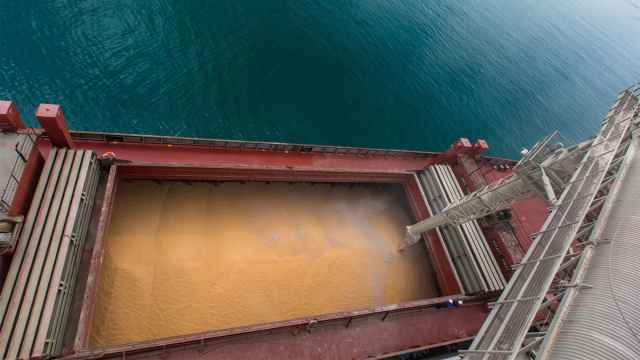
More than 90% of Russia’s grain export capacity in the Azov-Black Sea basin has been taken offline following Ukrainian attacks and navigation restrictions, disrupting the country’s main export corridor during the busiest part of the season.
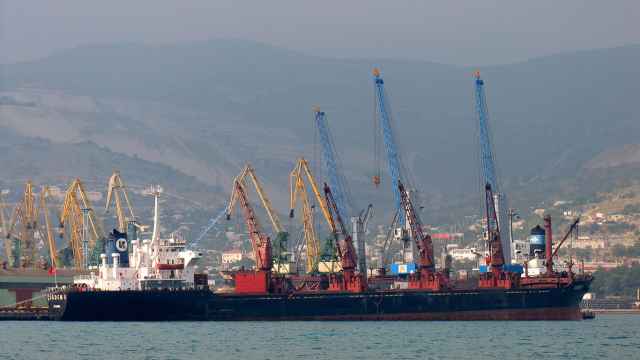
All three grain terminals at the Black Sea port of Novorossiysk suspended operations last week. Together, the terminals had handled around 25 million metric tons of Russian grain exports.
Navigation in the Sea of Azov has been suspended since July, while a grain terminal at Taman halted operations in late July. Two terminals in Novorossiysk — NKHP and NZT — stopped operating on the same day last week, followed a day later by KSK, the port’s largest terminal.
Tuapse, the smallest of Russia’s deep-water grain terminals, is the only port in the region still operating, according to Andrei Sizov, managing director of the SovEcon agricultural consultancy.
The disruption threatens a major source of foreign-currency revenue for Russia and is putting further pressure on farmers already struggling with falling prices and several years of deteriorating finances. Grain exports bring around $15 billion into the Russian economy annually, while the Azov-Black Sea basin accounted for 88% of Russia’s maritime grain shipments last season.
Russia shipped 46.3 million tons of grain through ports in the basin last season, including more than 29 million tons through Black Sea terminals.
“Practically all Russian grain exports through the Azov-Black Sea basin are at a standstill,” Sizov said.
He cautioned that the disruption would not necessarily be permanent and said some terminals were likely to resume operations. But it remains unclear when shipments will recover or whether exporters will be able to make up the lost volumes later in the season.
Global wheat prices have shown little reaction despite the scale of the shutdown. Chicago wheat remains below $7 a bushel, equivalent to around $257 per metric ton.
Sizov said that if traders had been asked six months ago what wheat would cost with more than 90% of Russian grain export capacity in the Azov-Black Sea region offline, most would probably have forecast a double-digit Chicago price, well above $10 a bushel.
Instead, he said, the market appears to be betting that plentiful global supplies, weak demand and an eventual resumption of cheap Russian exports will keep prices subdued.
“The problem is that it is completely unclear when exactly the situation will be resolved and shipments will resume,” Sizov said.
The interruption has come during the August-to-December period, when Russian grain exports are typically at their highest. Expectations that all the missed shipments can be made up later are overly optimistic, Sizov said, particularly because of winter storms and the seasonal freezing of rivers and the Sea of Azov.
“It is impossible to force additional grain through an ‘export pipeline’ that is already operating at the limit of its capacity,” he said.
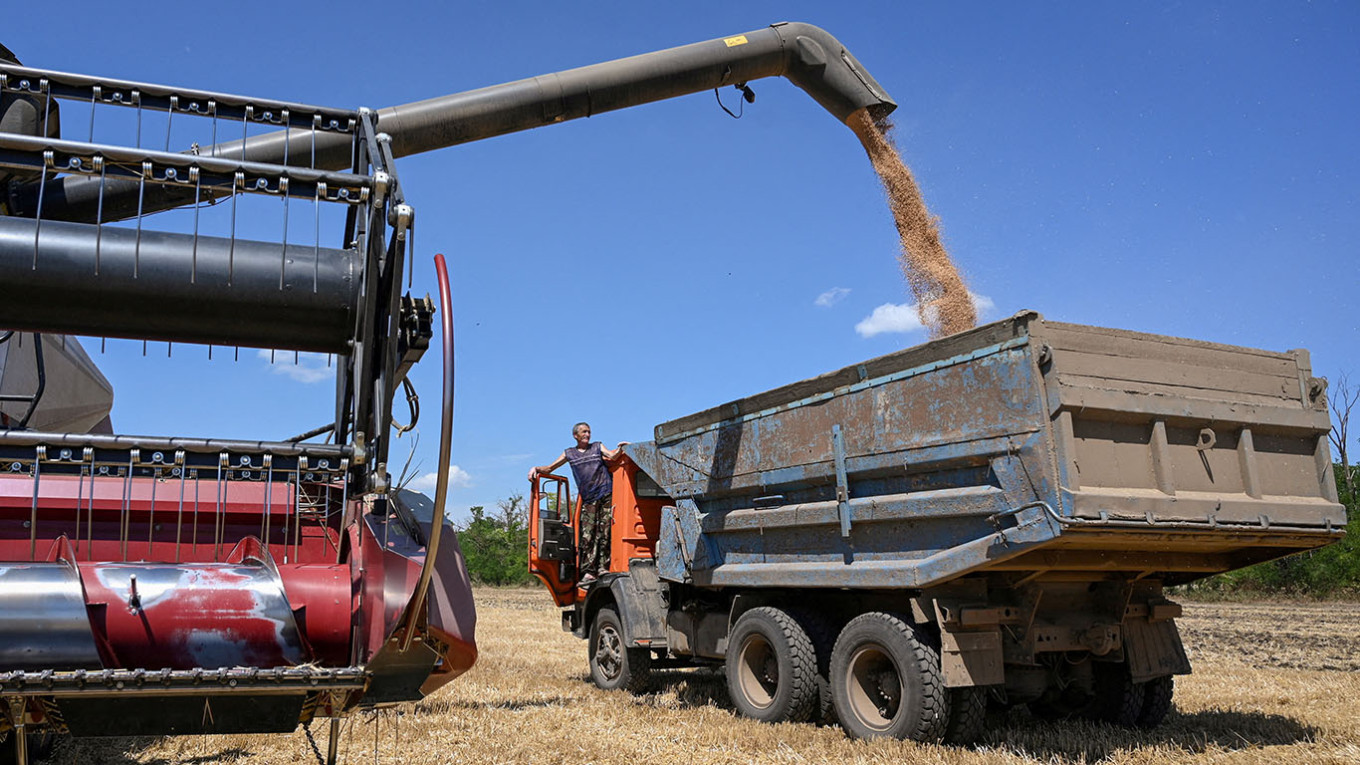
For Russian farmers, the port shutdowns have coincided with a strong 2026 harvest of nearly 140 million tons, leaving them with growing inventories and few buyers, Russian Grain Union President Arkady Zlochevsky said.
“Storage facilities are filling up every day, while demand has stopped and exporters have practically stopped buying grain,” Zlochevsky said.
Domestic prices have fallen as a result. Fourth-class wheat is now selling for around 12,000 rubles ($142) per ton, down from 15,000 rubles ($177) a year earlier.
“This is a catastrophic level, with enormous losses,” Zlochevsky said.
Sizov said extremely limited export demand would continue to push down ruble-denominated grain prices and could force producers out of business. Farmers had already endured several years of worsening financial conditions partly because of grain export duties, he added.
“Many will not survive this season, especially after several years of deteriorating financial conditions for producers because of export duties,” Sizov said.
The most serious consequences may emerge next season if farmers lack the money to sow winter crops, Zlochevsky warned. High borrowing costs, a lack of advance financing and losses on current grain sales have left producers with few sources of funding.
“There is nowhere to get the money, credit is unavailable and no one is providing advance financing, so farmers are being forced to sell at such losses,” Zlochevsky said. “If we do not receive sufficient financing, the winter sowing campaign will fail.”
This article was translated with the help of artificial intelligence and was reviewed by a Moscow Times editor before publication. Learn more about our newsroom's AI policy here.
Read this article in Russian at The Moscow Times' Russian service.
A Message from The Moscow Times:
Dear readers,
We are facing unprecedented challenges. Russia's Prosecutor General's Office has designated The Moscow Times as an "undesirable" organization, criminalizing our work and putting our staff at risk of prosecution. This follows our earlier unjust labeling as a "foreign agent."
These actions are direct attempts to silence independent journalism in Russia. The authorities claim our work "discredits the decisions of the Russian leadership." We see things differently: we strive to provide accurate, unbiased reporting on Russia.
We, the journalists of The Moscow Times, refuse to be silenced. But to continue our work, we need your help.
Your support, no matter how small, makes a world of difference. If you can, please support us monthly starting from just $2. It's quick to set up, and every contribution makes a significant impact.
By supporting The Moscow Times, you're defending open, independent journalism in the face of repression. Thank you for standing with us.

Remind me later.