
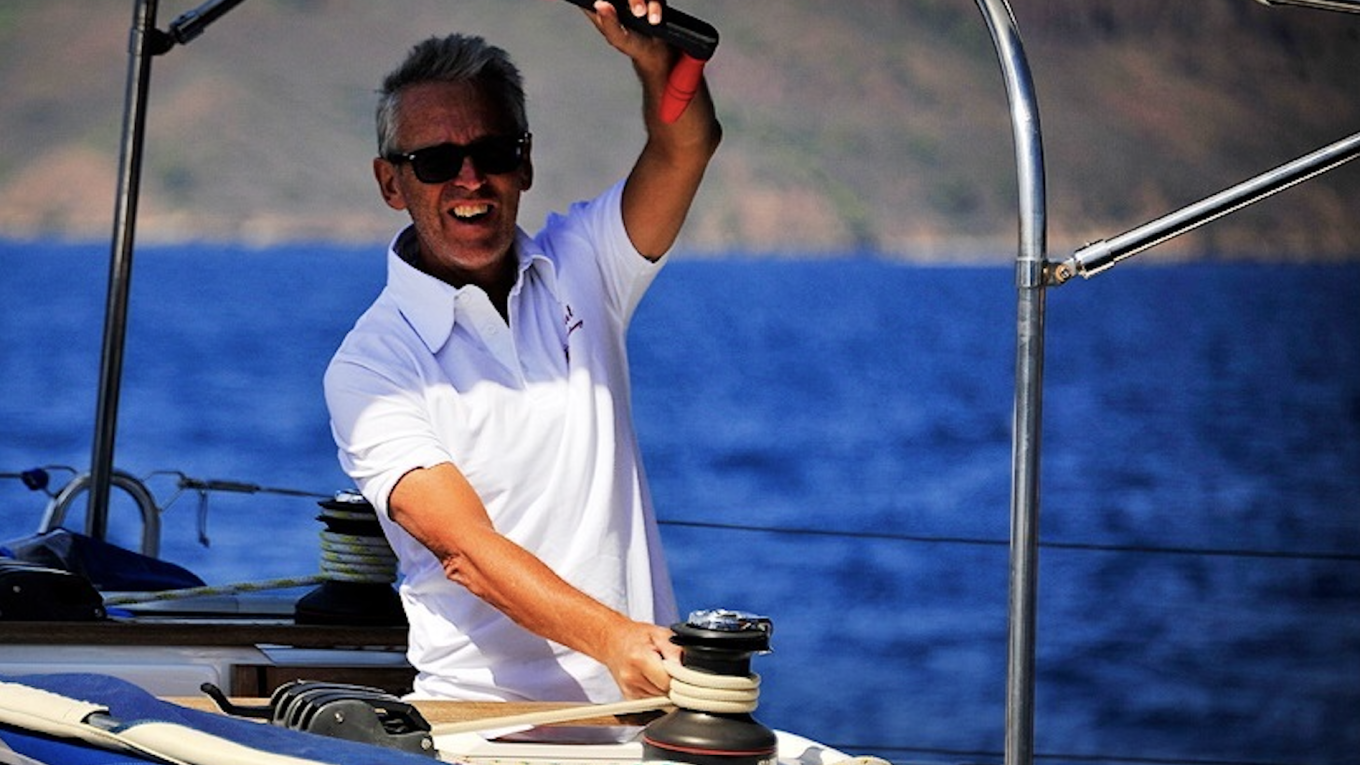
Exactly one year ago, Derk Sauer, the founder of The Moscow Times, passed away. His death was untimely and unexpected, the result of an accident. Derk remained actively involved with The Moscow Times until his last day. He had no plans to retire and was not preparing to step down.
“I believe that an entrepreneur’s life is divided into four quarters,” another remarkable entrepreneur, watch industry icon Jean-Claude Biver, once told me. “The beginning of a career is the ‘apprenticeship’ quarter; the longest is the ‘active’ quarter; the ‘handover’ quarter; and the final ‘retirement’ quarter.”
By this definition, Derk was still in his “active” quarter. It seemed as though his unexpected passing would inevitably spell the end of The Moscow Times. After all, how could a Russian-English publication about Russia, operating in exile from Amsterdam — where we ended up thanks to Derk, without whom we might instead have ended up in a Russian prison — possibly survive without its founder?
Success always attracts envy and ill will, and a publication with a clear political stance, such as The Moscow Times, will always have enemies. A year ago, alongside dozens of messages of condolence and support, I also received this one: “Now that Derk is dead, you, The Moscow Times, will die too!”
But we didn’t die. On the contrary, over the past year we have expanded both our English- and Russian-language audiences, launched new projects and continued to look to the future without fear — as much as we can during a war now in its fifth year.
Why have we survived? I am convinced that it is primarily thanks to our professionalism and the corporate culture that Derk established. It is a culture in which decisions are made clearly and transparently, and in which the primary responsibility of managers at every level is to protect their employees, allowing them to do their jobs responsibly and to the best of their ability. In this type of environment, where everyone does their job honestly and professionally, there is little room for insinuation or protracted conflict.
Earlier this year, we held a photo exhibition in Amsterdam featuring images from The Moscow Times’ archives, titled “Back to the USSR: When Russia Took a Wrong Turn.” Among the works on display were three photos, taken by the same photographer over the course of 10 years, that traced the fate of a Soviet monument in Moscow from its installation in 1992 to its dismantling in 1993 and eventual relocation to a park in 2002.
Yes, people worked at Derk’s publications for decades. Why look for something better when you are doing what you love, are part of a great team and get paid for it, too? I am a prime example: I joined The Moscow Times in 1995, then spent 20 years at another of Derk’s publications, Vedomosti, before returning to The Moscow Times in 2021.
We also survived thanks to the help and support of our readers and partners. And here I must note that kindness has a way of coming back around.
It might seem that Derk’s decision to move The Moscow Times from Moscow to Amsterdam was driven purely by pragmatism: he had created a publication in Russia that helped lay the foundation for his success and went on to become legendary, and then moved it to his home country to preserve the brand.
I would venture to say that this was not the case. Derk’s main goal was to help journalists stay in the profession.
The desire to help others was simply in Derk’s blood. Derk’s company, Independent Media, was among the first in Russia to establish a corporate philanthropy department, and Derk personally hired its first manager. Her task was to identify worthy projects for Independent Media to support. The company also matched every charitable donation made by its employees.
When we lost our founder last year, people and organizations came forward to offer both moral and financial support. It was deeply inspiring. It showed us once again that we are doing good and important work, and that The Moscow Times is on the right path.
On Derk’s birthday, October 31, Amsterdam will host the inaugural Derk Sauer Lecture for Independent Journalism. Next year, we will celebrate the 35th anniversary of The Moscow Times, for which we have already begun planning a program of events.
Thank you for staying with us. We will continue working for you.
A Message from The Moscow Times:
Dear readers,
We are facing unprecedented challenges. Russia's Prosecutor General's Office has designated The Moscow Times as an "undesirable" organization, criminalizing our work and putting our staff at risk of prosecution. This follows our earlier unjust labeling as a "foreign agent."
These actions are direct attempts to silence independent journalism in Russia. The authorities claim our work "discredits the decisions of the Russian leadership." We see things differently: we strive to provide accurate, unbiased reporting on Russia.
We, the journalists of The Moscow Times, refuse to be silenced. But to continue our work, we need your help.
Your support, no matter how small, makes a world of difference. If you can, please support us monthly starting from just $2. It's quick to set up, and every contribution makes a significant impact.
By supporting The Moscow Times, you're defending open, independent journalism in the face of repression. Thank you for standing with us.

Remind me later.