Back to the USSR: When Russia Took a Wrong Turn

The Moscow Times is proud to present “Back to the USSR: When Russia Took a Wrong Turn,” an exhibition of photos from the newspaper's archive, to mark the fourth anniversary of our move into exile in the Netherlands.
This curated collection captures everyday life in Russia during the Yeltsin era and the early years of Putin’s rule — and serves as a reminder that democracy and freedom of expression are fragile and must be protected.
More photos are on display and available for purchase at Localie Hub, Rudi van Dantzigstraat 3, 1095 PK Amsterdam, until June 10.
Localie Hub is open Monday through Friday, from 11:00 to 20:00. Admission is free.
This curated collection captures everyday life in Russia during the Yeltsin era and the early years of Putin’s rule — and serves as a reminder that democracy and freedom of expression are fragile and must be protected.
More photos are on display and available for purchase at Localie Hub, Rudi van Dantzigstraat 3, 1095 PK Amsterdam, until June 10.
Localie Hub is open Monday through Friday, from 11:00 to 20:00. Admission is free.
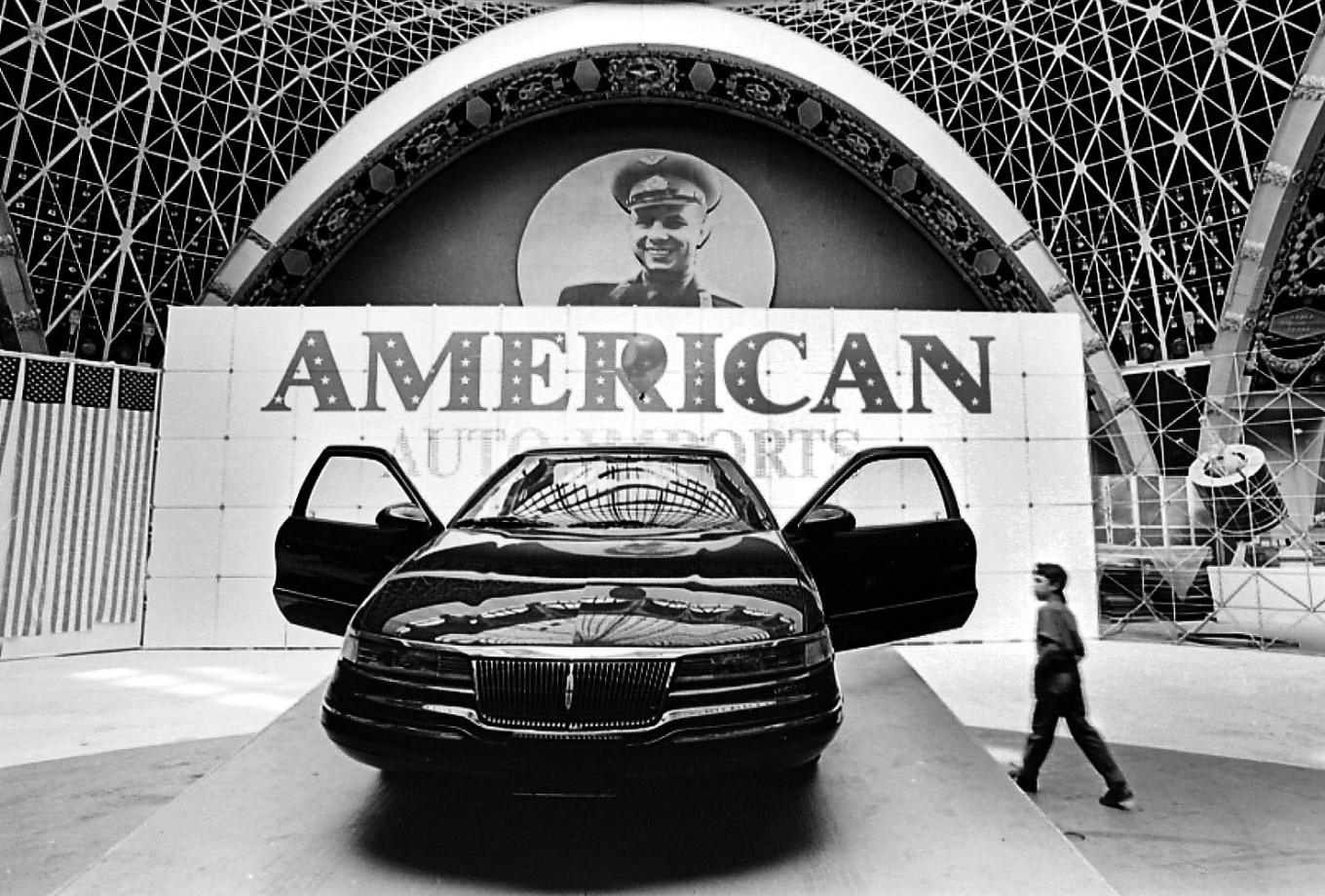
Car dealership in the “Cosmos” pavilion at VDNKh. 1992
Russia’s economy hit its lowest point in 1992 as it struggled to transition away from communism and the Soviet system. State institutions were collapsing and struggling to find their place in the new reality.
That year, the “Cosmos” pavilion at VDNKh, once a showcase of Soviet technological achievement, was converted into a showroom for American cars.
That year, the “Cosmos” pavilion at VDNKh, once a showcase of Soviet technological achievement, was converted into a showroom for American cars.
V.F.
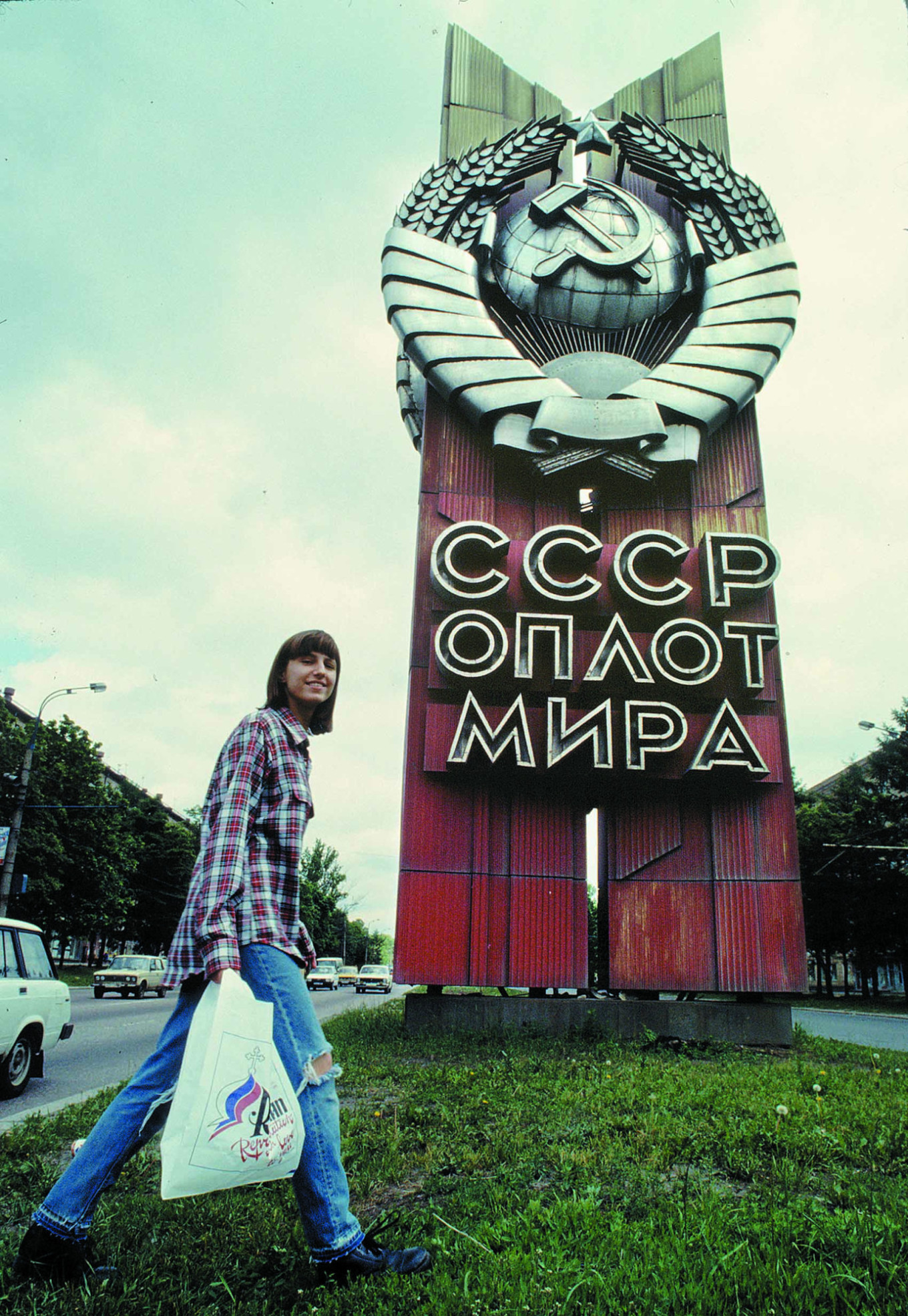
The “USSR: Bastion of Peace” stele. 1992
The “USSR: Bastion of Peace” stele once stood on Lenin Prospekt, one of Moscow’s main avenues.
V.F.
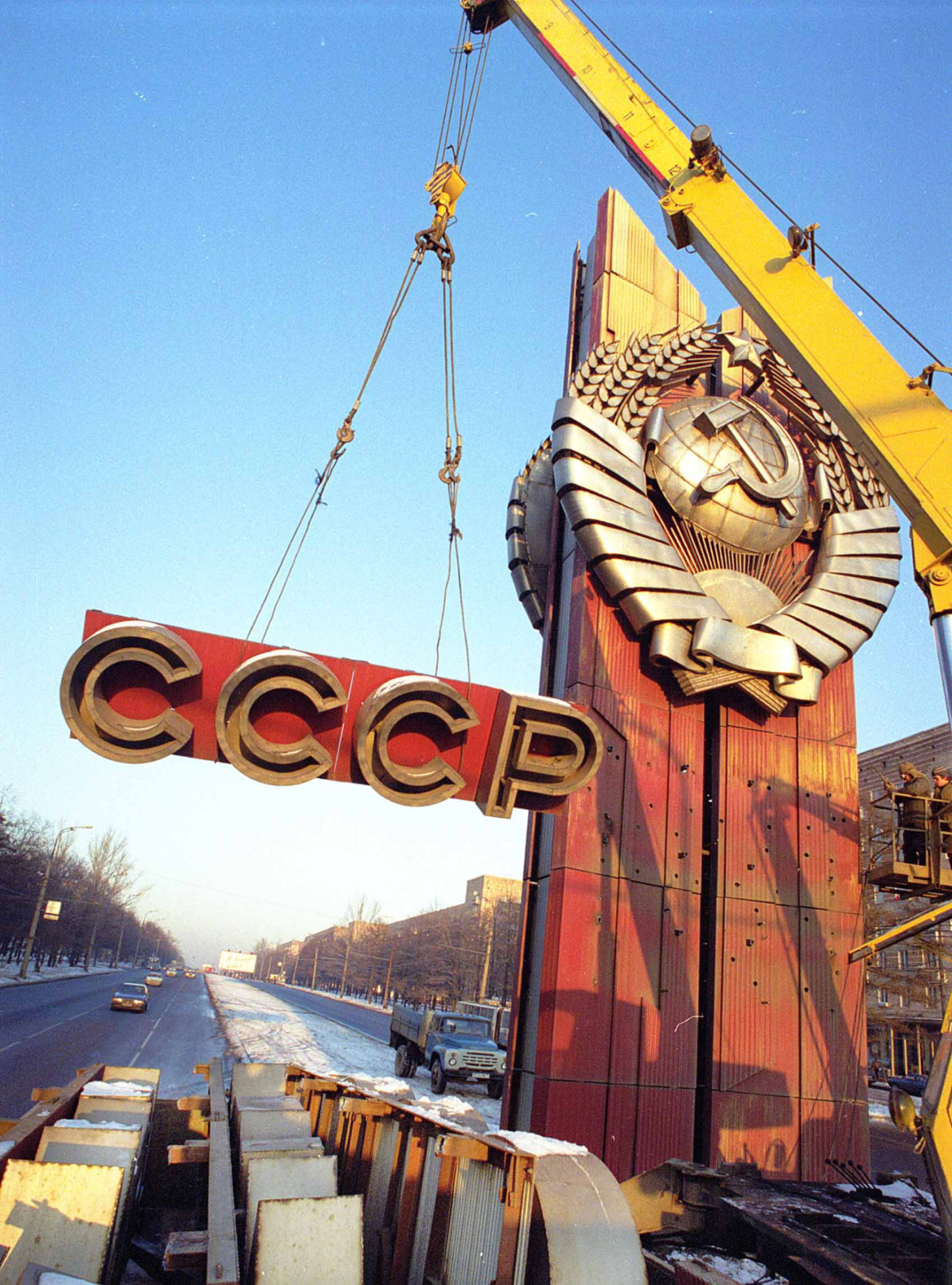
Dismantling of the “USSR: Bastion of Peace” stele. 1993
It was dismantled in the summer of 1993, less than two years after the collapse of the Soviet Union.
V.F.
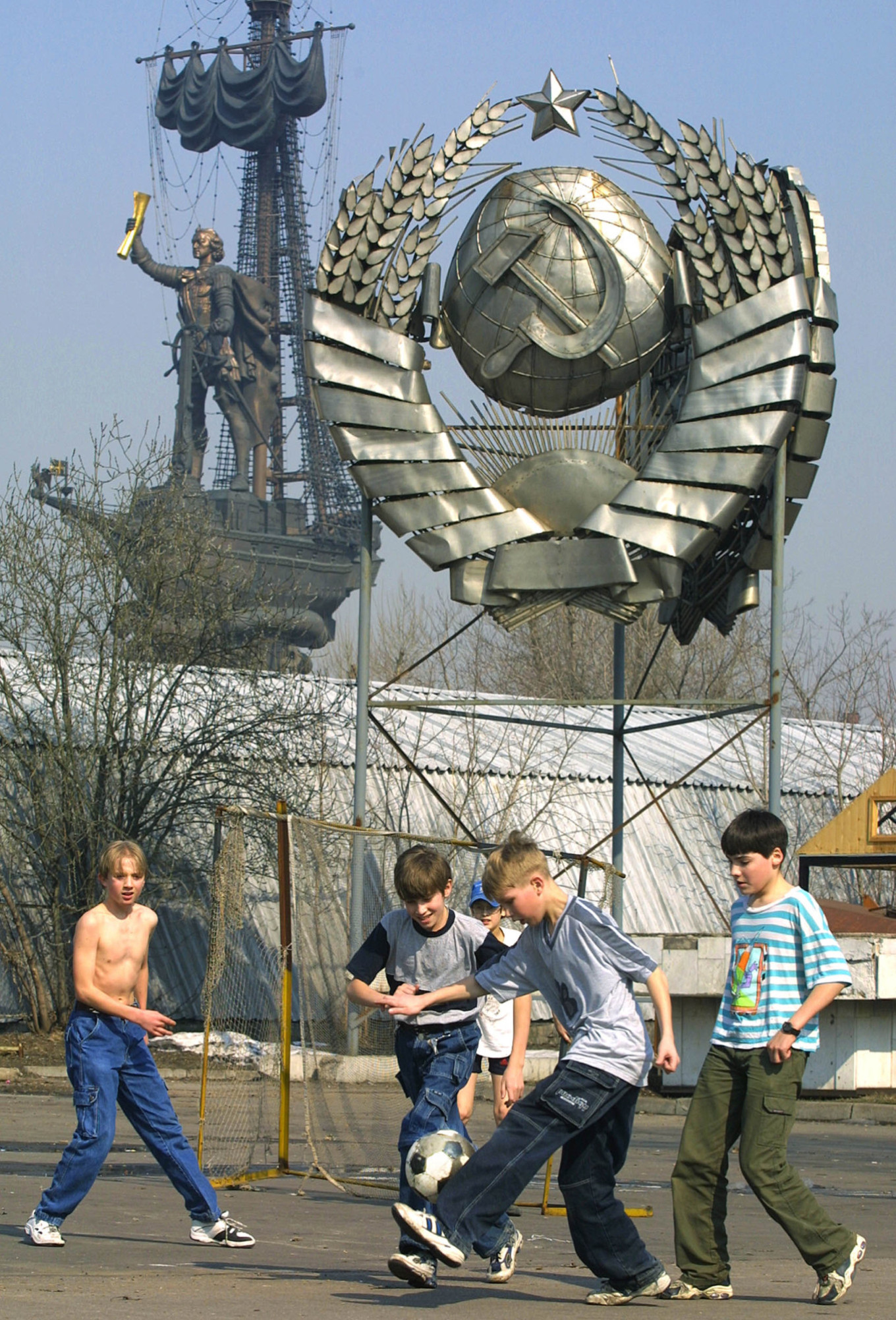
Children playing soccer in the Muzeon Park of Arts in Moscow. 2002
The Soviet coat of arms from the stele was later installed in Muzeon Park alongside other monuments glorifying the Soviet regime.
V.F.
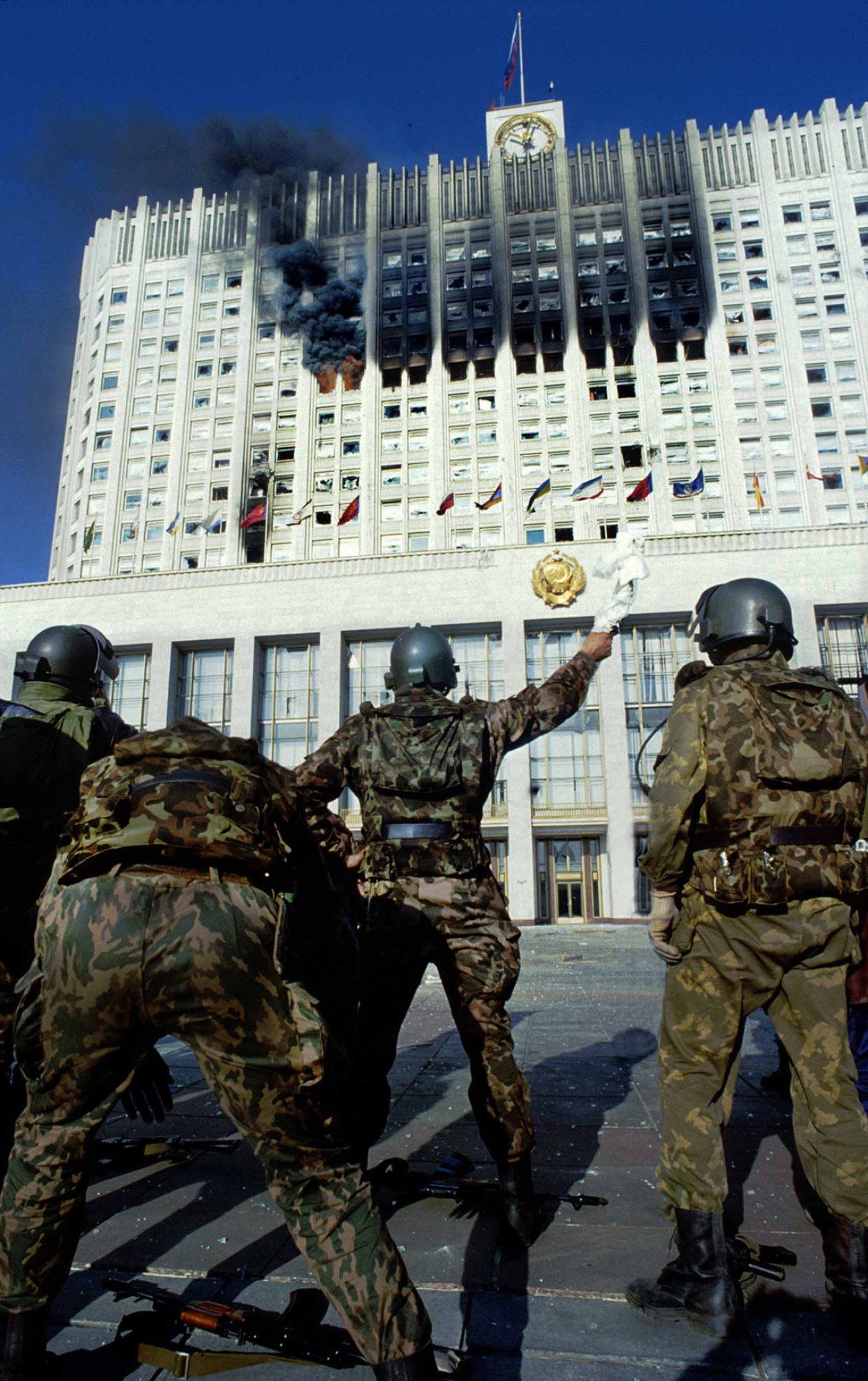
The storming of the Russian parliament building. 1993
The events of October 1993 marked a turning point in modern Russian history. After a spring referendum in which voters backed President Boris Yeltsin, he moved to dissolve the parliament and call early elections. Lawmakers responded by impeaching him.
Thousands of people, some of whom were armed, gathered to defend the parliament. Yeltsin, as commander-in-chief, ordered the military to storm the building. Tanks opened fire before special forces moved in.
All lawmakers had left the building before the assault began, leaving their supporters behind.
Officially, 124 people were killed, but the results of the government investigation were never published. According to surviving witnesses, more than 1,000 people were killed in and around the building.
The crisis ended with the consolidation of presidential power, solidifying Russia’s shift away from a parliamentary system.
Thousands of people, some of whom were armed, gathered to defend the parliament. Yeltsin, as commander-in-chief, ordered the military to storm the building. Tanks opened fire before special forces moved in.
All lawmakers had left the building before the assault began, leaving their supporters behind.
Officially, 124 people were killed, but the results of the government investigation were never published. According to surviving witnesses, more than 1,000 people were killed in and around the building.
The crisis ended with the consolidation of presidential power, solidifying Russia’s shift away from a parliamentary system.
V.F.
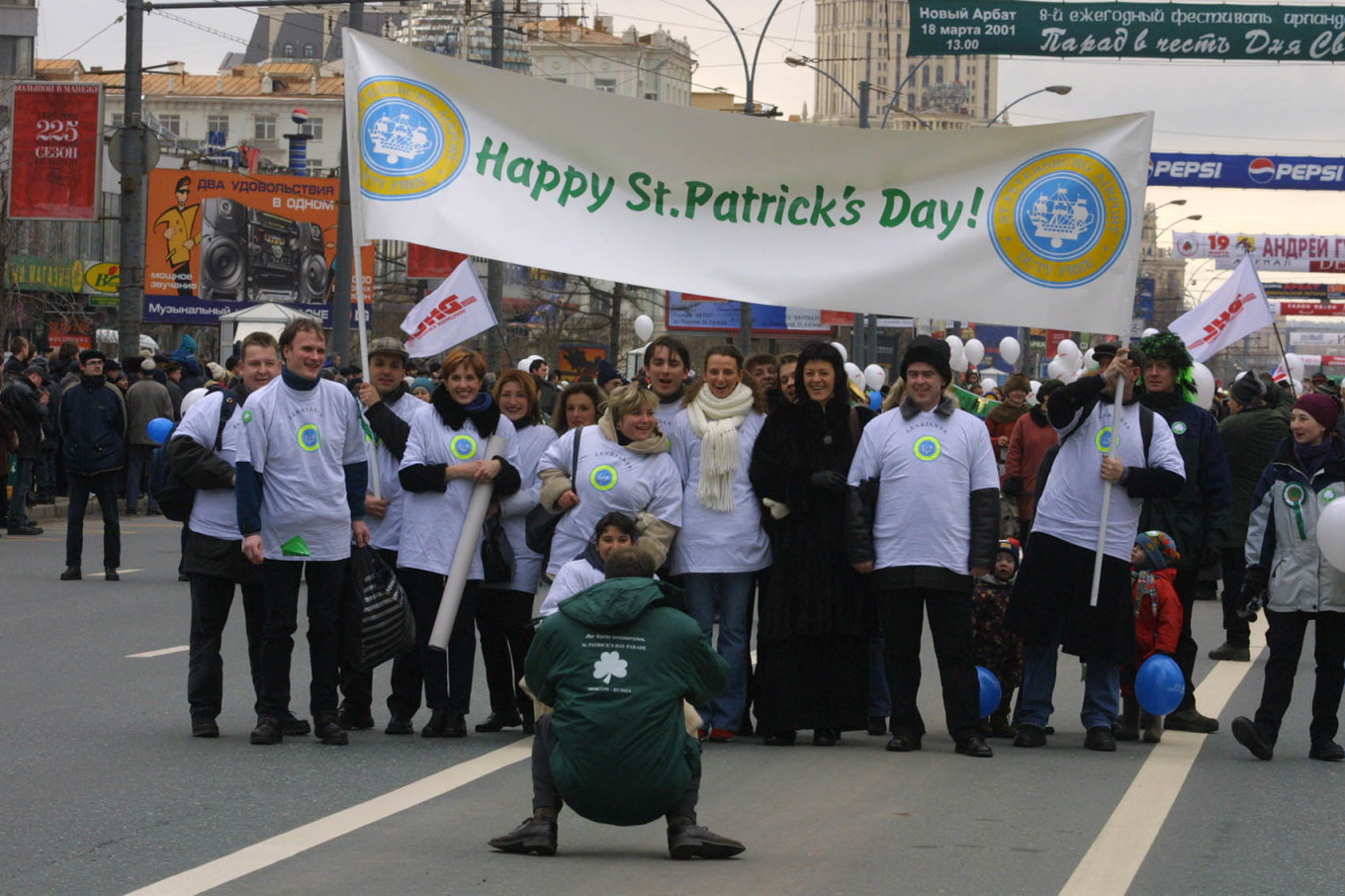
The 8th St. Patrick's Day Festival and Parade in Moscow. 2001
St. Patrick’s Day festivals and parades were held annually in Moscow from 1992, drawing thousands of corporate and individual participants. The last parade took place in 2019.
Huub Golsteijn
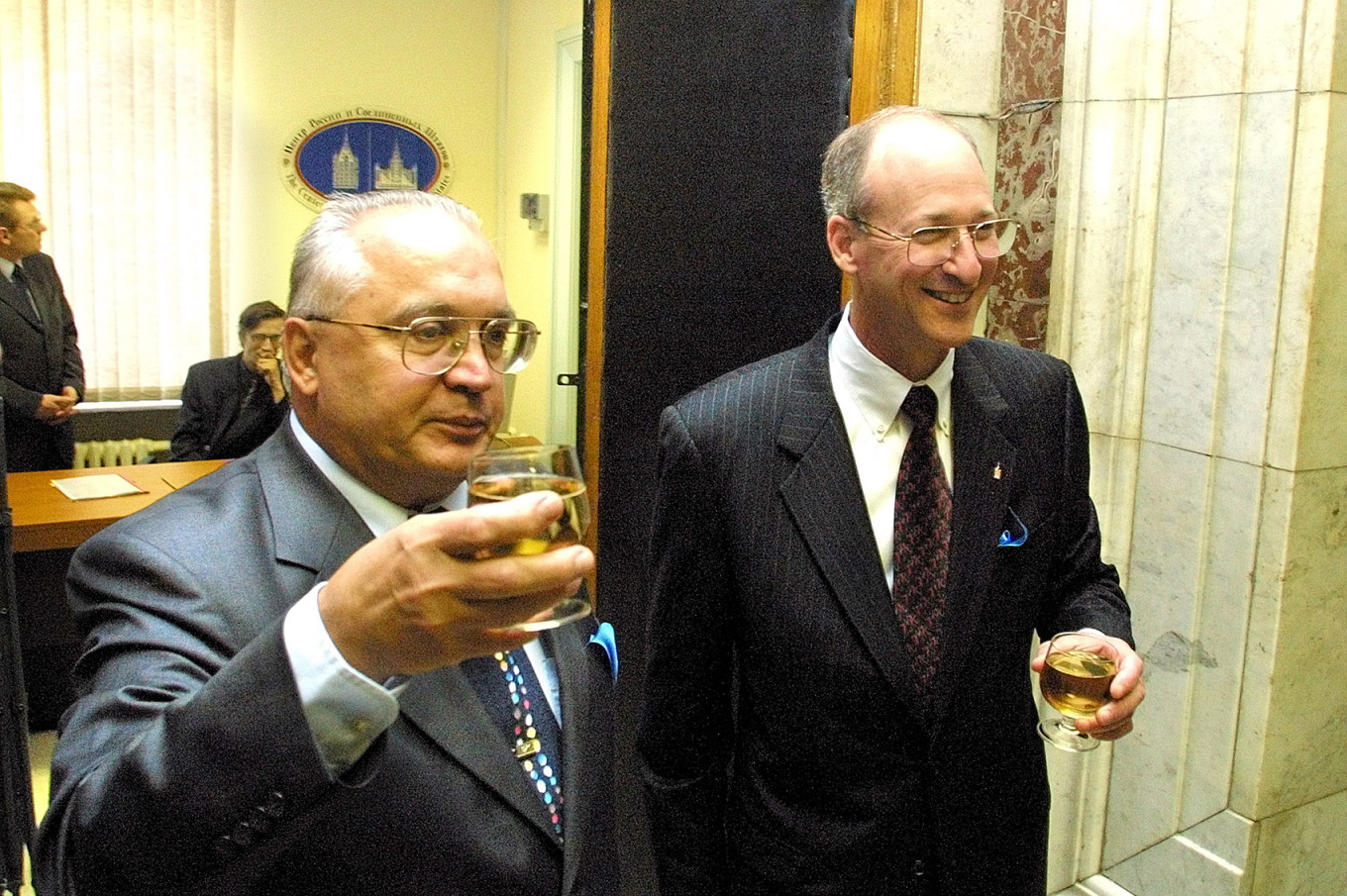
John W. Ryan, Chancellor of the State University of New York, and Viktor Sadovnichy, rector of Moscow State University (left), open the Center for Russia and the United States at MSU. 1999
A native of Ukraine, Viktor Sadovnichy became rector of Moscow State University (MSU), Russia’s largest university, in 1992. He later served as one of Putin’s representatives during the 2012 presidential election.
On March 6, 2022, he signed a statement by the Russian Union of Rectors in support of Russia’s invasion of Ukraine. In 2026, MSU students reported being pressured to sign contracts with the Defense Ministry to take part in the war.
On March 6, 2022, he signed a statement by the Russian Union of Rectors in support of Russia’s invasion of Ukraine. In 2026, MSU students reported being pressured to sign contracts with the Defense Ministry to take part in the war.
Huub Golsteijn
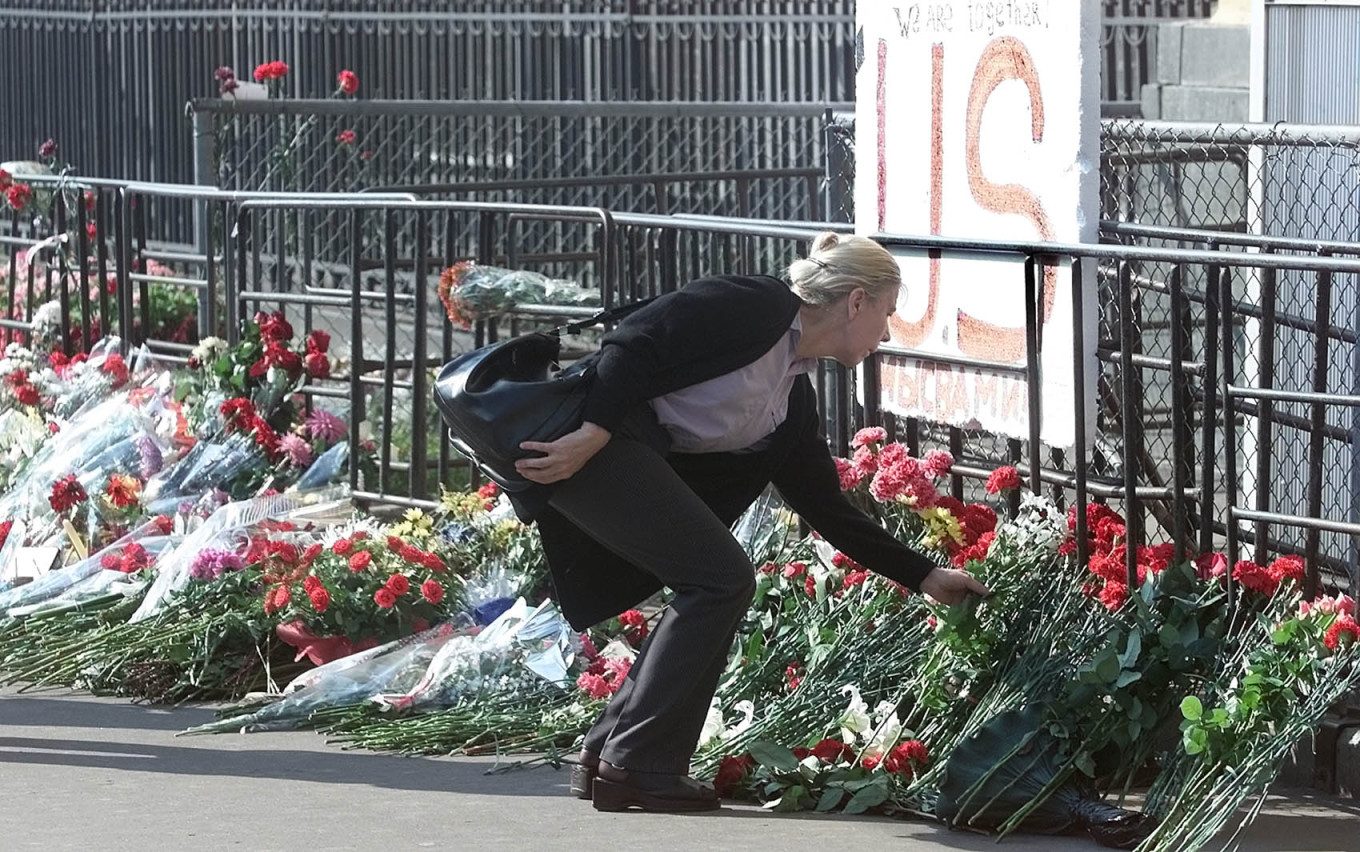
“U.S., We Are Together!” Russians bring flowers to the U.S. Embassy in Moscow the day after 9/11. 2001
According to the Kremlin, Vladimir Putin “was the first head of state to call U.S. President George W. Bush following the barbaric terrorist attacks of September 11 and to express solidarity with the American people.”
In November 2001, Putin flew to New York and went directly from the airport to Ground Zero, the site where the World Trade Center’s Twin Towers once stood.
In November 2001, Putin flew to New York and went directly from the airport to Ground Zero, the site where the World Trade Center’s Twin Towers once stood.
I.T.
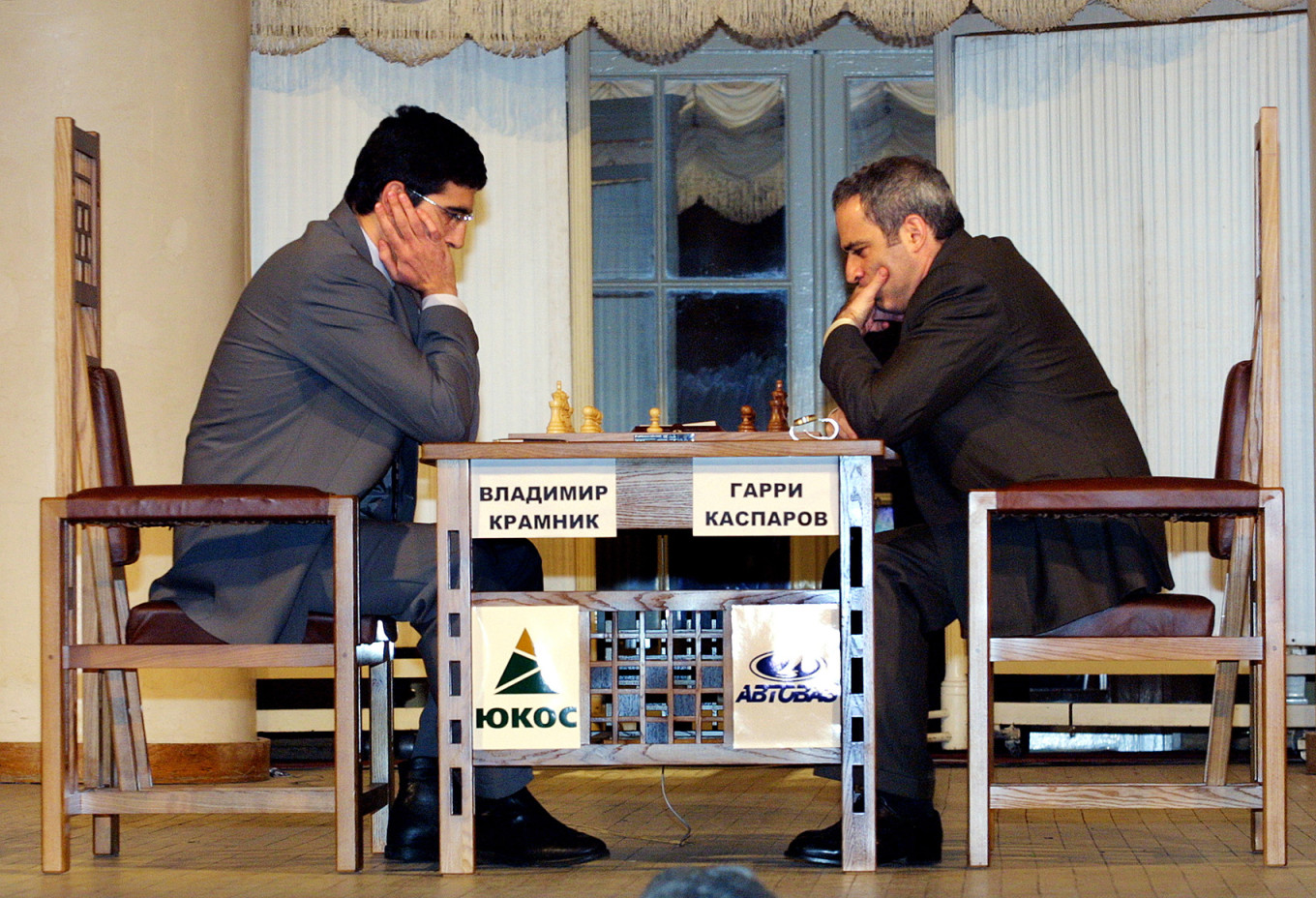
The Supermatch between the 13th and 14th World Chess Champions, Garry Kasparov and Vladimir Kramnik. 2001.
The supermatch was sponsored by oil company Yukos, then one of Russia’s most valuable publicly traded firms, and AvtoVAZ, the country’s largest state-owned car manufacturer.
In 2003, Mikhail Khodorkovsky, Yukos’s main shareholder and Russia’s wealthiest businessman, was arrested on charges of embezzlement and tax evasion and remained in prison until 2013. Yukos was declared bankrupt in 2007, and its core assets were transferred to state-owned Rosneft.
Renault acquired a controlling stake in AvtoVAZ between 2008 and 2016 for 1.9 billion euros, and Russia became Renault’s second-largest market. In 2022, Renault sold its stake in AvtoVAZ to a state entity for one ruble.
Garry Kasparov retired from professional chess in 2005 and later became a prominent political activist. He left Russia in 2013 and is now designated a “foreign agent” and “extremist” there.
Vladimir Kramnik lives privately in Geneva.
In 2003, Mikhail Khodorkovsky, Yukos’s main shareholder and Russia’s wealthiest businessman, was arrested on charges of embezzlement and tax evasion and remained in prison until 2013. Yukos was declared bankrupt in 2007, and its core assets were transferred to state-owned Rosneft.
Renault acquired a controlling stake in AvtoVAZ between 2008 and 2016 for 1.9 billion euros, and Russia became Renault’s second-largest market. In 2022, Renault sold its stake in AvtoVAZ to a state entity for one ruble.
Garry Kasparov retired from professional chess in 2005 and later became a prominent political activist. He left Russia in 2013 and is now designated a “foreign agent” and “extremist” there.
Vladimir Kramnik lives privately in Geneva.
V.F.
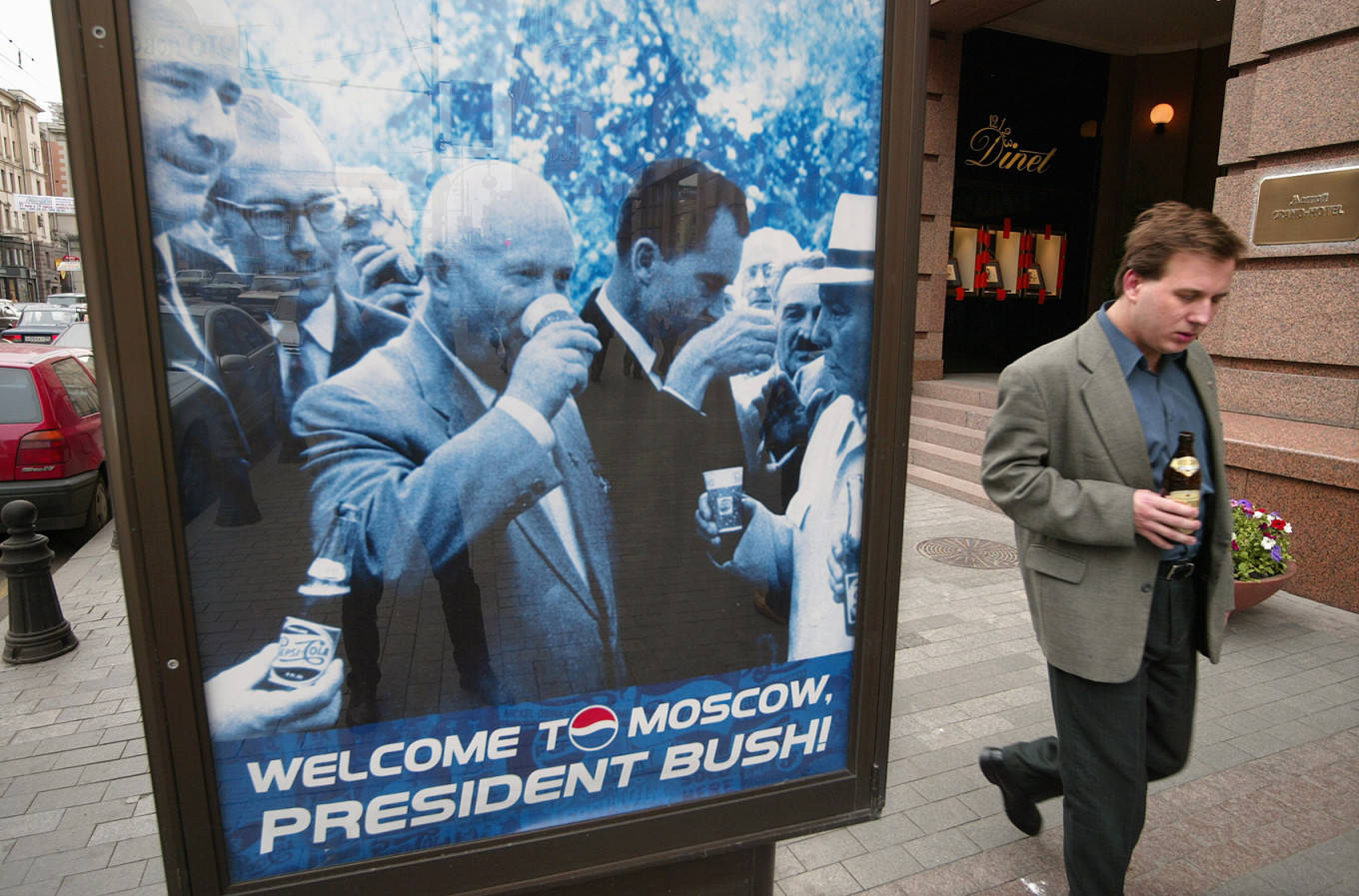
Welcome to Moscow, President Bush. 2002
A Pepsi advertisement commemorating the official visit of U.S. President George W. Bush to Russia. The poster features a 1959 photograph of Soviet leader Nikita Khrushchev and U.S. Vice President Richard Nixon drinking Pepsi at the opening of the American National Exhibition in Moscow’s Sokolniki Park on July 24, 1959.
The exhibition showcased products from more than 450 American companies. Over the course of six weeks, it was visited by some 3 million visitors — even though Moscow’s population at the time was 5 million.
The exhibition showcased products from more than 450 American companies. Over the course of six weeks, it was visited by some 3 million visitors — even though Moscow’s population at the time was 5 million.
I.T.
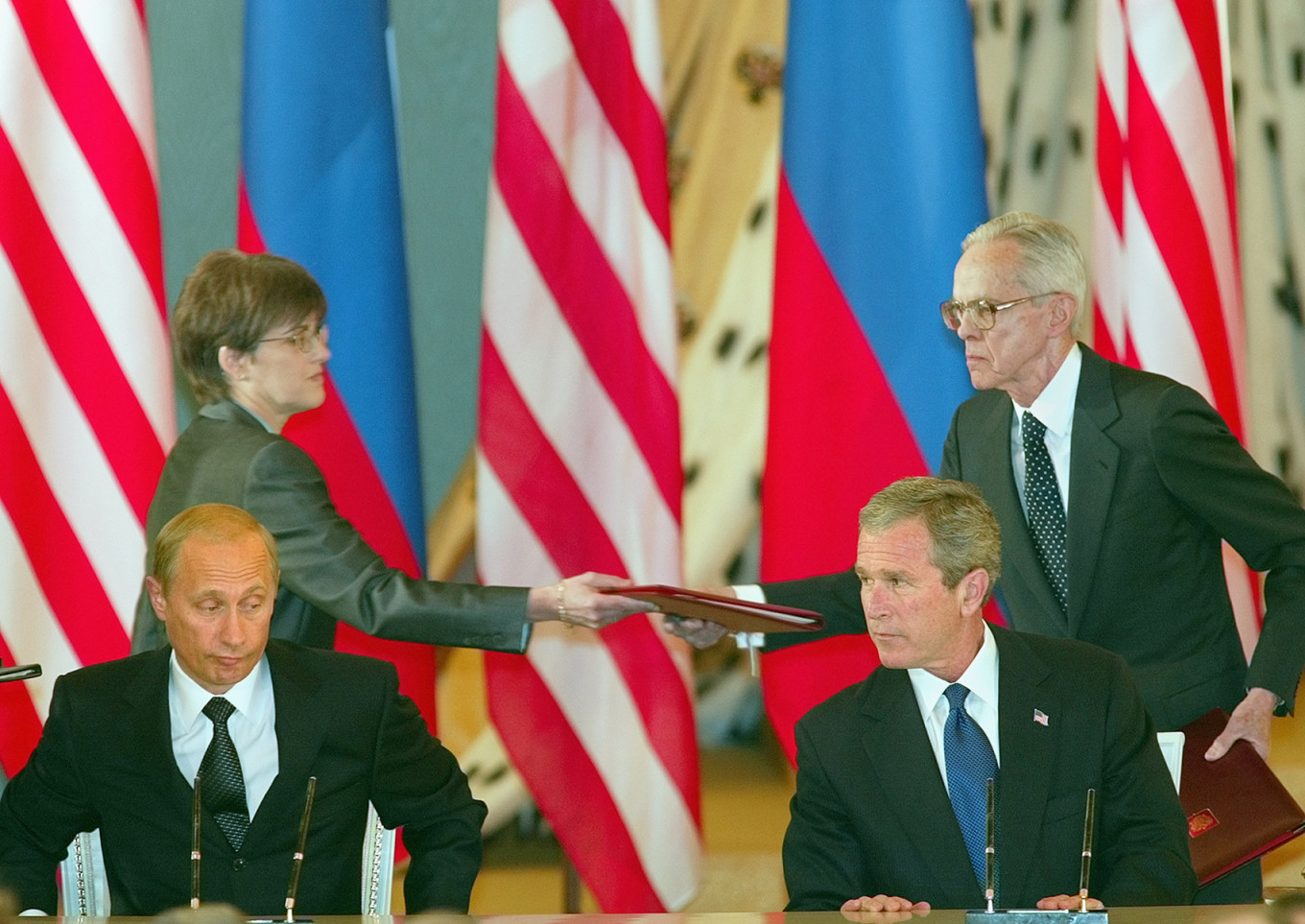
Russian President Vladimir Putin and U.S. President George W. Bush sign the Strategic Offensive Reductions Treaty (Treaty of Moscow). 2002
The three-page Treaty of Moscow was signed in the Kremlin on May 24, 2002, to reduce nuclear arsenals and, as Bush put it, close “a long chapter of confrontation.”
Putin described the visit as “fundamentally different from all previous visits by U.S. heads of state,” emphasizing the goal of establishing “a completely new quality of relations” between Russia and the U.S.
Putin described the visit as “fundamentally different from all previous visits by U.S. heads of state,” emphasizing the goal of establishing “a completely new quality of relations” between Russia and the U.S.
I.T.
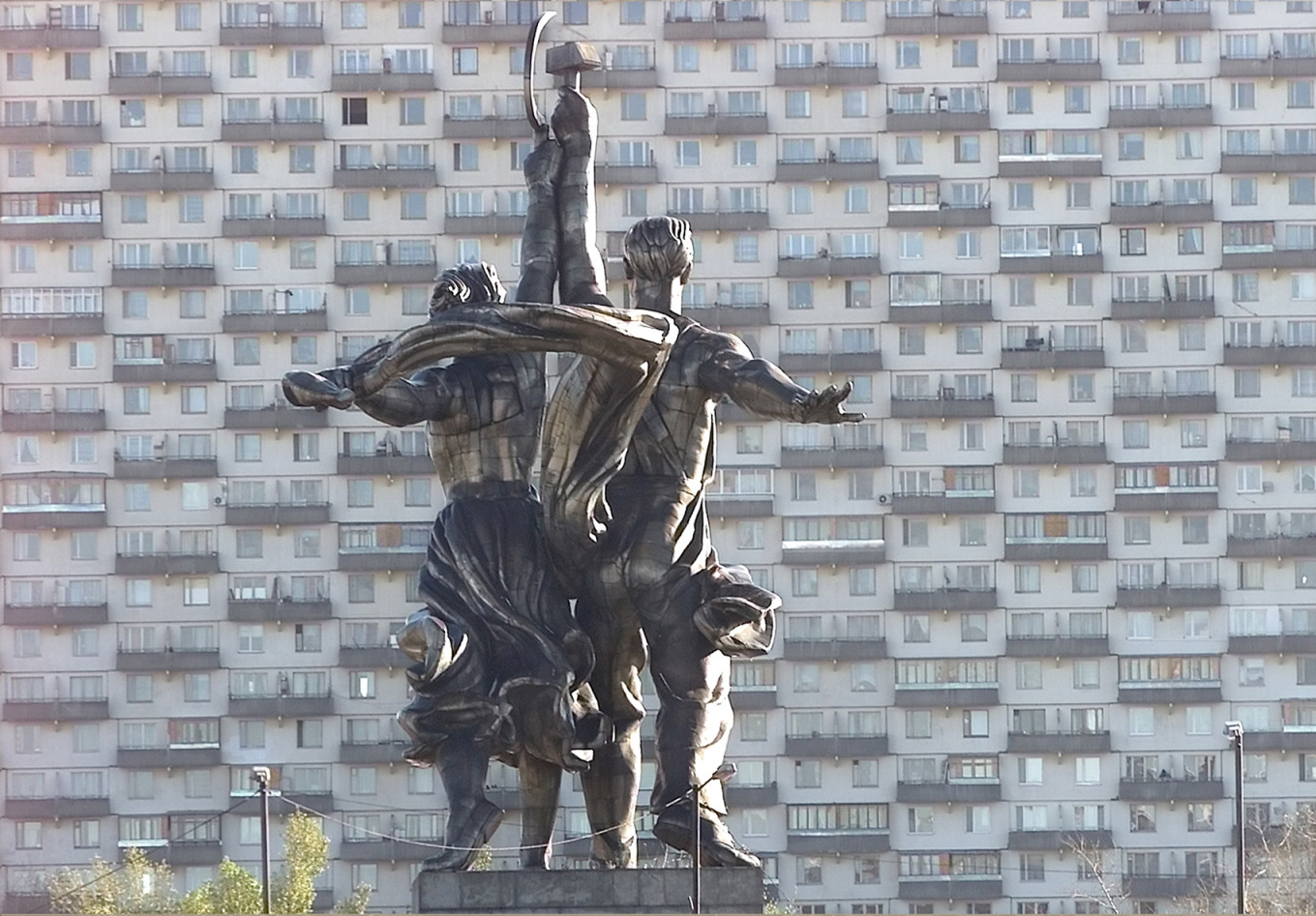
Worker and Kolkhoz Woman. 2001
The 23.5-meter stainless steel sculpture by Vera Mukhina was created for the 1937 World’s Fair in Paris and later relocated to Moscow.
Originally mounted atop a 34-meter-high Soviet pavilion in Paris, it was later placed on a 10-meter-high pedestal in Moscow, which Mukhina called a “stump.” Nevertheless, “Worker and Kolkhoz Woman” became one of the best-known symbols of the Soviet Union.
In 2009, the restored sculpture was installed on a new 34.5-meter pedestal.
Originally mounted atop a 34-meter-high Soviet pavilion in Paris, it was later placed on a 10-meter-high pedestal in Moscow, which Mukhina called a “stump.” Nevertheless, “Worker and Kolkhoz Woman” became one of the best-known symbols of the Soviet Union.
In 2009, the restored sculpture was installed on a new 34.5-meter pedestal.
I.T.