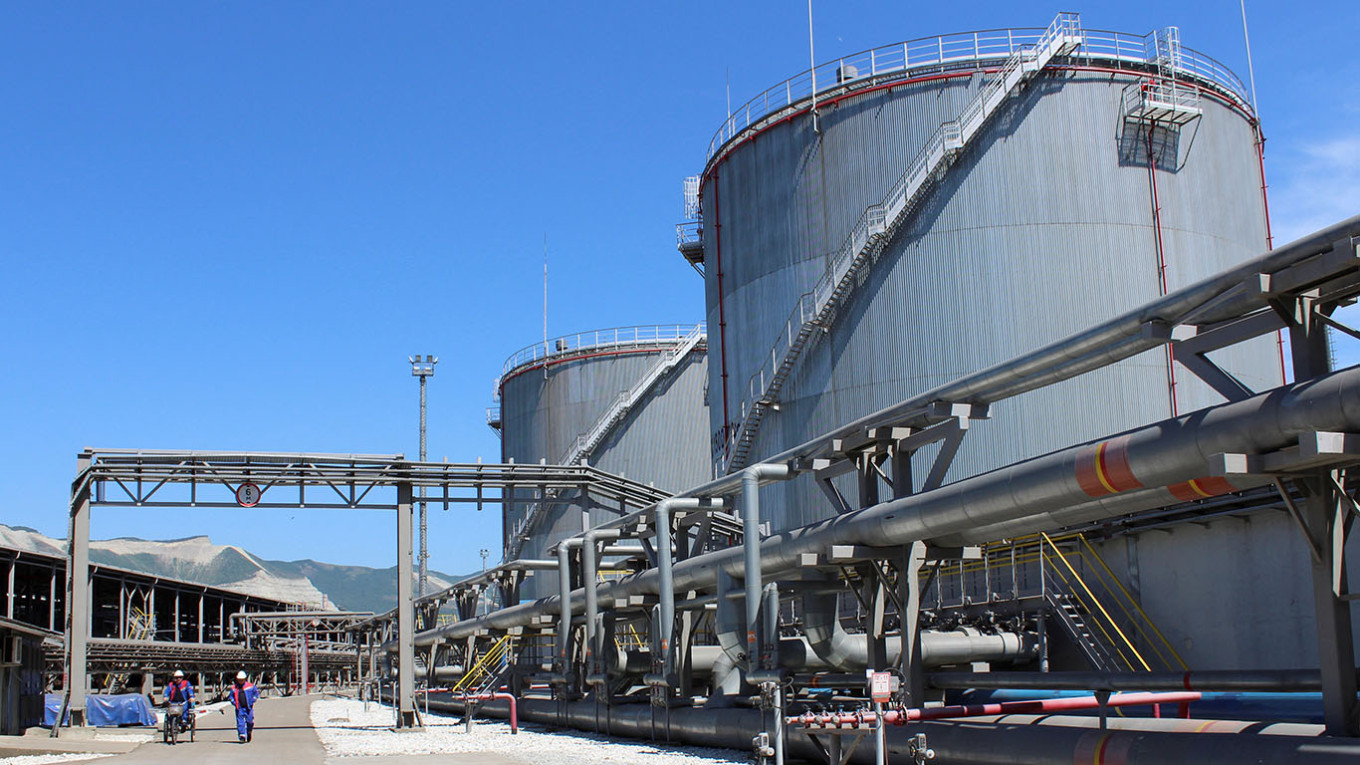
Kazakhstan has reduced crude oil production following drone strikes on commercial tankers at the Caspian Pipeline Consortium (CPC) terminal off Russia’s Black Sea coast, the country’s energy ministry announced Thursday.
“Oil firms adjusted their daily output, causing a temporary drop in production volumes,” the ministry said in a statement.
Kazakh officials described the reduction as a “purely technical” decision made to prevent storage tanks from overflowing after CPC restricted incoming oil shipments. Industry sources told Reuters this week that oil reservoirs at the terminal had reached capacity.
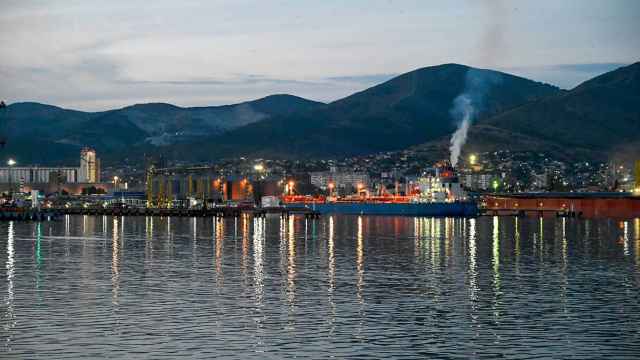
CPC suspended oil loadings at the Black Sea port on Monday following drone strikes on tanker ships. Russia accused Ukraine of targeting the vessels to disrupt global oil markets. Officials in Kyiv have not commented on the attacks.
Reuters reported that at least five tankers have been attacked at the CPC terminal so far in July.
Neither CPC nor Kazakh officials have publicly named those responsible for the strikes. Kazakhstan’s foreign ministry condemned the attacks in a statement on Sunday.
Kazakhstan’s energy ministry said loadings at the CPC have been suspended “to ensure the safety of ships, their crews and the environment in the Black Sea.”
It added that the CPC’s production and technical facilities were “fully intact and operational” and would resume “as soon as conditions normalize.” It did not specify how much oil output was cut or when CPC planned to resume loading operations.
The CPC is a 1,510-kilometer (940-mile) oil pipeline connecting Kazakhstan’s Caspian Sea oil deposits with Russia’s Black Sea port of Novorossiysk. Oil loaded at Novorossiysk is then exported by tankers.
CPC, a joint venture with Chevron and ExxonMobil among its shareholders, accounts for about 80% of Kazakhstan’s oil exports.
Reuters contributed reporting.
A Message from The Moscow Times:
Dear readers,
We are facing unprecedented challenges. Russia's Prosecutor General's Office has designated The Moscow Times as an "undesirable" organization, criminalizing our work and putting our staff at risk of prosecution. This follows our earlier unjust labeling as a "foreign agent."
These actions are direct attempts to silence independent journalism in Russia. The authorities claim our work "discredits the decisions of the Russian leadership." We see things differently: we strive to provide accurate, unbiased reporting on Russia.
We, the journalists of The Moscow Times, refuse to be silenced. But to continue our work, we need your help.
Your support, no matter how small, makes a world of difference. If you can, please support us monthly starting from just $2. It's quick to set up, and every contribution makes a significant impact.
By supporting The Moscow Times, you're defending open, independent journalism in the face of repression. Thank you for standing with us.

Remind me later.