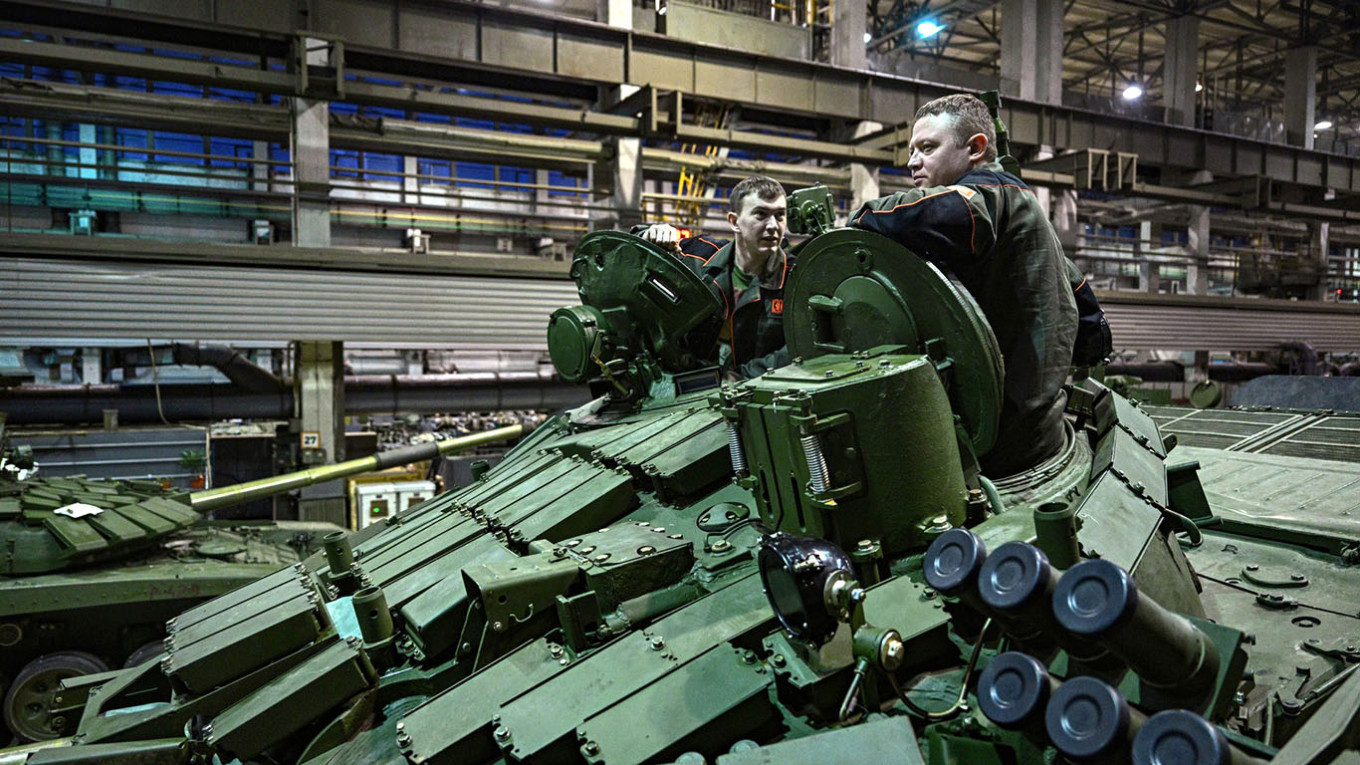
Russia's wartime defense manufacturing surge is nearing its limit, Industry and Trade Minister Anton Alikhanov said Tuesday, signaling that one of the country's main economic growth engines is beginning to lose momentum.
"The defense industry as the locomotive of industrial growth will soon reach its maximum output and a high base and will no longer provide the substantial boost to manufacturing growth that it did previously," Alikhanov said, according to Interfax.
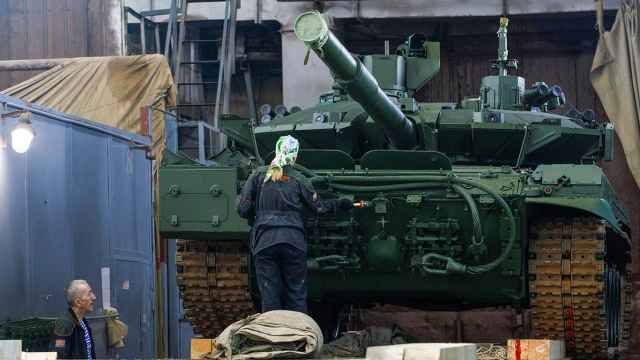
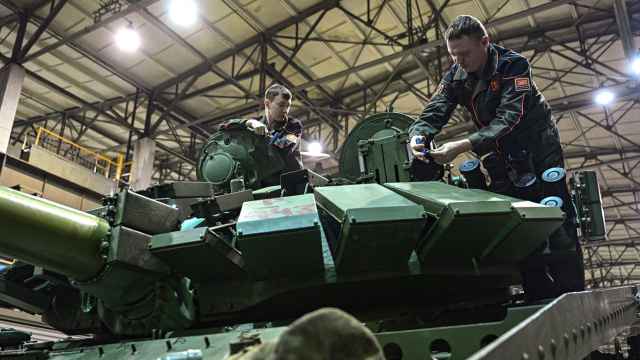
Manufacturing, led by the defense-industrial complex, has been one of the main drivers of Russia's wartime economy. After it became clear that the conflict would be prolonged, the government sharply increased military spending and expanded defense procurement.
Russia spent between 3 trillion and 3.6 trillion rubles ($39.3 billion-$47.2 billion) annually on "national defense" between 2019 and 2021.
This year's budget allocates 12.1 trillion rubles ($158.5 billion), though that figure is likely to increase after Finance Minister Anton Siluanov warned that both government spending and the budget deficit would exceed planned levels.
To meet the surge in state defense orders, Russia's largely state-owned defense industry significantly raised wages, prompting companies in other sectors to increase pay to compete for workers, Andrei Yakovlev, a visiting researcher at the Davis Center, has previously noted.
As a result, output in the three industrial categories that include most defense production — "other transport equipment," "computers, electronic and optical products," and "fabricated metal products" — nearly doubled between 2023 and 2025, according to Russia's state statistics agency Rosstat.
Production is still increasing, though at a slower pace. During the first five months of 2026, output of "other transport equipment" rose 23.3% year on year, fabricated metal products increased 12.6% and electronic and optical products grew just 2.1%, Rosstat data showed. In some months, the statistics agency recorded year-on-year declines in individual defense-related sectors.
Analysts have questioned how long Russia can sustain this level of expansion.
Researchers at the think tank Chatham House concluded last year that Russia's defense industry was deteriorating despite massive state investment.
They argued that the sector has struggled to develop technologically advanced new weapons systems, that import substitution has largely failed and that manufacturers remain heavily dependent on foreign suppliers while relying on Soviet-era technologies. They also predicted Russia would eventually have to simplify and slow military production while accepting a decline in product quality.
Outside the defense sector, industrial production has largely stagnated or contracted, with a handful of exceptions such as pharmaceuticals.
The Center for Macroeconomic Analysis and Short-Term Forecasting (CMAKP), a research center with close ties to the Russian authorities, has repeatedly reported that industrial output excluding sectors with significant defense production has been broadly stagnant since mid-2023 and has been declining since the second half of 2024.
Most civilian manufacturing sectors are either stagnating or shrinking, it has said in successive reports.
The Institute of Economic Forecasting at the Russian Academy of Sciences has also highlighted the widening gap between civilian and defense industries.
It said that almost all of Russia's 1.3% industrial growth last year came from just four sectors: pharmaceuticals and the three defense-related manufacturing categories.
During the first quarter of 2026, it identified only two rapidly expanding industries — other transport equipment and pharmaceuticals — while output declined year on year in 19 other sectors.
Alikhanov said another factor that had supported industrial growth over the past two years — import substitution and the replacement of Western companies that left Russia after the invasion of Ukraine — was fading.
"We have already used part of the momentum created by the sanctions-related restructuring and the departure of foreign companies from the Russian market in the interests of industry," he said.
As a result, overall industrial production growth slowed to just 0.4% in the first five months of the year, according to official data.
Read this article in Russian at The Moscow Times' Russian service.
A Message from The Moscow Times:
Dear readers,
We are facing unprecedented challenges. Russia's Prosecutor General's Office has designated The Moscow Times as an "undesirable" organization, criminalizing our work and putting our staff at risk of prosecution. This follows our earlier unjust labeling as a "foreign agent."
These actions are direct attempts to silence independent journalism in Russia. The authorities claim our work "discredits the decisions of the Russian leadership." We see things differently: we strive to provide accurate, unbiased reporting on Russia.
We, the journalists of The Moscow Times, refuse to be silenced. But to continue our work, we need your help.
Your support, no matter how small, makes a world of difference. If you can, please support us monthly starting from just $2. It's quick to set up, and every contribution makes a significant impact.
By supporting The Moscow Times, you're defending open, independent journalism in the face of repression. Thank you for standing with us.

Remind me later.