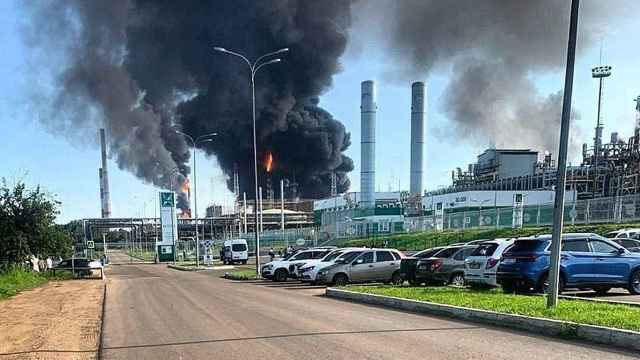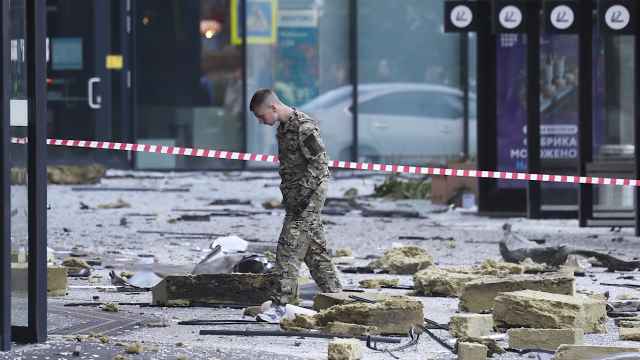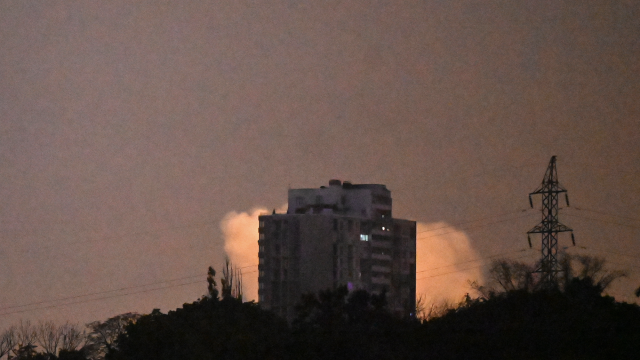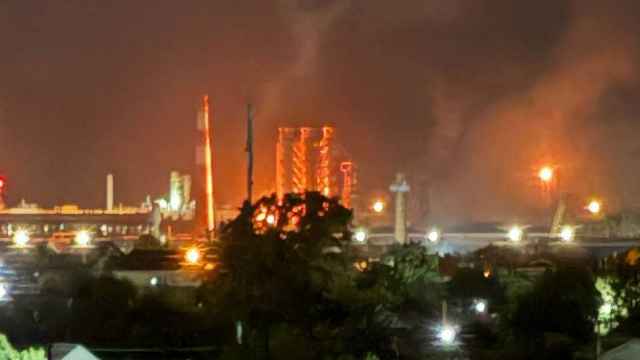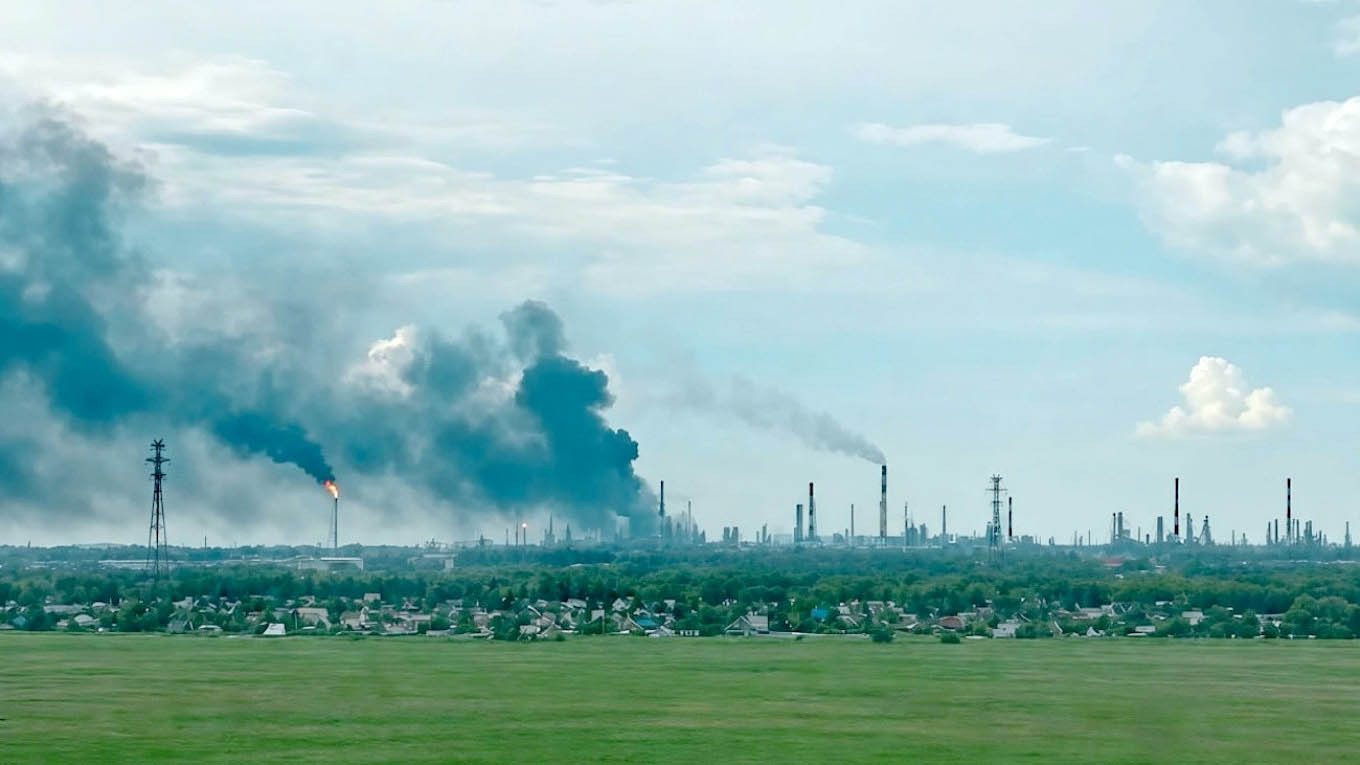
The Ukrainian military said Monday that its drones struck Russia’s largest oil refinery in the western Siberian region of Omsk, marking one of the deepest attacks on Russian territory since the full-scale invasion of Ukraine.
The Gazprom Neft-operated refinery is located on the northern outskirts of the city of Omsk, around 2,500 kilometers (1,550 miles) from the border with Ukraine. NASA satellites recorded multiple fire hotspots at the facility on Monday evening.
“An impact with subsequent fire was recorded on the territory [of the refinery]. The extent of the damage is being verified,” Ukraine’s General Staff said in a statement on Facebook. “This is the last of the 11 largest gasoline producers in Russia that have been hit.”
Omsk region Governor Vitaly Khotsenko confirmed that “several drones” had broken through layers of Russian air defense and attacked the refinery. Without specifying what, if anything, was damaged, Khotsenko said that emergency services were dispatched to the facility.
The strikes mark the first time the Omsk region has come under a Ukrainian drone attack since the 2022 invasion.
Sources told Reuters that the Omsk refinery processed around 23 million metric tons of oil last year.
Meanwhile, Ukraine’s HUR military intelligence agency said Monday that it carried out a deep-strike operation that hit one of Russia’s five largest refineries, the Slavneft-Yanos refinery in the Yaroslavl region, some 700 kilometers (435 miles) from the border with Ukraine.
Ukraine’s General Staff said in a separate statement that it documented “explosions and smoke” at the refinery.
In northwestern Russia’s Leningrad region, Ukraine said it struck the Novatek natural gas producer’s Ust-Luga complex on the Baltic Sea and the deployment point of a Russian missile brigade.
Ukrainian forces said they also carried out multiple attacks in Russian-controlled parts of Ukraine, including one of annexed Crimea’s largest petroleum storage and shipment facilities in the port city of Kerch, as well as a key transport corridor and a drone warehouse in the occupied Luhansk region.
A Message from The Moscow Times:
Dear readers,
We are facing unprecedented challenges. Russia's Prosecutor General's Office has designated The Moscow Times as an "undesirable" organization, criminalizing our work and putting our staff at risk of prosecution. This follows our earlier unjust labeling as a "foreign agent."
These actions are direct attempts to silence independent journalism in Russia. The authorities claim our work "discredits the decisions of the Russian leadership." We see things differently: we strive to provide accurate, unbiased reporting on Russia.
We, the journalists of The Moscow Times, refuse to be silenced. But to continue our work, we need your help.
Your support, no matter how small, makes a world of difference. If you can, please support us monthly starting from just $2. It's quick to set up, and every contribution makes a significant impact.
By supporting The Moscow Times, you're defending open, independent journalism in the face of repression. Thank you for standing with us.

Remind me later.