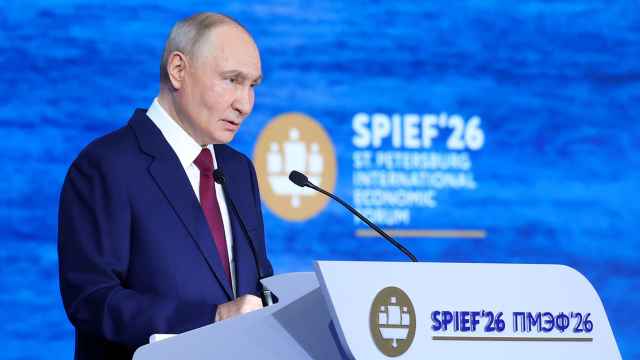

Western coverage mocked the foreign guest list at the 2026 St. Petersburg International Economic Forum, laughing at how low Russia had sunk, and moved on. Compare the conspiracists and convicted criminals with the world leaders who once attended and the story of the decline of “Putin’s Davos” writes itself.
That story is true. But the freak show distracts from the real work that is happening behind the scenes, where the global far-right gets to meet and exchange ideas with Russia at the center of it all.
The story practically wrote itself. The forum that once hosted Angela Merkel and Xi Jinping now attracts a guest list that resembles a casting call for a straight-to-streaming movie about a washed-up superpower. The presidents who once treated St. Petersburg as a serious diplomatic stop are gone. This year, the most prominent foreign heads of state came from Uzbekistan and Tanzania, alongside delegations from the Taliban and North Korea.
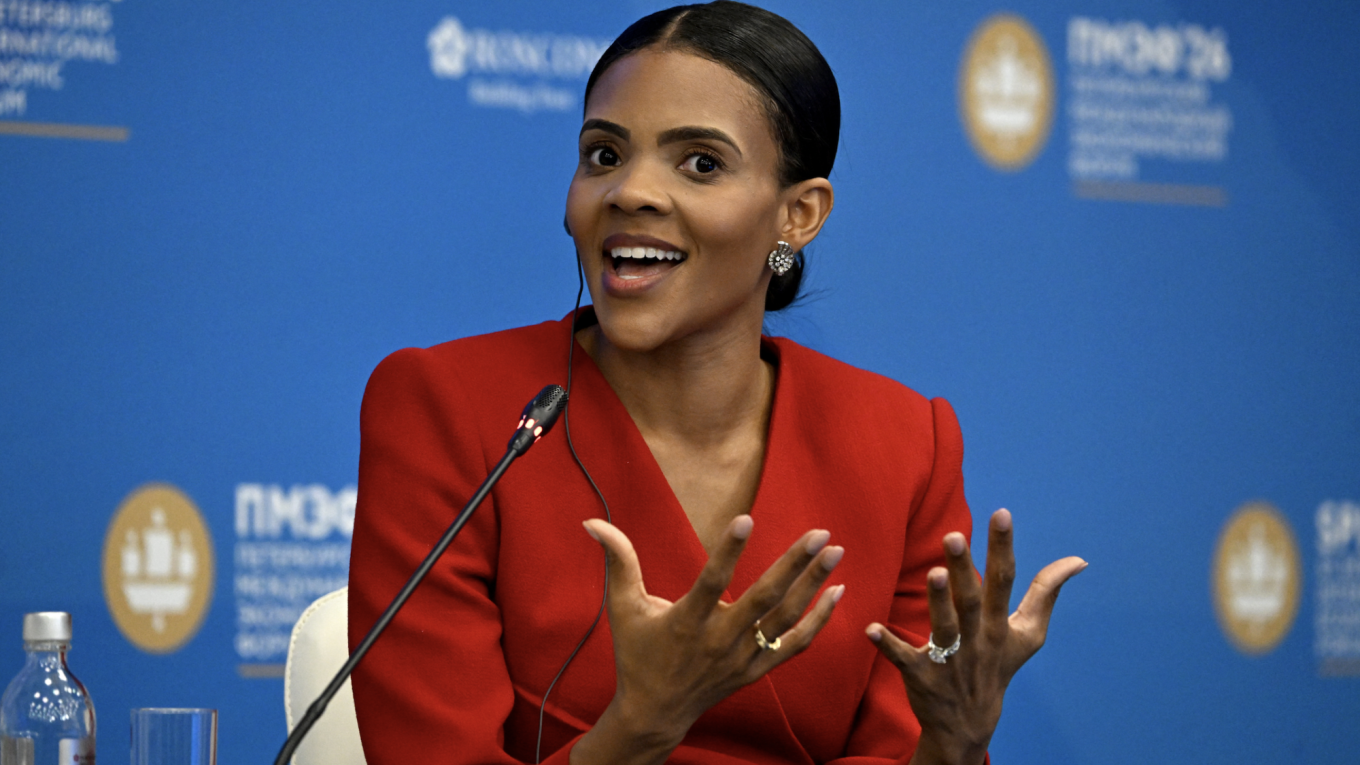
Far-right American commentator Candace Owens, who built part of her following by claiming that France's first lady was born a man, toured Moscow as part of a “family vacation.” American actor Steven Seagal, who received his Russian citizenship directly from President Vladimir Putin and now serves as the Russian Foreign Ministry's special representative for humanitarian ties with the United States and Japan, used the forum to call for renewed friendship between Moscow and Washington. Former U.S. Marine intelligence officer Scott Ritter who was convicted in a child sex offense sting operation and now works as a regular contributor to RT.
At the same time, beyond the conference, Andrew and Tristan Tate, social media influencers who face human trafficking charges in Romania and rape charges in Britain. They were welcomed to Moscow with bread and salt, the traditional Russian ceremony reserved for honored guests.
The only United States official to attend was Rodney Mims Cook Jr., chair of the U.S. Commission of Fine Arts, who wanted everyone to see his home in Atlanta: a wooden lodge built in the Russian style, which he calls his dacha. He spoke warmly about a Russian architect he has mentored for years, describing him as a surrogate son, a Russian brother.
Cook is the clearest example of what the forum is really doing. Russian state media presented him as part of the first official American delegation to attend in nearly a decade, though Washington denied sending one. But whether or not it was official, Moscow had what it needed: a real American official on a Russian stage, praising Russian culture. Official enough to display, unofficial enough to disown.
The other political attendees included members of Alternative for Germany — a party polling near the top of German politics and currently challenging its legal designation as a right-wing extremist group — alongside sitting members of the European Parliament. Their own party leaders had quietly distanced themselves; they came anyway.
This is what the forum increasingly offers: not influence in the old sense, but access — to Russian officials and like-minded politicians from across Europe and America. That network is built on two assumptions: that Russia's isolation will not last forever and that the people in that network will matter more tomorrow than they do today.
None of this requires Putin to persuade anyone. The guests did not come to be converted. They came to meet one another, exchange contacts, compare notes and carry home a simple message: Russia is open, its isolation is ending and the window to take advantage of the business opportunities might be closing. And they leave knowing that a nuclear power treats their ideas not as fringe opinions but as matters of state policy.
That is the real draw. The provocateurs and conspiracy theorists international observers laugh at find themselves taken seriously in Russia — flattered, courted, made to feel they matter. The spectacle is the cover for that validation.
And yet, for all the courting, notice what Russia itself brings to the table. Listen to what the guests actually came to say. Owens told a panel on family values that East and West are fighting the same cultural battle and had arrived in Russia only to discover that "we are all the same."
She was more correct than she knew. There is very little in today's Russian message that is distinctly Russian. The anti-woke politics, the anti-migrant rhetoric, the vaccine scepticism, the panic about Western decline — none of it originated here. They are grievances imported from Western culture wars, repackaged in Russia and reflected back to the audiences they came from.
You could see the same logic on display at the forum: a planned village near Nizhny Novgorod for Western families fleeing the woke West under Russia's "shared values" visa, the anti-woke residency scheme Putin created in 2024. But the number of people who have made the leap was just over 2,000 by the end of 2025, according to Moscow’s own figures. The village, like the forum around it, is a story rather than a destination.
This is the change that matters most, hiding in plain sight behind the spectacle. The U.S.S.R. exported the image of a forward-looking country, which the world debated until its collapse. Contemporary Russia has no idea of its own left to export. What it offers instead is a mirror to the conspiracists of the world — a room in which people who share the same grievances can gather, recognise themselves in one another, and leave feeling larger than they are.
None of which means the forum is what it once was. The smoke over the river, the war, the narrowing circle of guest speakers. The executives who once flew in from Silicon Valley and global boardrooms are gone. Russia's grand gathering now spends as much energy disguising its isolation as breaking it.
And yet the network it convenes is real. So is the validation it gives out for its grievances.
These days, that is the only thing Russia has left to offer — and, increasingly, the only thing the far-right still travels there to collect. The guest list and spectacle are easy to laugh at. The rest is harder.
A Message from The Moscow Times:
Dear readers,
We are facing unprecedented challenges. Russia's Prosecutor General's Office has designated The Moscow Times as an "undesirable" organization, criminalizing our work and putting our staff at risk of prosecution. This follows our earlier unjust labeling as a "foreign agent."
These actions are direct attempts to silence independent journalism in Russia. The authorities claim our work "discredits the decisions of the Russian leadership." We see things differently: we strive to provide accurate, unbiased reporting on Russia.
We, the journalists of The Moscow Times, refuse to be silenced. But to continue our work, we need your help.
Your support, no matter how small, makes a world of difference. If you can, please support us monthly starting from just $2. It's quick to set up, and every contribution makes a significant impact.
By supporting The Moscow Times, you're defending open, independent journalism in the face of repression. Thank you for standing with us.

Remind me later.