
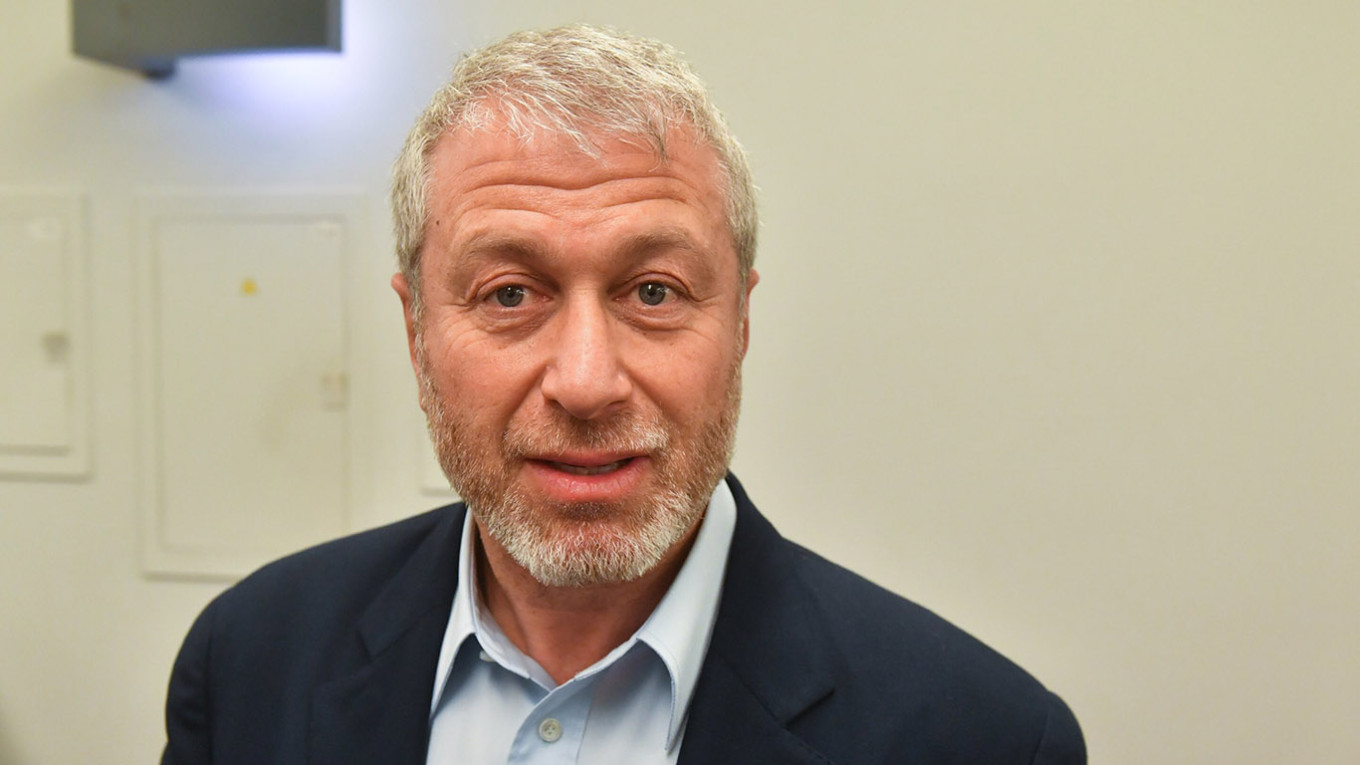
Earlier this month, a familiar name re-entered the ongoing push for a negotiated settlement to Russia’s war in Ukraine: sanctioned Russian oligarch Roman Abramovich. As Ukrainian President Volodymyr Zelensky said, Abramovich approached his office with a message that the Kremlin wants “to understand what [Kyiv is] ready to do.” Zelensky said that he then told Abramovich to tell Putin he is ready to meet to discuss the war “at any time.”
At first glance, the sudden emergence of this Abramovich backchannel is bizarre. The oligarch is, after all, hardly a disinterested mediator. For years, Abramovich served as one of the key members of Putin’s network of Russian oligarchs, known best for his purchase of Chelsea Football Club in Britain. All the while, as London said when it sanctioned Abramovich in 2022, the billionaire maintained “close links to Putin” — so much so that, after the expanded invasion of Ukraine, then-Foreign Secretary Liz Truss said the “blood of the Ukrainian people is on their hands.”
As Elisabeth Schimpfössl, an academic who has studied Russian oligarchs, told France 24, Abramovich has “never done anything that would make him look disloyal in the eyes of the Kremlin.” Leading Russian anti-corruption researcher Maria Pevchikh commented similarly, calling him “the most faithful and devoted of Putin’s oligarchs.”
Yet if you look past the history of Abramovich’s pro-Kremlin efforts, his presence as a potential backchannel makes a certain sense. The opportunity to end the war is one that he can’t afford to pass up — perhaps quite literally. After all, at the beginning of the war, Abramovich was worth nearly $15 billion. Following the expanded invasion, however, he faced successive sanctions and asset seizures in places like Switzerland, Britain, Australia, Canada and the European Union. Almost immediately, his net worth dropped by nearly half — still in the billions, but also billions less than it was just a few years prior. Most impressively, British authorities forced Abramovich to divest from Chelsea, seizing his crown jewel and decimating both his net worth and his reputation in the West.
A chance to help end the war could potentially shift things back. Maybe it wouldn’t help him salvage his previous reputation as a billionaire worth welcoming across the West, but it could help lift some of the sanctions smothering his personal wealth. Several of Russia’s elite tycoons have spoken out against the war — a war that has obliterated their status across the board.
Perhaps the more curious fact is that the Ukrainian government would be willing to parley with Abramovich, or use him as a go-between with the Kremlin. Given that pro-Russian oligarchs were key linchpins in Moscow’s broader efforts to destabilize Ukraine — not least figures like Viktor Medvedchuk, who acted as the key pro-Kremlin figure in Ukraine itself — Ukrainian officials well recognize that these billionaires are mere prongs of Russia’s influence operations, not agenda setters themselves.
Still, even those prongs can be of use. Abramovich has himself been involved in previous conversations between Kyiv and Moscow, going as far back as March 2022. Along the way, he has helped broker everything from unlocking Ukrainian grain exports to prisoner swaps. As Kremlin spokesman Dmitry Peskov said at the time, Abramovich was someone who “both sides” accepted as a mediator.
That, however, was a time when many within and outside Moscow thought victory was inevitable. That the Ukrainians would, in time, buckle under the combined weight of Russia’s military prowess.
But in the years since, the war has slid into unmitigated disaster for the Kremlin. Russia has seen hundreds of thousands killed and is searching for ways to replace those it is losing at the front line. All the while, as Ukraine presses its advantage in long-range drone strikes and pummels Russia’s oil infrastructure, the Kremlin has watched its influence across the former U.S.S.R. plummet so much so that it’s no longer even the leading power in the region, let alone globally.
It’s a reality that, once again, everyone within and outside of Russia can see — or almost everyone, at least. While the war’s popularity continues to sag, Putin apparently remains convinced as ever that victory is just around the bend. Perhaps not full victory; even the collapse of Kyiv appears beyond his powers, at least for now. But the Russian president, cosseted by yes-men and ensconced in a bubble, continues to believe that the Donbas is ready to fall — and that, once it does, the path to demolishing Ukraine’s remaining sovereignty is his for the taking.
As one assessment at the Carnegie Endowment recently said, “There may be a growing feeling inside Russia that it is time to end the war, but Putin made it unequivocally clear that there was no chance of economic problems, stalemate at the front, or tensions at home pushing the Kremlin to soften its position on the war or make any concessions to Kyiv.”
Putin’s position has been evident for years, going back almost certainly before the expanded invasion. For Putin, Ukraine has always been something that Russia would eventually reabsorb, a wayward part of a so-called triune nation with Russia and Belarus. The method of control didn’t necessarily matter; perhaps it was via a cabal of crooked authoritarians, as with former Ukrainian President Viktor Yanukovych, or perhaps it was via armed meddling or outright warfare, as Putin has attempted since 2014. All that mattered was that Kyiv was once more subordinated to Moscow.
It was true for Putin years ago, and it’s true now. It was true while oligarchs like Abramovich were making their billions and while those same tycoons watched billions go up in smoke as a result of sanctions and asset seizures. And it will be true as long as Putin remains in power, convinced every day that Ukraine is rightfully Russian — and that it is his historic mission to finalize that reunion.
All of which is to say that Abramovich is, of course, welcome to try to sway the Kremlin. And Kyiv is welcome to take up his offer of mediation, especially when it comes to things like helping the Ukrainian economy or returning Ukrainian soldiers.
But any dreams of using Abramovich to somehow convince Putin to end the war are little more than fantasy, as are his apparent beliefs that his efforts can somehow restore his own finances, his own standing, and his own place in the West.
There’s no negotiation to be had with Putin, especially when it comes to his belief that Ukraine will ultimately return to its status as a subaltern for Russia. If anything, Abramovich would be better suited to negotiate an end to something else: Putin’s rule. It’s the way he could be of best use not only to those in the oligarchic class, but to Russia as a whole — and to all those who see the war as the sheer calamity it’s been for Moscow.

A Message from The Moscow Times:
Dear readers,
We are facing unprecedented challenges. Russia's Prosecutor General's Office has designated The Moscow Times as an "undesirable" organization, criminalizing our work and putting our staff at risk of prosecution. This follows our earlier unjust labeling as a "foreign agent."
These actions are direct attempts to silence independent journalism in Russia. The authorities claim our work "discredits the decisions of the Russian leadership." We see things differently: we strive to provide accurate, unbiased reporting on Russia.
We, the journalists of The Moscow Times, refuse to be silenced. But to continue our work, we need your help.
Your support, no matter how small, makes a world of difference. If you can, please support us monthly starting from just $2. It's quick to set up, and every contribution makes a significant impact.
By supporting The Moscow Times, you're defending open, independent journalism in the face of repression. Thank you for standing with us.

Remind me later.