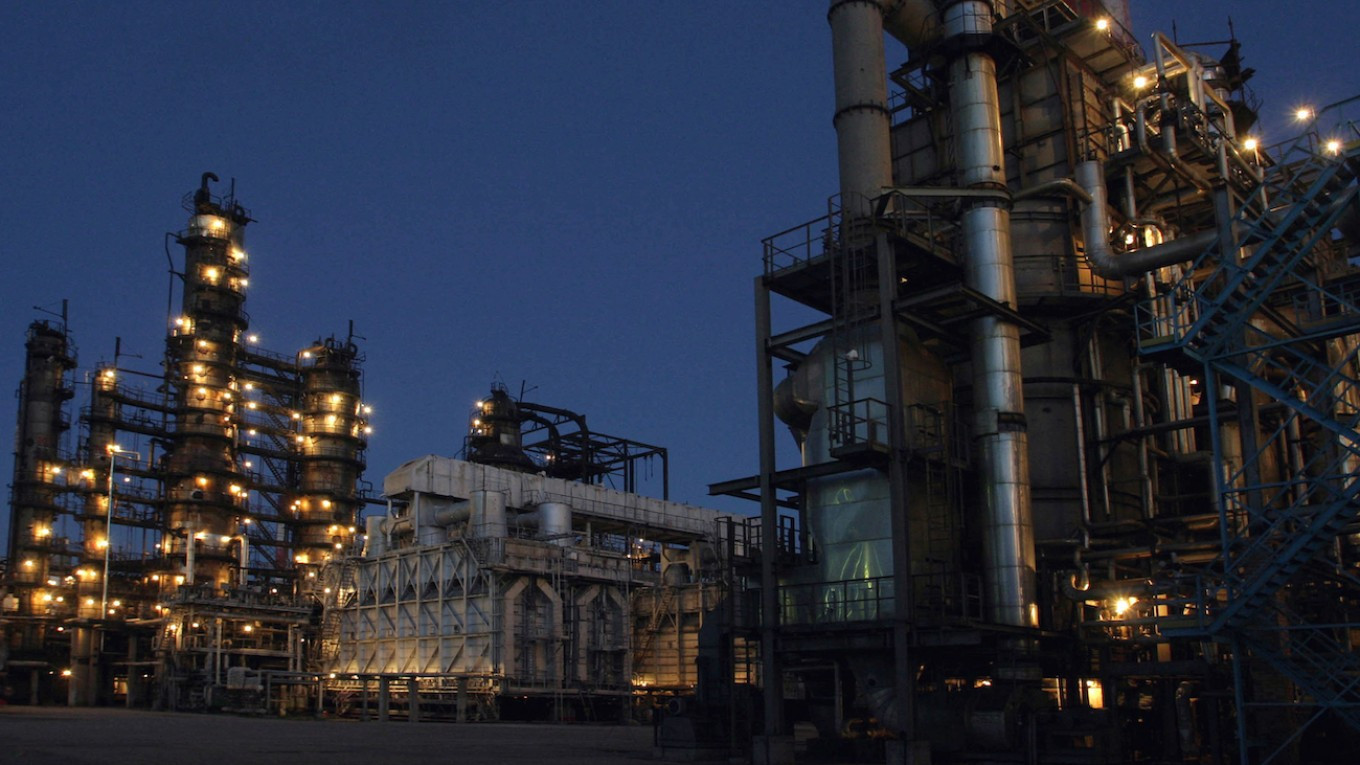
Russian oil companies received more than 716 billion rubles ($9.95 billion) in state support payments in April and May as the country's refining sector grappled with repeated Ukrainian drone attacks and declining processing volumes.
In May, oil companies received 204.3 billion rubles ($2.84 billion) through Russia's fuel price stabilization mechanism, known as the damping system, and another 153 billion rubles ($2.13 billion) in refinery tax rebates, according to Finance Ministry data.
Combined, the payments amounted to roughly 40% of the 872.9 billion rubles ($12.13 billion) in mineral extraction tax revenue collected from the oil sector that month.
State support was even higher in April, when oil producers received 207.5 billion rubles ($2.88 billion) through the damping mechanism and 151.8 billion rubles ($2.11 billion) in tax rebates. The payments were equivalent to about 46% of the 771.3 billion rubles ($10.72 billion) in oil-related mineral extraction taxes collected during the month.
The damping mechanism compensates refiners for selling fuel on the domestic market when export prices are higher, while the tax rebates are intended to support refinery operations.
Analysts at Raiffeisenbank said the increase in compensation payments reflects growing difficulties in the refining sector.
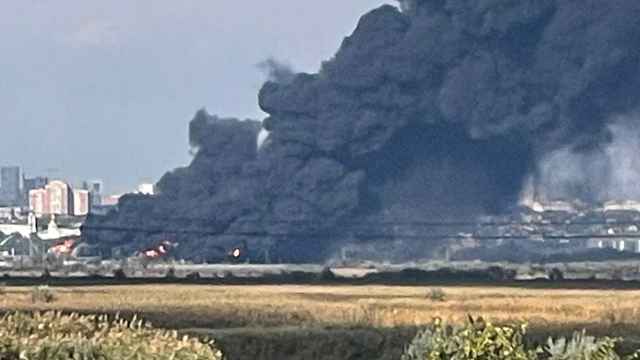
Russian refineries were targeted by drones 38 times between January and May, including attacks on 16 facilities last month alone, the highest monthly total since the start of the war.
As a result, refinery utilization has fallen 14% since the beginning of the year and remains about 20% below prewar levels, according to calculations by energy analytics firm OilX.
The rising subsidies are offsetting much of the budget's windfall from stronger oil prices. Brent crude climbed as high as $95 per barrel in April before averaging around $87 in May.
According to economist Kirill Rodionov, the growing volume of refinery support payments is offsetting much of the benefit to the budget from stronger oil prices.
"The growth in refinery subsidies largely neutralizes the effect of increased mineral extraction tax revenues," economist Kirill Rodionov said.
Although Russia's oil and gas revenues rose 34% year-on-year in May, cumulative energy revenues for the first five months of 2026 remain 30% lower than during the same period last year, Rodionov said.
"A decline will also be recorded for the first half of the year," he added.
Despite the growing state support, fuel prices have continued to rise.
Benchmark AI-92 gasoline prices on Russia's commodity exchange have increased 6% since the beginning of May and 30% since the start of the year, Rodionov said. AI-95 gasoline has risen 12% since early May and 38% compared with the end of December.
Retail fuel prices have also accelerated. According to state statistics agency Rosstat, gasoline prices rose 4.77% during the first five months of the year.
That increase exceeds the pace recorded by the same point in any year since Russia launched its full-scale invasion of Ukraine in 2022, according to Janis Kluge, a Russia expert at the German Institute for International and Security Affairs.
Last year, Ukrainian attacks on Russian refineries caused an estimated 1 trillion rubles ($13.9 billion) in losses for oil companies.
To help finance refinery repairs this year, the government is considering allowing wholesale and retail fuel prices to rise by 1.5 rubles per liter, business daily RBC previously reported, citing sources familiar with the discussions.
Read this article in Russian at The Moscow Times' Russian service.
A Message from The Moscow Times:
Dear readers,
We are facing unprecedented challenges. Russia's Prosecutor General's Office has designated The Moscow Times as an "undesirable" organization, criminalizing our work and putting our staff at risk of prosecution. This follows our earlier unjust labeling as a "foreign agent."
These actions are direct attempts to silence independent journalism in Russia. The authorities claim our work "discredits the decisions of the Russian leadership." We see things differently: we strive to provide accurate, unbiased reporting on Russia.
We, the journalists of The Moscow Times, refuse to be silenced. But to continue our work, we need your help.
Your support, no matter how small, makes a world of difference. If you can, please support us monthly starting from just $2. It's quick to set up, and every contribution makes a significant impact.
By supporting The Moscow Times, you're defending open, independent journalism in the face of repression. Thank you for standing with us.

Remind me later.