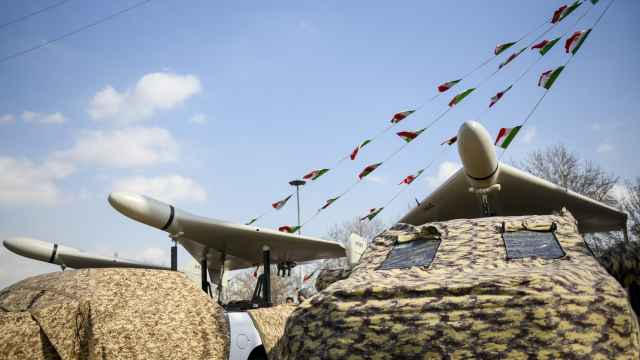
Russia's quest for a post-American world is being stress-tested in the Western Hemisphere more than anywhere else. Here, far from Moscow's backyard, the United States is resorting to fast-and-furious power projection to reassert its eroding and increasingly contested influence, forcing Latin America to choose between the West and the “Rest.”
After losing a battle with Lula’s Brazil but winning big in Venezuela, Mexico and Ecuador, U.S. President Donald Trump and his Secretary of State Marco Rubio are now planning a takeover of Cuba. Should they succeed in bringing an end to the Cuban revolutionary experience, the Moscow-Beijing axis would bear the brunt.
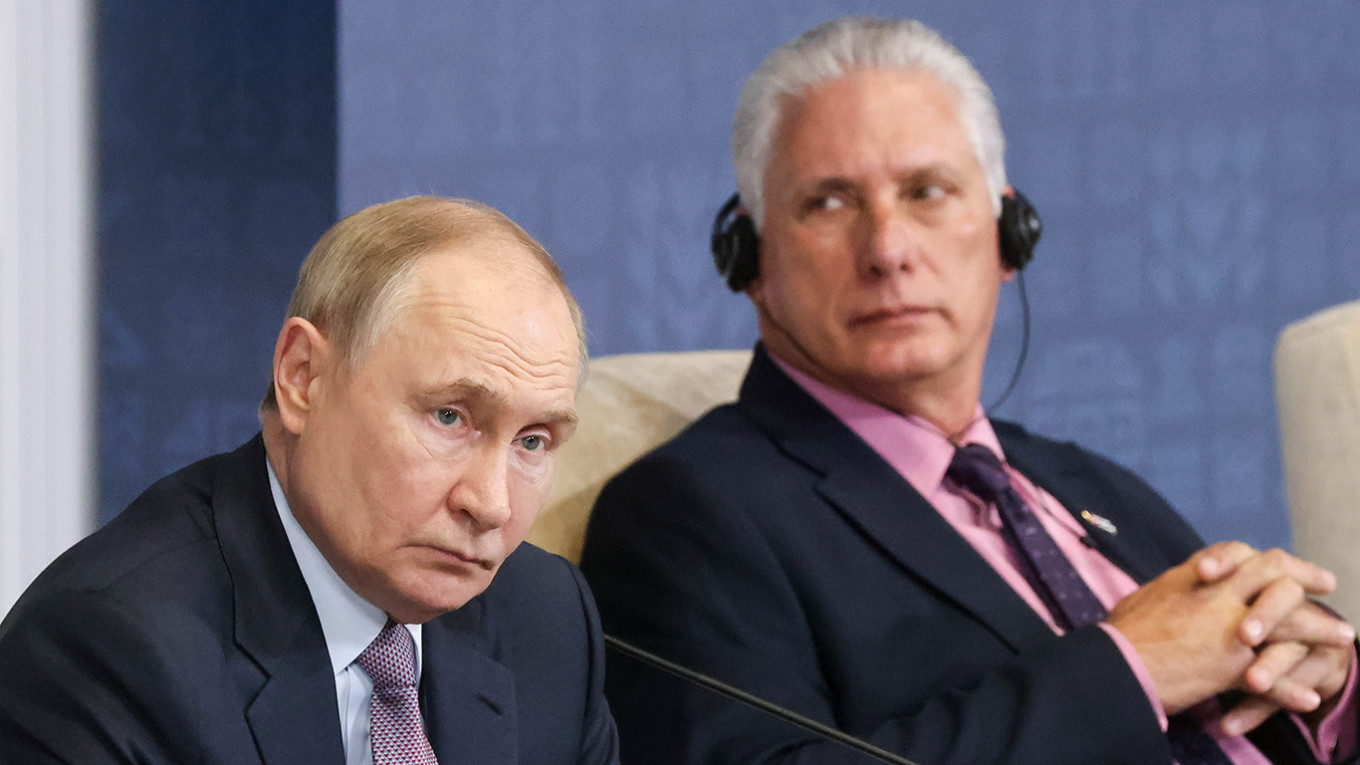
SIGINT, soldiers, strategic projection and sugar — this is what Moscow has mainly got from Havana ever since President Vladimir Putin decided that resuming the old Cuban-Soviet friendship had to be a top priority for his nation. That decision was made in late 2000, when Russia-U.S. relations were far from bad, when Putin visited the Caribbean island, meeting Fidel Castro and laying the foundations of an all-sector partnership that still lasts.
Cuba and Russia exchanged best practices, helped each other, restored beloved old traditions such as the Soviet-era barter agreements and prevented Washington’s blockade from leading to regime change. Over the years, Putin’s Russia became Cuba’s greatest lifeline, offering and sending critical aid whenever Havana requested food, fuel, basic goods and medical supplies and equipment, against the backdrop of recurring financial support and joint sanctions-evasion schemes.
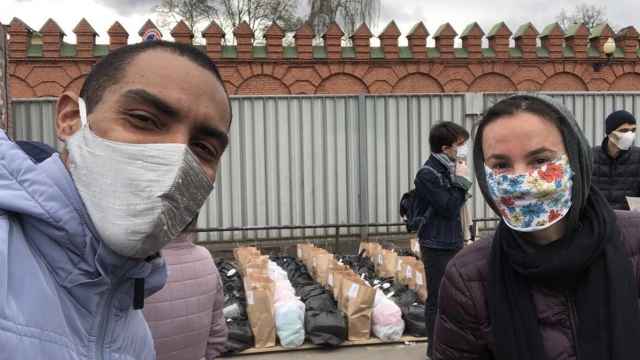
From Putin’s notable decision to wipe 90% of Cuba’s debt to Russia back in 2014 to the mammoth humanitarian effort during the Covid-19 pandemic, in which the Kremlin sent more than 250 tons of food and medical equipment to the island, Cuba has gained a lot from the partnership with its old friend.
Similarly, Russia has gotten exclusive deals to invest in Cuba’s historically closed economy. Its energy and mining companies gained privileged access to some of the world’s largest nickel and cobalt reserves. The Cubans mined, the Russians sold. Together, they made the blockade less suffocating, eyeing $1 billion in Russian investments in the country’s development by 2030.
In the aftermath of the Ukrainian Revolution, Cuba’s importance to Russia has only grown. The Kremlin ceased to view the island as a mere remnant of the Cold War, deserving of help to honor the old good times, and set about turning it into a listening post on the U.S.’s doorstep. Between 2014 and 2018, the Kremlin ordered the reopening of its largest signals intelligence station in the Americas, the 5,000-square-meter Lourdes complex, which is not far from Havana and whose ears enable it to spy on most of the Gulf of Mexico region.
Shortly after the 2022 invasion of Ukraine, Cuba came to Russia’s help by providing between 5,000 and 25,000 fighters for its armed forces, even though the Cuban government has always stated that those combatants left the island for monetary purposes and are not part of any state-backed mercenary activity.
From intelligence gathering to war support and resource exploitation, Cuba has proved to be a reliable ally, a useful asset, and a good investment. That’s why, with Washington looming over the Americas and already responsible for some notable victims — Venezuela’s Nicolás Maduro and the Hong Kong-controlled mouths of the Panama Canal — Putin senses the urgency to prevent Cuba from “being taken over,” to use Trump’s own words.
Since Maduro was ousted from office in early January, Washington and Moscow have begun arm-wrestling over Cuba, with the former attempting to provoke popular uprisings through a harsher-than-ever blockade and the latter challenging Trump’s ambitions of dominion over the Western Hemisphere by sending tankers to the fuel-starved island.
The stakes are high. Russia cannot afford to lose another ally, acknowledging that its hard-built image as a Global South defender would be damaged significantly, with global repercussions for its capability to win consensus and persuade swing states to pick a side. Washington’s newest National Security Strategy made clear that Trump aims to “clean” hostile foreign influences out of the U.S.’s backyard by the late 2020s or early 2030s, meaning that all weeds are to be cut sooner or later.
Similarly, Russia’s goal for the Americas is to create dual-use footholds that can allow it to negotiate with the United States on a near-equal basis when it comes to talking about spheres of influence. Cuba served this purpose throughout the Cold War, helping the Soviet Union prevent the deployment of U.S. critical military assets close to its borders. Putin, coherently with his Cold War-shaped forma mentis, is likely to have always seen Cuba through the eyes of his Soviet predecessors, helping it face the embargo with the expectation of weaponizing it when the right time had come.
Trump has already shown that the U.S. Navy has not been deployed across the Caribbean as a merely symbolic measure. Notably, Trump ordered a Russian-flagged vessel carrying Venezuelan oil to be seized in early January after a run across the Atlantic.
He believed he had set a powerful precedent, setting a deterrent against future challenges to the “Donroe Doctrine.”
It did not work. Two months later, the Sea Horse managed to discharge its fuel to Cuba after a series of deceptive maneuvers, from transponder deactivation to abnormal routing, showing the U.S.-sanctioned Anatoly Kolodkin ship how to escape the maritime wall erected by Trump to protect Fortress America.
But a few tankers are not going to reverse Cuba’s energy crisis, nor are they going to change the fact that the White House is dead serious this time in its pursuit of regime transformation on the Caribbean island.
Trump wants to deprive Russia and China of a strategic hotspot located one hour by plane from Florida; Marco Rubio wants to cement a legacy for a future presidential bid. Whether the Russians have the same resolve as their American counterparts remains to be seen.
A Message from The Moscow Times:
Dear readers,
We are facing unprecedented challenges. Russia's Prosecutor General's Office has designated The Moscow Times as an "undesirable" organization, criminalizing our work and putting our staff at risk of prosecution. This follows our earlier unjust labeling as a "foreign agent."
These actions are direct attempts to silence independent journalism in Russia. The authorities claim our work "discredits the decisions of the Russian leadership." We see things differently: we strive to provide accurate, unbiased reporting on Russia.
We, the journalists of The Moscow Times, refuse to be silenced. But to continue our work, we need your help.
Your support, no matter how small, makes a world of difference. If you can, please support us monthly starting from just $2. It's quick to set up, and every contribution makes a significant impact.
By supporting The Moscow Times, you're defending open, independent journalism in the face of repression. Thank you for standing with us.

Remind me later.