

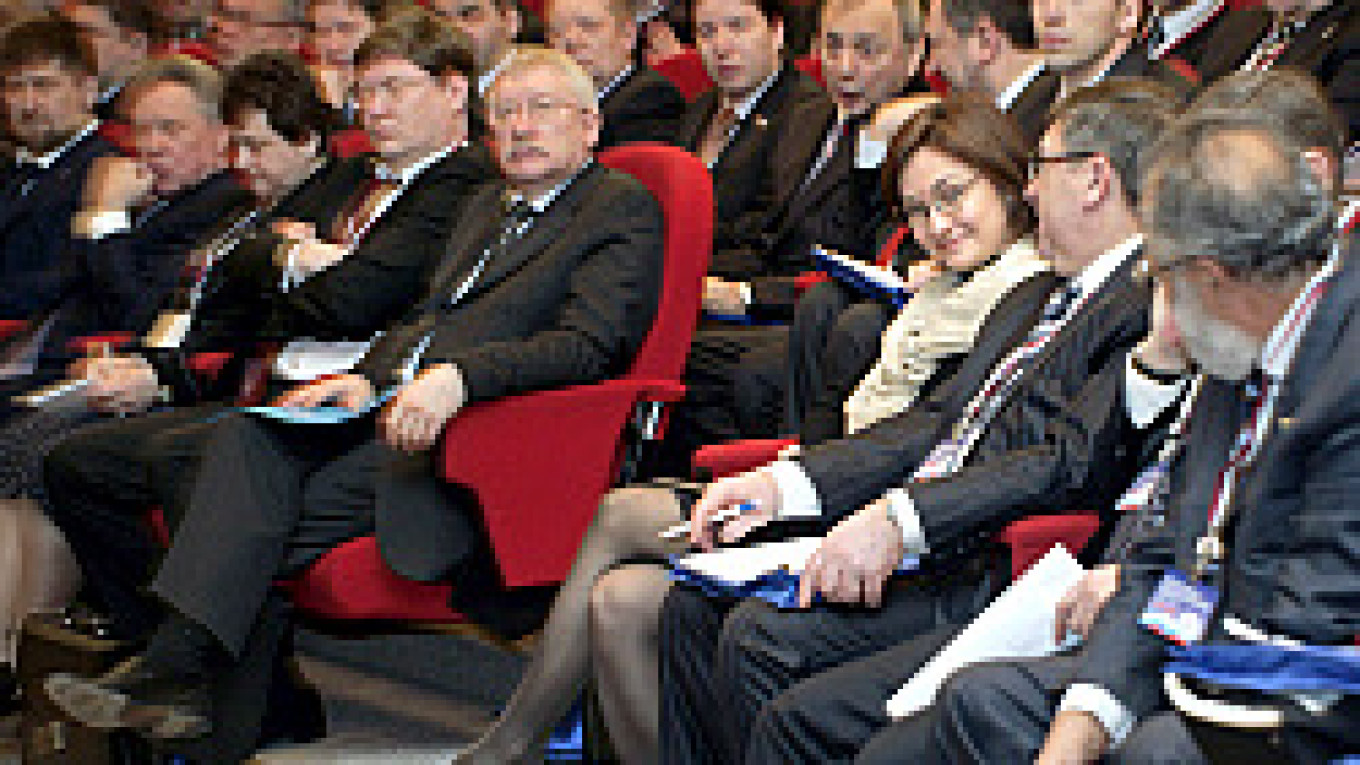
With the Central Bank, government ministries and the presidential administration each responsible for doling out its own forecasts, the resulting conglomeration can be confusing -- especially where politics are concerned.
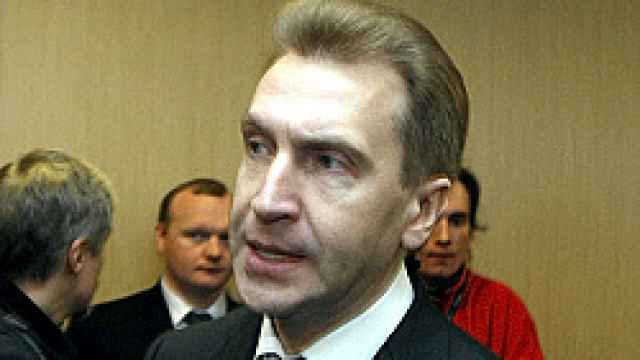
First Deputy Prime Minister Igor Shuvalov and Central Bank First Deputy Chairman Alexei Ulyukayev indicated already in April that the crisis was bottoming.
But officials from the Finance and Economic Development ministries then appeared to contradict them, offering a slew of gloomy forecasts that prompted a stinging rebuke from President Dmitry Medvedev last week.
MT
Shuvalov
|  |
| |
The newfound openness of government officials to discuss the crisis is being welcomed by market participants as a drastic improvement from the initial weeks of the turmoil last fall, when the government flatly denied that there was a problem and instructed state and privately owned television channels to avoid using words like "financial crisis" or "collapse" in describing the situation in Russia.
But the cacophony of government voices now threatens to make the its actual message murky at best and contradictory at worst.
"The views of the government are like the pieces of a puzzle, and this in turn raises the question of whether there is a government consensus about economic policy," said Yulia Tsepliaeva, chief economist at Merrill Lynch. "If they have no idea about the current economic situation, then it seems it won't be so easy to develop a plan of attack."
At an investment bank like Merrill Lynch, Tsepliaeva said, the analysts and economists must come to an agreement on their various forecasts before releasing them publicly. "The situation should be the same in the government," she said.
While government figures have rarely challenged each other's predictions, they have publicly disagreed on budget and tax proposals, a key instrument for fighting the 2009 and 2010 budget deficit.
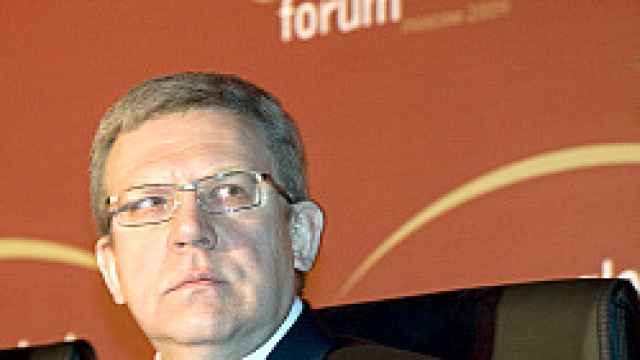
At a recent conference, the fiscally prudent Finance Minister Alexei Kudrin chided Kremlin economic adviser Arkady Dvorkovich and Economic Development Minister Elvira Nabiullina for suggesting that the state could afford to reduce value-added tax as early as 2011, warning that it might be decades before Russia witnesses economic growth on par with recent years.
"I believe that my colleagues' proposal was not calculated and weighed," Kudrin said. "It was made for the public."
MT
Kudrin
| |
| |
Observers, however, said there appeared to be a split at times between the government's four top economic officials -- Kudrin, Shuvalov, Dvorkovich and Nabiullina -- who have been rolled into the spotlight to muse about the crisis. All four are participating in the three-day St. Petersburg International Forum, which opened Thursday.
"You've got these more optimistic comments coming out of people like Dvorkovich, and then the next day you get Kudrin or others giving a different view," said Chris Weafer, chief strategist at UralSib.
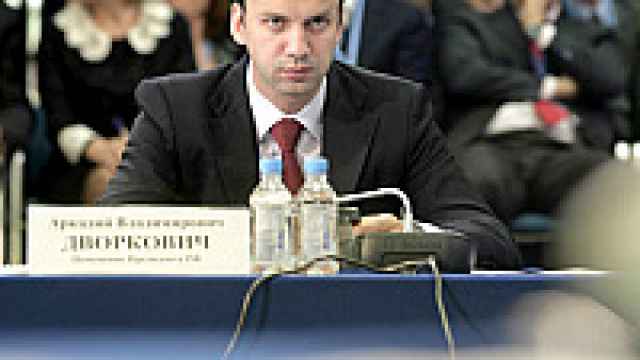
Perhaps the most vocal of government's economic team are Dvorkovich and Nabiullina, who have spoken at numerous forums, news conferences and other events in recent months. Newer to the public eye, Dvorkovich, 37, holds a master's degree in economics from Duke University in North Carolina, while Nabiullina, a 45-year-old ethnic Tatar, has been an ally of President Medvedev since before his election. Both are considered proteges of Sberbank CEO German Gref, Nabiullina's predecessor at the Economic Development Ministry.
MT
Dvorkovich
| |
| |
If the media respond positively to them, he added, foreign investors will too.
The Economic Development Ministry said it did not keep figures on the number of Nabiullina's speaking engagements and did not respond to faxed questions sent in mid-May. Kremlin spokesman Pavlov said there had been no effort to put Dvorkovich in front of the media more than others. Dvorkovich's primary responsibility has always been his work in economics, he said.
Still, Pavlov acknowledged that Dvorkovich has a good touch with reporters. "He's good," he said. "If you've been to his news conferences, you've probably noticed this."
In theory, Dvorkovich and Nabiullina's personal attributes should not have an effect on the market, Nadorshin said. "It doesn't necessarily matter if a polite man says this year's GDP is going to be minus 6 percent or if a rude man says it. It doesn't change the reality that minus 6 percent is the forecast," he said.
Yet at the same time, it certainly helps the Kremlin on the public relations front when negative news comes from a pleasant messenger, said Alexei Mukhin, an analyst at the Institute for Political Information.
"While both Dvorkovich and Nabiullina are responsible for coming up with forecasts for the government, their success lies in their ability to decrease Russian economic risks like stock market volatility," Mukhin said.
Still, to make the best impression, government officials must start offering more consistency, Weafer said. "There needs to be one voice -- whether it's right or wrong doesn't matter," he said.
A Message from The Moscow Times:
Dear readers,
We are facing unprecedented challenges. Russia's Prosecutor General's Office has designated The Moscow Times as an "undesirable" organization, criminalizing our work and putting our staff at risk of prosecution. This follows our earlier unjust labeling as a "foreign agent."
These actions are direct attempts to silence independent journalism in Russia. The authorities claim our work "discredits the decisions of the Russian leadership." We see things differently: we strive to provide accurate, unbiased reporting on Russia.
We, the journalists of The Moscow Times, refuse to be silenced. But to continue our work, we need your help.
Your support, no matter how small, makes a world of difference. If you can, please support us monthly starting from just $2. It's quick to set up, and every contribution makes a significant impact.
By supporting The Moscow Times, you're defending open, independent journalism in the face of repression. Thank you for standing with us.

Remind me later.