

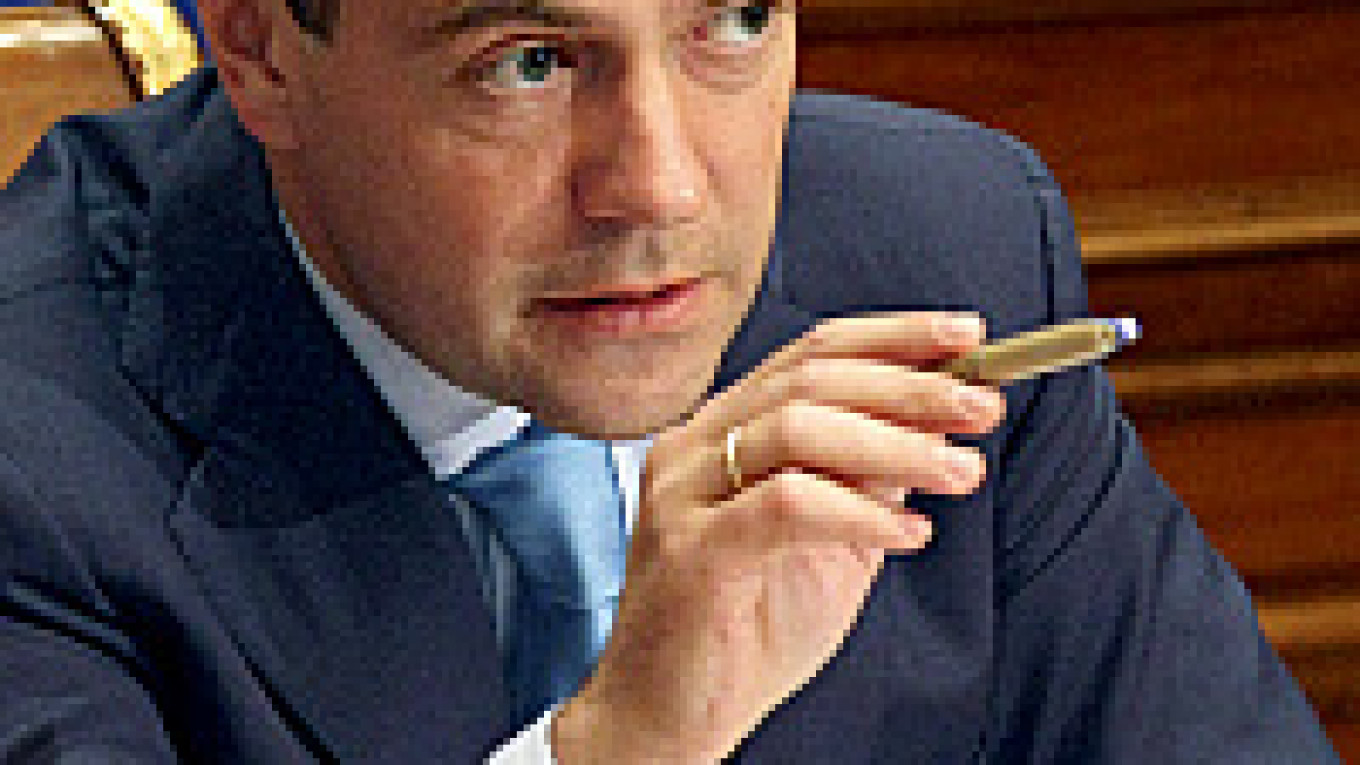
"Sometimes decisions about filling positions are made on the basis of acquaintance, personal allegiance or, even worse, for money ?€” that is, offices can be bought," Medvedev said in televised comments.
Medvedev, who has said confronting rampant corruption will be a priority of his presidency, told Kremlin officials at his residence outside Moscow that the practice did not jibe with his vision of modern Russia. "Russia is a democracy, not a medieval tyranny," he said.
He added that recruiting capable leaders is a particularly difficult task in the regions, which he described as suffering a "famine of personnel." The problem applies to regional leaders, Medvedev said, using a sports metaphor to describe the shortage of qualified candidates.
"There is no bench with substitute players," Medvedev said. "Every time we have to rack our brains over how to find candidates for higher office in the regions."
Medvedev said he would handpick top candidates for regional government posts to form a "presidential reserve."
The system, he said, would help reduce corruption by ensuring that candidates display "real talent" rather than taking advantage of "acquaintances and corruption."
Former President Vladimir Putin moved to rein in the regions with a 2005 law abolishing popular elections of regional leaders in favor of leaders selected by the Kremlin.
Critics maintain, however, that some regional bosses still find it easy to help friends and relatives into office, especially in the North Caucasus, where nepotism is widespread.
The Kremlin itself has come under fire from critics who say that many people close to Putin ?€” including Medvedev ?€” were appointed to senior government posts during his eight years in office.
A Message from The Moscow Times:
Dear readers,
We are facing unprecedented challenges. Russia's Prosecutor General's Office has designated The Moscow Times as an "undesirable" organization, criminalizing our work and putting our staff at risk of prosecution. This follows our earlier unjust labeling as a "foreign agent."
These actions are direct attempts to silence independent journalism in Russia. The authorities claim our work "discredits the decisions of the Russian leadership." We see things differently: we strive to provide accurate, unbiased reporting on Russia.
We, the journalists of The Moscow Times, refuse to be silenced. But to continue our work, we need your help.
Your support, no matter how small, makes a world of difference. If you can, please support us monthly starting from just $2. It's quick to set up, and every contribution makes a significant impact.
By supporting The Moscow Times, you're defending open, independent journalism in the face of repression. Thank you for standing with us.

Remind me later.