

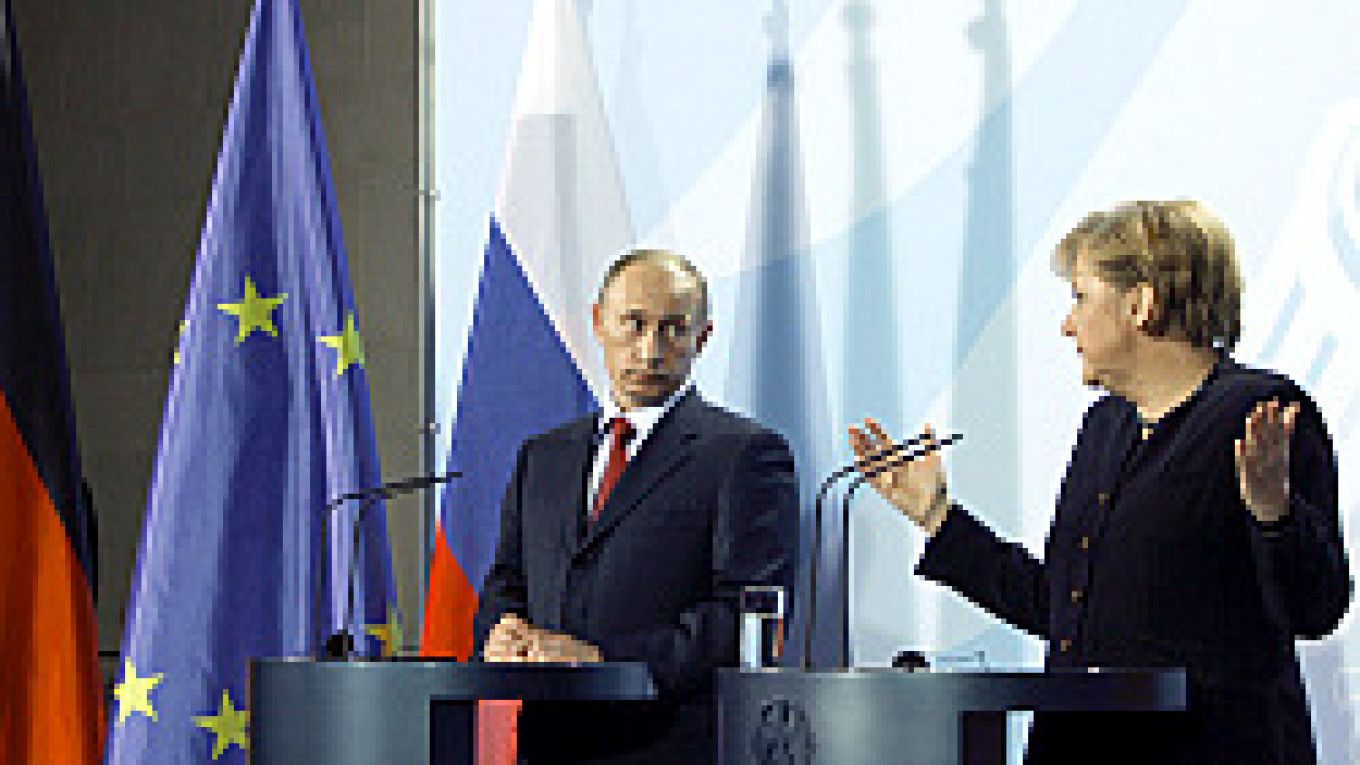
In turning off gas supplies to Ukraine and Europe, Putin showed Russians that he is in charge as a recession looms and that the West must treat him as a key player in global energy. He also is pushing for higher long-term revenue for Gazprom.
"The more they criticize Putin abroad and the more they fight with Russia, the greater his political weight grows," said Mikhail Delyagin, an economic adviser to former Prime Minister Mikhail Kasyanov and director of the Institute for Globalization Studies in Moscow.
The stalemate has left parts of Eastern Europe without fuel during sub-freezing temperatures, and state-controlled media coverage of it has spotlighted Putin, 56, more than President Dmitry Medvedev, his chosen successor when he stepped down in May.
As Putin was shown pacing Gazprom's headquarters Tuesday on Vesti-24, Medvedev hosted a Kremlin banquet to honor parents with large families.
Putin's approval rating was 83 percent in an October poll published by the Levada Center and almost 90 percent in September after Russia trounced Georgia in a five-day war condemned by the EU and the United States. No polls have been released since the gas crisis began earlier this month.
"There is also a personal side to all this, as with the war with Georgia," said Yulia Latynina, a political commentator on Ekho Moskvy radio. "What we are seeing now is a war with [Ukrainian President Viktor] Yushchenko."
A Message from The Moscow Times:
Dear readers,
We are facing unprecedented challenges. Russia's Prosecutor General's Office has designated The Moscow Times as an "undesirable" organization, criminalizing our work and putting our staff at risk of prosecution. This follows our earlier unjust labeling as a "foreign agent."
These actions are direct attempts to silence independent journalism in Russia. The authorities claim our work "discredits the decisions of the Russian leadership." We see things differently: we strive to provide accurate, unbiased reporting on Russia.
We, the journalists of The Moscow Times, refuse to be silenced. But to continue our work, we need your help.
Your support, no matter how small, makes a world of difference. If you can, please support us monthly starting from just $2. It's quick to set up, and every contribution makes a significant impact.
By supporting The Moscow Times, you're defending open, independent journalism in the face of repression. Thank you for standing with us.

Remind me later.