

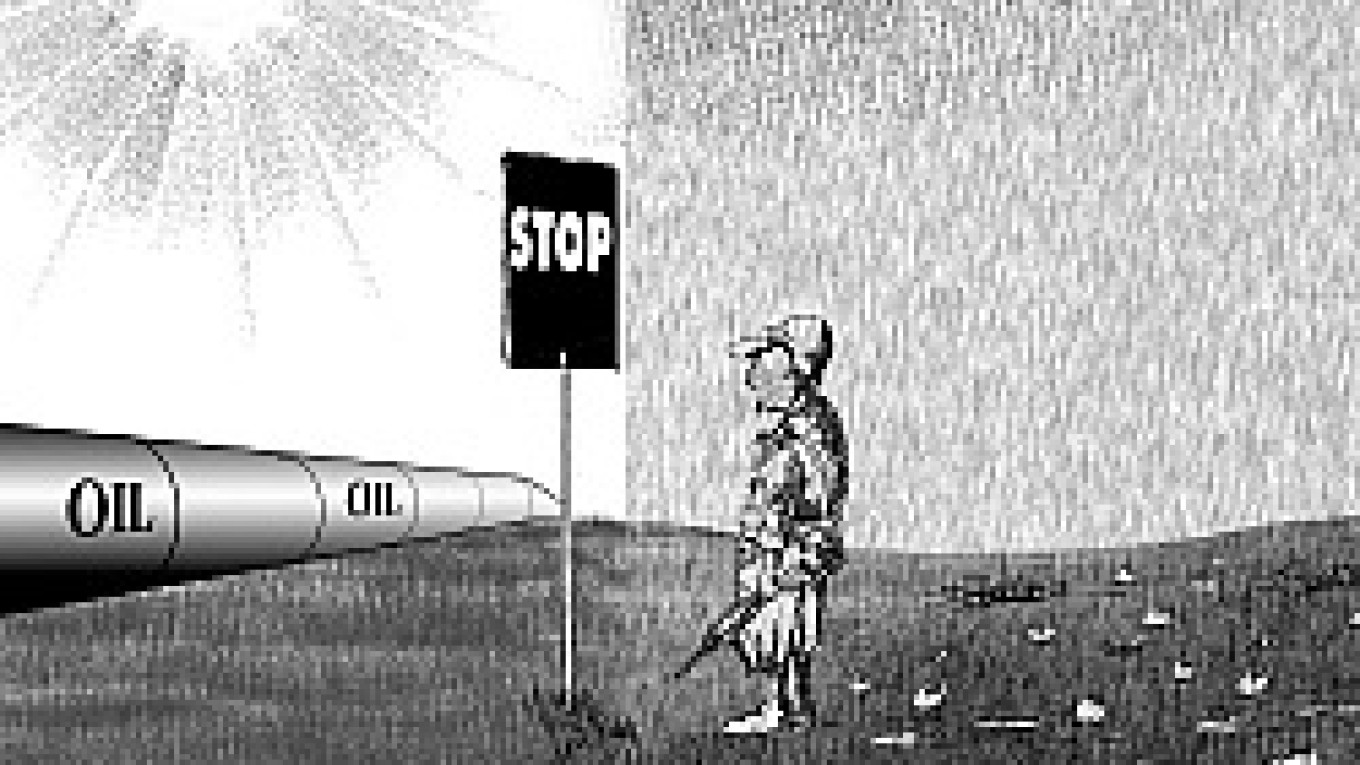
Moscow obviously did not want to cause any additional anxiety among European consumers. Nor did it want to deal Tbilisi any unnecessary trump cards for its blame game. From what is possible to deduce from scarce information provided by official sources, Russia's restraint in targeting Georgia's highly vulnerable energy infrastructure was confirmed to Turkish Prime Minister Tayyip Erdogan, who rushed to Moscow for meetings with President Dmitry Medvedev and Prime Minister Vladimir Putin the day after French President Nicolas Sarkozy negotiated the conditions for cease-fire. That visit had a peculiar context, since Russian reassurances were focused on the BTC pipeline that had in fact been shut down, but for a completely different reason -- an explosion in the Turkish section of the BTC pipeline, most probably an attack by Kurdish insurgents, that interrupted the flow of oil for at least two weeks. Neither that emergency nor the combat operations had any noticeable influence on the oil price; it continues to slide to about $115 per barrel.
This trend is punishing Russia with lost profits measured in billions of dollars, but Moscow still prefers to keep energy business separate from the war matters. This compartmentalization is consistent with the pattern that emerged in the course of the second Chechen war. This conflict saw dozens of deadly terrorist attacks, but there was not a single attack on the oil terminals in Novorossiisk and Tuapse or on the strategic pipelines that crisscross the North Caucasus. The fact that the energy infrastructure is safe does not mean, however, that there is no impact from the war.
 | To Our Readers |
The Moscow Times welcomes letters to the editor. Letters for publication should be signed and bear the signatory's address and telephone number. |
Russia, nevertheless, should be very careful in harvesting these ripening energy fruits since its reputation has suffered great damage. Every day that it delays withdrawing its troops from Georgia adds more mistrust and suspicion. The European reaction generally amounts to its traditional milquetoast response of: "We don't like it but we can't do anything about it." Meanwhile, Europe is keeping the door open for Moscow to repair a few broken ties. While diplomats continue to exchange bitter tirades, small steps such as resolving the scandalous conflict with TNK-BP or removing a few bureaucratic hurdles that have slowed down the huge Shtokman gas project could be very helpful in restoring a modicum of normalcy in energy relations -- and perhaps in shifting the pessimistic mood in the stock market.
The war in the Caucasus has not opened any perspective of peaceful resolution of its many conflicts. It might stimulate Europe's interest in Iranian gas, which has always been the last-resort option for the struggling Nabucco pipeline project, intended to bring gas to Central Europe from Azerbaijan and Turkmenistan. In Iran, however, the Georgian troubles could play both ways: The probability of a U.S. strike has probably diminished, but the prospect of convincing Iran to discontinue its nuclear program has quite possibly evaporated. Russia's cooperation was crucial for maintaining pressure on Tehran, but the quarrel between Moscow and Washington has reached such an intensity that a meaningful cooperation is reduced to wishful thinking.
The tragedy has not brought any catharsis at all. It is entirely understandable that Georgia remains defiant. And Russia may soon discover that achieving a "military victory" is not as simple as pushing Georgia's U.S.-trained but poorly led army out of South Ossetia. It is a heavy burden that adds to the many tensions in its economy and politics deformed by the country's petro-prosperity.
Pavel K. Baev is a research professor at the International Peace Research Institute in Oslo.
A Message from The Moscow Times:
Dear readers,
We are facing unprecedented challenges. Russia's Prosecutor General's Office has designated The Moscow Times as an "undesirable" organization, criminalizing our work and putting our staff at risk of prosecution. This follows our earlier unjust labeling as a "foreign agent."
These actions are direct attempts to silence independent journalism in Russia. The authorities claim our work "discredits the decisions of the Russian leadership." We see things differently: we strive to provide accurate, unbiased reporting on Russia.
We, the journalists of The Moscow Times, refuse to be silenced. But to continue our work, we need your help.
Your support, no matter how small, makes a world of difference. If you can, please support us monthly starting from just $2. It's quick to set up, and every contribution makes a significant impact.
By supporting The Moscow Times, you're defending open, independent journalism in the face of repression. Thank you for standing with us.

Remind me later.