

Preoccupation with Afghanistan’s disputed presidential election is understandable. Ending the country’s violence will require a government with both the legitimacy and capacity to tackle the underlying sources of the Taliban insurgency.
But achieving success in Afghanistan — defined as achieving a sustainable democratic regime able to contain political violence, prevent the reconstruction of a terrorist base with global reach and dampen a narcotics-funded insurgency that threatens neighboring countries — requires greater policy harmonization among the world powers that have a stake in the outcome.
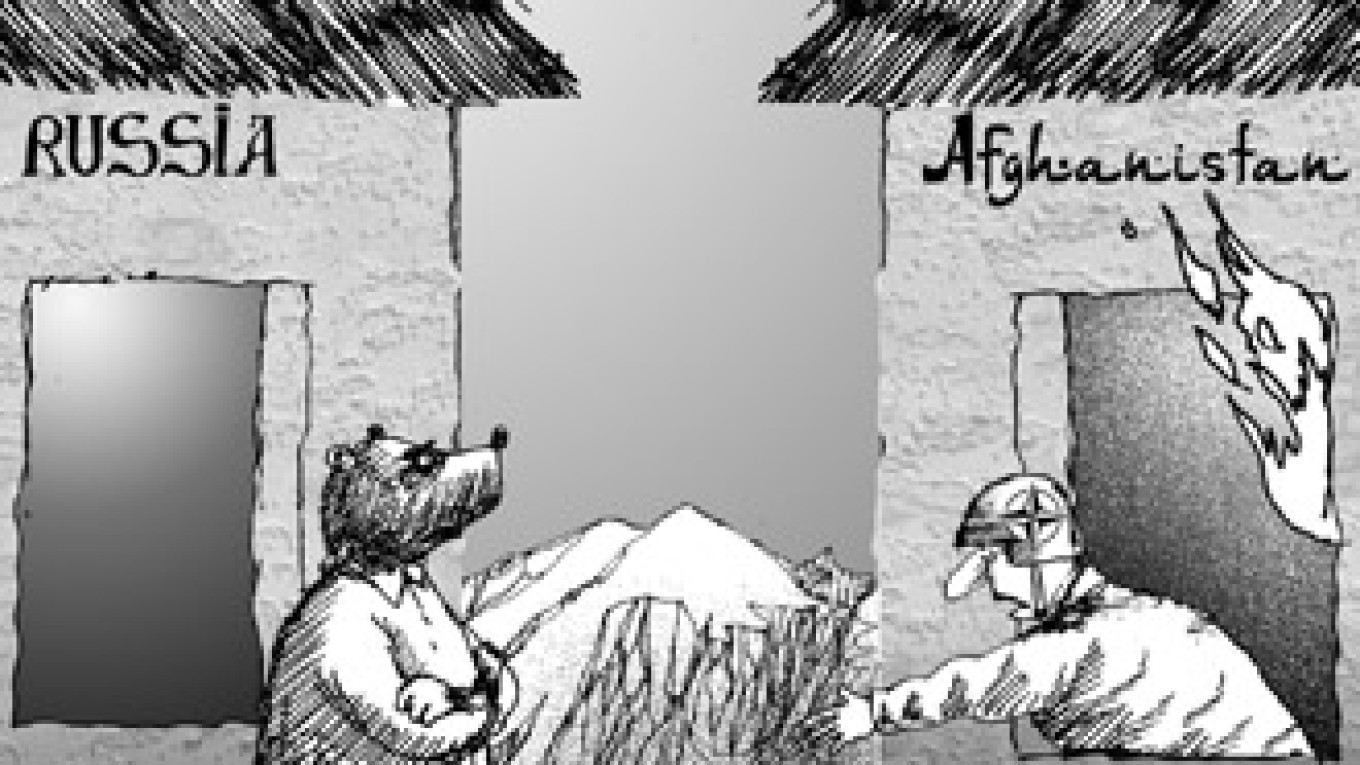
Much recent attention has focused on how NATO, Afghan and Pakistani security forces can collaborate to defeat the insurgency and prevent the country from becoming a terrorist haven again. But the past few years have underscored NATO’s inability to achieve sustained political, economic and security improvements in Afghanistan without more effective international collaboration, particularly with China and Russia.
For several years, representatives of the Shanghai Cooperation Organization, whose dominant members are China and Russia, have identified narcotics trafficking from Afghanistan as a major regional insecurity. NATO should use these concerns to explore potential collaboration on Afghan security issues. Securing additional assistance from China and Russia — to supplement the support already provided by the SCO’s Central Asian members, as well as SCO observers Pakistan and India — is imperative.
Afghanistan is an area of vital interest to the SCO. Its members are eager to assist the Afghan government to counter regional narcotics trafficking and terrorism. Afghan President Hamid Karzai has been a regular guest at SCO summits since 2004 and has called on the SCO to make combating narcotics trafficking a priority. The members have established an SCO-Afghan Working Group to provide a coordinating mechanism for the large number of SCO initiatives that concern Afghanistan.
The convening of a special conference under SCO auspices in March further confirmed the unique status Afghanistan has obtained. The SCO and Afghan governments adopted a joint statement that expressed support for the efforts of the NATO-led International Security Assistance Force, or ISAF, to counter regional narcotics trafficking.
SCO members showed no interest in contributing troops to the ISAF, but the declaration did encourage “other countries … to participate in the collective efforts” to combat regional terrorism and to “consider taking part in transiting nonmilitary cargoes needed by ISAF.” Several SCO members are already assisting NATO countries to deliver supplies into Afghanistan, while Russia is allowing the United States to transport military items across its border into Central Asia and onward to Afghanistan.
This collaboration should be expanded because China and Russia, perhaps more than any other countries, share common interests with the West in Afghanistan. A major drug route passes from Afghanistan through Central Asia and into Russia and Europe. The lax regimes on Russia’s borders with the former Soviet republics of Central Asia facilitate the smuggling of narcotics and other contraband. The Taliban, and especially al-Qaida, have also used their positions in Afghanistan to support other Eurasian terrorist movements, especially the Islamic Movement of Uzbekistan and its various offshoots.
Although China is not situated along the “Northern Route” through which Afghan narcotics traditionally enter Central Asia and Europe, new trafficking networks have developed since 2005 that transport illicit drugs from Afghanistan through Pakistan and Central Asia into China. In addition, Chinese officials remain concerned about the Taliban’s ties with Islamic extremist groups advocating independence for China’s restive Xinjiang region.
Moreover, China has become a major economic stakeholder in Afghanistan. According to Chinese government figures, as of last year, 33 projects in Afghanistan involved Chinese companies. In May 2008, China obtained a major economic stake in Afghanistan when Chinese firms won a $3.5 billion contract to develop Afghanistan’s huge Aynak copper field. The contract also involves the construction of a power plant and a railroad connecting the mines to China through Pakistan. It represents the largest foreign direct investment project in Afghanistan’s history and creates hundreds of jobs.
Yet Chinese entrepreneurs are reluctant to invest in Afghanistan because of the widespread violence there. Insurgent attacks have killed 11 Chinese workers since 2004. Chinese investors would presumably eagerly acquire additional natural resources in Afghanistan if the security situation improved.
Since SCO members have stated that they are not prepared to provide combat troops to the NATO-led ISAF, closer collaboration should first concentrate on revitalizing the Afghan economy and providing alternative livelihoods to those involved in narcotics. Afghanistan’s long-term economic viability depends on the development of improved transportation, communication and other networks to better integrate the country into the regional economy.
China and Russia could provide economic assistance and investment to Afghanistan, creating more projects that provide Afghanistan with badly needed jobs and revenue. In turn, NATO and Afghan forces could assign troops to protect these projects from further attacks, ideally with some kind of Chinese and Russian financial assistance to blunt objections that Western soldiers are dying to enrich foreign companies. China’s close ties to Pakistan could also prove useful in assisting European and American efforts to keep the Pakistani military and intelligence services allied against the Taliban.
Meanwhile, all these international actors could help fund and train the Afghan army and national police. In the end, Afghans themselves will need to sustain the economic and security progress that foreign allies can only help to jump-start.
Richard Weitz is a senior fellow and director of the Center for Political-Military Analysis at the Hudson Institute in Washington. © Project Syndicate
A Message from The Moscow Times:
Dear readers,
We are facing unprecedented challenges. Russia's Prosecutor General's Office has designated The Moscow Times as an "undesirable" organization, criminalizing our work and putting our staff at risk of prosecution. This follows our earlier unjust labeling as a "foreign agent."
These actions are direct attempts to silence independent journalism in Russia. The authorities claim our work "discredits the decisions of the Russian leadership." We see things differently: we strive to provide accurate, unbiased reporting on Russia.
We, the journalists of The Moscow Times, refuse to be silenced. But to continue our work, we need your help.
Your support, no matter how small, makes a world of difference. If you can, please support us monthly starting from just $2. It's quick to set up, and every contribution makes a significant impact.
By supporting The Moscow Times, you're defending open, independent journalism in the face of repression. Thank you for standing with us.

Remind me later.