

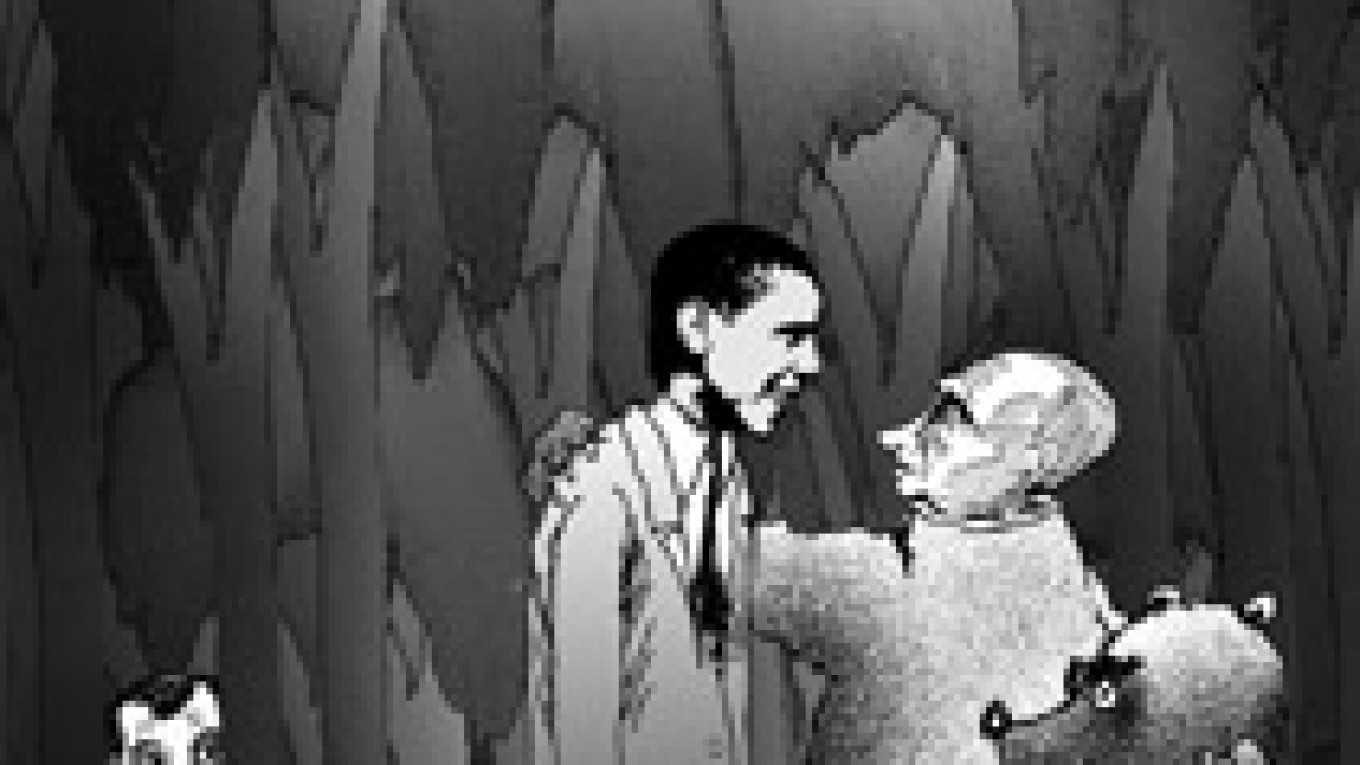
U.S. President Barack Obama faces a major test of his leadership with his trip to Moscow to meet with Russian leaders. He has invested considerable political capital in the effort to “reset” relations with Russia, yet Moscow’s interests in such a “reset” remain dubious at best. While I have been a strong advocate of the spirit of “pressing the reset button” to improve U.S.-Russian relations, there is a flaw in the logic. The logic of “reset” rests on the assumption there is new leadership in Washington and Moscow ready to reconsider past policies, but the reality is that assumption is only true in Washington.
There should be no illusions about where ultimate decision-making authority in Russia resides today. The “tandem” is a fiction, of course. Obama must operate under the assumption that on any issue of importance to him — from nuclear arms reductions to Afghanistan to Iran — the ultimate arbiter for Russian policy is Putin.
This does not mean that meeting with Medvedev is a waste of time, but it must be assumed that every position taken by Medvedev has been blessed by his mentor. Obama must also harbor no illusion that the United States can take measures in Moscow to empower Medvedev or his Western-leaning colleagues in the government.
The first challenge presented by the Putin-Medvedev “tandemocracy” has to do with summit protocol. This can be managed, however, by allowing for Medvedev and Obama to preside over the summit deliverables, including the framework agreement for the arms reduction treaty to replace START, deepened cooperation in Afghanistan, the resumption of military-to-military ties and hopefully some joint appearances at forums among nongovernmental organizations and business leaders. (No doubt Putin is relieved that he does not have to engage in empty photo opportunities and the ceremonial signing of agreements that have already been made.)
 | |
| To Our Readers | |
|
The Moscow Times welcomes letters to the editor. Letters for publication should be signed and bear the signatory's address and telephone number.
| |
| | |
Since Putin is clearly the most important and powerful figure in Russia, I hope that Obama does not shy away from engaging with him in an environment where they can have a real discussion. Obama should go to Putin’s dacha and take a walk in the woods — with or without translators — and say what needs to be said in a clear and forceful way.
This will not be an easy conversation for three reasons. First, Putin not only has built a power vertical that leaves virtually all significant authority with himself, but he also believes he can act with absolute impunity. Second, there is a long list of events, from the Yukos affair to the Georgia war, that have consistently bolstered this sense of omnipotence over the years. It is also clear that Putin has a chip on his shoulder about the “humiliations” that the United States supposedly inflicted upon Russia. Finally, Putin believes that Washington needs to make all the fundamental concessions and carry the bulk of the burden in resetting U.S.-Russian relations.
On any issue of importance, Obama must be very direct with Putin, clearly spelling out U.S. goals and the specific and credible consequences that Moscow should expect if the United States believes that those goals are being thwarted. I would start with Georgia. Once again, we hear of many rumors of Russian preparations for war to “finish the unfinished business” from last summer’s conflict. This needs to be avoided at all costs. Last year’s conflict was a massive blow to the credibility of U.S. security commitments not only in the region but also around the world. Obama must assure Putin that Georgian President Mikheil Saakashvili has been told that there is no justification for responding to any Russian provocations with military force as well as the direct consequences for Russia if it invades Georgia again.
Obama also needs to brief Putin very specifically on his plan to engage Iran and the measures that the United States is prepared to take in the likely event that Tehran proves intransigent on its nuclear weapons program. This is a near-term threat, and the most likely scenario is a return to the United Nations Security Council to impose harsh economic sanctions. At that point, Moscow should abandon its typical strategy of playing both sides against the middle and decide whether it is with the United States or against it.
Afghanistan is another high priority for Obama. While the Russians have been cooperative in opening its transit corridor for U.S. nonmilitary shipments bound for Afghanistan — and there is likely to be an agreement announced between Moscow and Washington on the transfer of military shipments through Russian territory — their position on U.S. use of the Manas military base in Kyrgyzstan raises serious questions about how the Kremlin sees its interests. Officially, the Kremlin approved of the Kyrgyz decision to allow the Americans access again to Manas, but Russia’s behavior going back to the beginning of this year suggests that it really wants to see them out. The Kremlin’s desire to maintain a hegemonic position in Central Asia may take precedence over U.S. success in Afghanistan.
There are many questions about Moscow’s reliability and predictability as a partner, and not only for the United States. Putin’s blithe decision to end Russia’s negotiations for separate accession to the World Trade Organization last month raised these questions in high relief for all parties, including his own government, which seemed to be caught completely off guard. Obama needs to be ahead of the game when he goes to Moscow.
Andrew C. Kuchins is director and senior fellow of the Russia and Eurasia Program at the Center for Strategic and International Studies and the co-author with Anders Åslund of “The Russia Balance Sheet.”
A Message from The Moscow Times:
Dear readers,
We are facing unprecedented challenges. Russia's Prosecutor General's Office has designated The Moscow Times as an "undesirable" organization, criminalizing our work and putting our staff at risk of prosecution. This follows our earlier unjust labeling as a "foreign agent."
These actions are direct attempts to silence independent journalism in Russia. The authorities claim our work "discredits the decisions of the Russian leadership." We see things differently: we strive to provide accurate, unbiased reporting on Russia.
We, the journalists of The Moscow Times, refuse to be silenced. But to continue our work, we need your help.
Your support, no matter how small, makes a world of difference. If you can, please support us monthly starting from just $2. It's quick to set up, and every contribution makes a significant impact.
By supporting The Moscow Times, you're defending open, independent journalism in the face of repression. Thank you for standing with us.

Remind me later.