

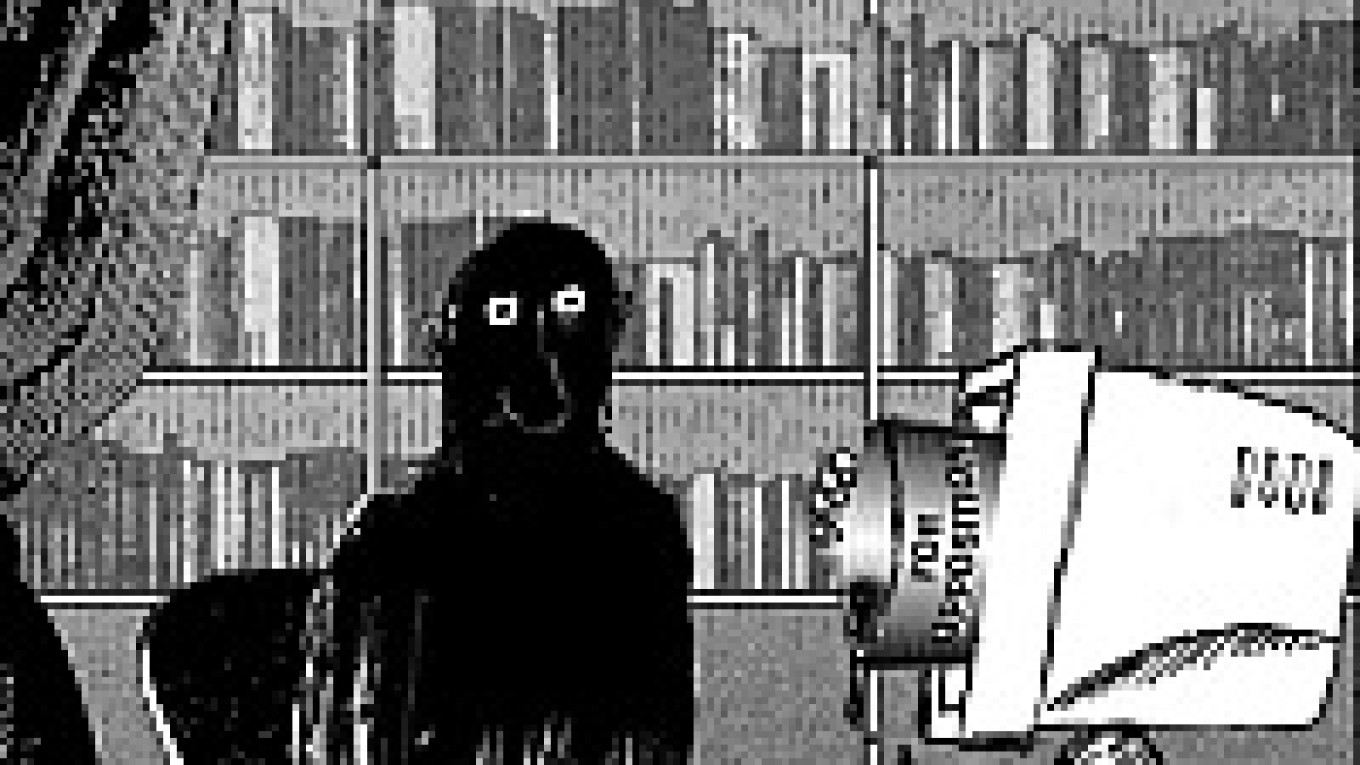
The majority of Russia's most popular national television stations and newspapers are under the direct control of one federal agency or another, with Surkov at the top pulling the strings. In the process, he has effectively established a state ideology -- something that former President Boris Yeltsin specifically prohibited when he introduced Article 13 of the 1993 Constitution as a guarantee that the repressive ideological monopoly of the Soviet period would never be repeated.
According to Surkov's political model, the public discussion of the economic problems in the country has been halted. Of course, Russians today can express themselves openly in their kitchens and even in some public places -- a major improvement over Soviet times -- but the problem is that these candid discussions are never aired in the mainstream media, and therefore they will have no bearing on the decisions made by our authorities.
When the crisis hit Russia last year, it became clearer than ever that the principles enshrined in the Constitution -- above all, private initiative and property rights, an independent court, a competitive political system, an active civil society and free press -- need to be guaranteed and protected.
 | To Our Readers |
|
The Moscow Times welcomes letters to the editor. Letters for publication should be signed and bear the signatory's address and telephone number.
|
The conclusions I have drawn from this experience are as follows:
1. The modern Russian propaganda machine permeates nearly every major media outlet and even extends to the blogosphere. But the machine breaks down under certain external factors. For example, the informational blockade of the situation in Pikalyovo was broken when state-controlled television stations were compelled to show Putin's visit there.
2. The informational and ideological lockdown is not quite as impervious as it might appear. In order to stir things up a bit, one has only to introduce some fresh and thought-provoking material into the media now and then.
3. The most important item on today's reform agenda should be a commitment to uphold the constitutional ban on state ideology. Otherwise, nothing will be achieved in the economic or social spheres, much less in politics.
4. The country has to break the habit of praising those who both brainwash the populace and defame those who oppose it. The elite controlling the propaganda machine should understand that their present positions of authority are temporary at best, and that the day will come with they will face political ostracism.
Yevgeny Gontmakher is the director of the Center for Social Policy at the Institute of Economics of the Russian Academy of Sciences. This comment appeared in Vedomosti.
A Message from The Moscow Times:
Dear readers,
We are facing unprecedented challenges. Russia's Prosecutor General's Office has designated The Moscow Times as an "undesirable" organization, criminalizing our work and putting our staff at risk of prosecution. This follows our earlier unjust labeling as a "foreign agent."
These actions are direct attempts to silence independent journalism in Russia. The authorities claim our work "discredits the decisions of the Russian leadership." We see things differently: we strive to provide accurate, unbiased reporting on Russia.
We, the journalists of The Moscow Times, refuse to be silenced. But to continue our work, we need your help.
Your support, no matter how small, makes a world of difference. If you can, please support us monthly starting from just $2. It's quick to set up, and every contribution makes a significant impact.
By supporting The Moscow Times, you're defending open, independent journalism in the face of repression. Thank you for standing with us.

Remind me later.