

GAVRILKOVO, Moscow Region — The U.S.-Russian "reset" has yielded no meaningful progress on human rights, and the United States needs to "redouble" its efforts to press Russia on the issue, a senior American diplomat said Saturday.
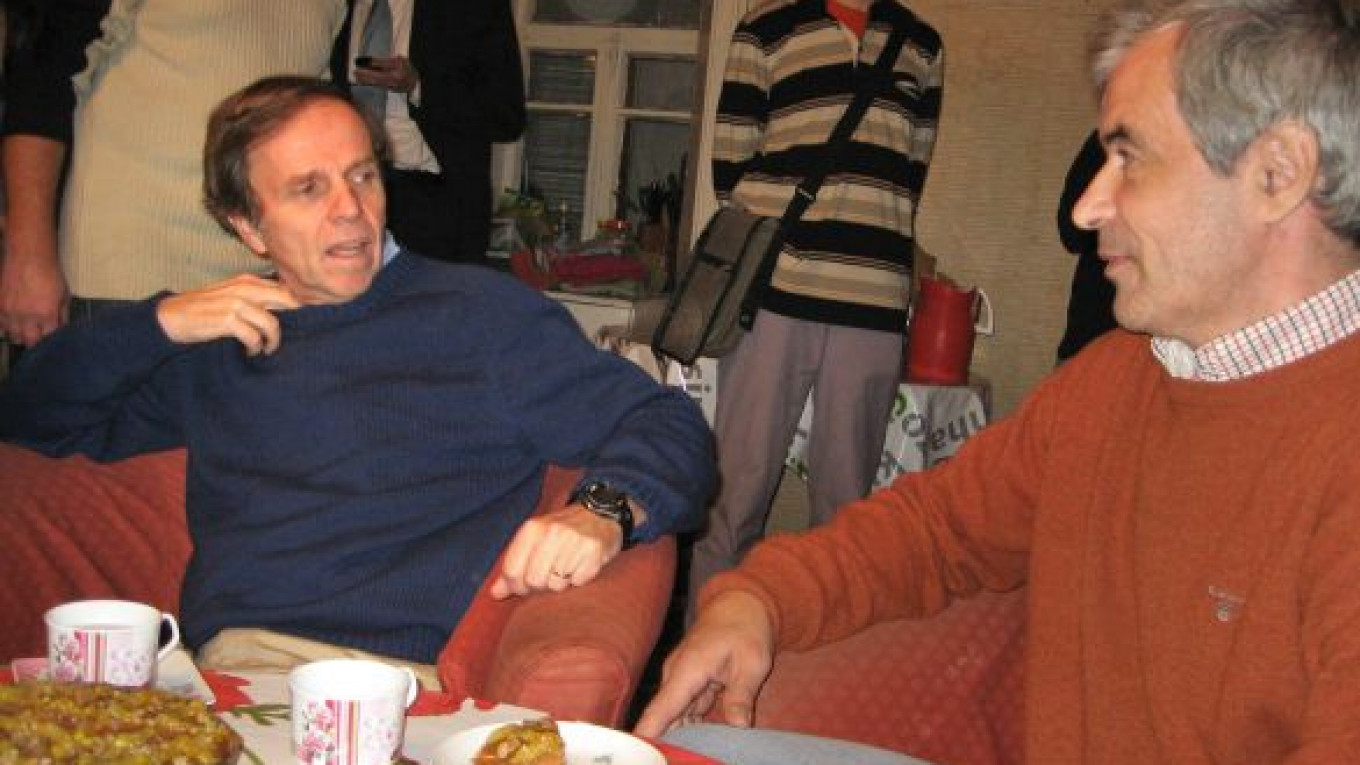
The unusually harsh rebuke of Russia's rights record was made by U.S. Assistant Secretary of State Michael Posner after his meeting with environmental activists near Khimki, the Moscow region town where they are fighting a losing and sometimes violent battle to stop a government-backed road project.
Posner's visit to the village of Gavrilkovo wound up a six-day trip across Russia, where he also traveled to Moscow, Nizhny Novgorod and Kazan, and met with officials, students, religious leaders and human rights activists ?€” including 84-year-old campaigner Lyudmila Alexeyeva.
"The so-called 'reset' has been effective in arms control, security issues and stronger economic ties, but I don't think there's been any meaningful progress on human rights and democracy issues," Posner said.
"When somebody organizes a protest, they shouldn't be beaten over the head with a baseball bat," Posner said at the meeting at the summer house of Konstantin Fetisov, a Khimki forest defender who was severely beaten by unidentified thugs last November.
"We will continue to follow what's happening in your case and to reinforce the importance of there being justice and accountability for the attack against you," Posner told Fetisov.
Fetisov was left with impaired speech and memory after being beaten over the head with a baseball bat outside his apartment in Khimki on Nov. 4, National Unity Day. He spent 40 days in a coma after the assault.
"As a person, he's recovered. As a person with two university diplomas, he's not recovered," his wife, Marina, told Posner as Fetisov looked on.
A $8 billion project to build a Moscow-St. Petersburg highway through the centuries-old Khimki forest caused a spate of public protests and minor clashes between activists and construction workers last year. Reacting, the Kremlin halted the project in August, but President Dmitry Medvedev ordered in December that the construction proceed as planned, saying it was too late to change anything.
Activists say the road is illegal and accuse local officials of waging a campaign of violence and intimidation against them.
At Saturday's meeting, campaign leader Yevgenia Chirikova listed the injuries suffered by those present. "Pasha spent time in the hospital with a broken nose and a concussion. Lyosha had his nose broken. Seryozha, over there, was beaten over the head," she said, adding that none of the attackers had been brought to justice.
However, police have detained six people on suspicion of planning and carrying out the attack on Fetisov, including Andrei Chernyshyov, a department head at Khimki city hall's property management committee. None have been tried so far.
Posner said the United States would "redouble" its efforts to make sure Russia heeded international norms on human rights. He denied that this bid constituted a change of focus for the administration of President Barack Obama, which critics have accused of neglecting human rights in Russia.
Pressed for details about U.S. plans, Posner said: "I don't think there's more than one way to push the Russian government harder. Some of it's private diplomacy, some of it's public. Some of it's reconstituting the McFaul-Surkov Civil Society Working Group. … We want to reorient it, rethink the way it's been done."
The McFaul-Surkov Civil Society Working Group, co-headed by Michael McFaul, the recently nominated U.S. ambassador to Russia, and Vladislav Surkov, the Kremlin’s first deputy chief of staff, has been meeting since 2009. Its agenda includes prison reform, migration, anti-corruption legislation and child protection ?€” primarily for Russian adoptees in the United States.
Posner said "real differences" on human rights remained with the Russian side and the United States would continue to amplify activists' voices and press officials to keep open the Internet and social media sites ?€” key forums for opposition-minded Russians.
But he and U.S. Embassy officials remained diplomatic about the matter in hand, avoiding direct criticism of the Khimki forest construction project, which is considered by the State Department a human rights, not an environmental, issue.
"Given that it's such an old forest, I think [the project] is a shame. But I also drive in this city ?€” I understand the need for road construction. I don't think there's a good choice," Cristina Hansell, environmental officer at the U.S. Embassy, said in Gavrilkovo.
She added that it was not the United States' job to tell Russia how and where to build. "We haven't done any independent environmental assessments," she said.?
Posner's meeting with Khimki activists, however, is significant in itself as an example of the State Department's increasing willingness to criticize and mildly sanction Russian officials for perceived human rights abuses. The shift comes months before the State Duma vote in December and the presidential election in March, which Prime Minister Vladimir Putin is widely expected to win.?
In a telling case, American diplomats confirmed in July that dozens of Russian officials implicated in another high-profile rights case, the 2009 death of Hermitage Capital lawyer Sergei Magnitsky in pretrial detention in Moscow, have been banned from entering the United States. A list of 60 people proposed for a blacklist was introduced in the U.S. legislature in 2010 but never approved. Unlike the Congress, the State Department did not make the names on its blacklist public.?
Posner was the first high-ranking U.S. official to travel to Khimki to meet with activists. As assistant secretary of state for the Bureau of Democracy, Human Rights and Labor, Posner is three ranks below Secretary of State Hillary Clinton.?
Chirikova, leader of the forest's defenders, welcomed his visit despite the lack of any formal pledges on Posner's part.?
"I didn't expect him to say, 'I'll save you!' ?€¦ For us, the most important thing is that they're paying attention," she told The Moscow Times at the meeting.
A Message from The Moscow Times:
Dear readers,
We are facing unprecedented challenges. Russia's Prosecutor General's Office has designated The Moscow Times as an "undesirable" organization, criminalizing our work and putting our staff at risk of prosecution. This follows our earlier unjust labeling as a "foreign agent."
These actions are direct attempts to silence independent journalism in Russia. The authorities claim our work "discredits the decisions of the Russian leadership." We see things differently: we strive to provide accurate, unbiased reporting on Russia.
We, the journalists of The Moscow Times, refuse to be silenced. But to continue our work, we need your help.
Your support, no matter how small, makes a world of difference. If you can, please support us monthly starting from just $2. It's quick to set up, and every contribution makes a significant impact.
By supporting The Moscow Times, you're defending open, independent journalism in the face of repression. Thank you for standing with us.

Remind me later.