

"It is now a huge construction site over there," Dmitry Chernyshenko, head of the Sochi Olympic Committee, said in Geneva. "We are already deep in the details."
But inspectors from the International Olympic Committee might be in for a surprise when they visit Sochi on Wednesday for their second major evaluation of progress.
Piles of gravel, temporary roads and a brand-new fence around the perimeter of the Olympic construction site in Sochi's Imeretinskaya lowland are among the few visible signs that this vast area is a "huge construction site."
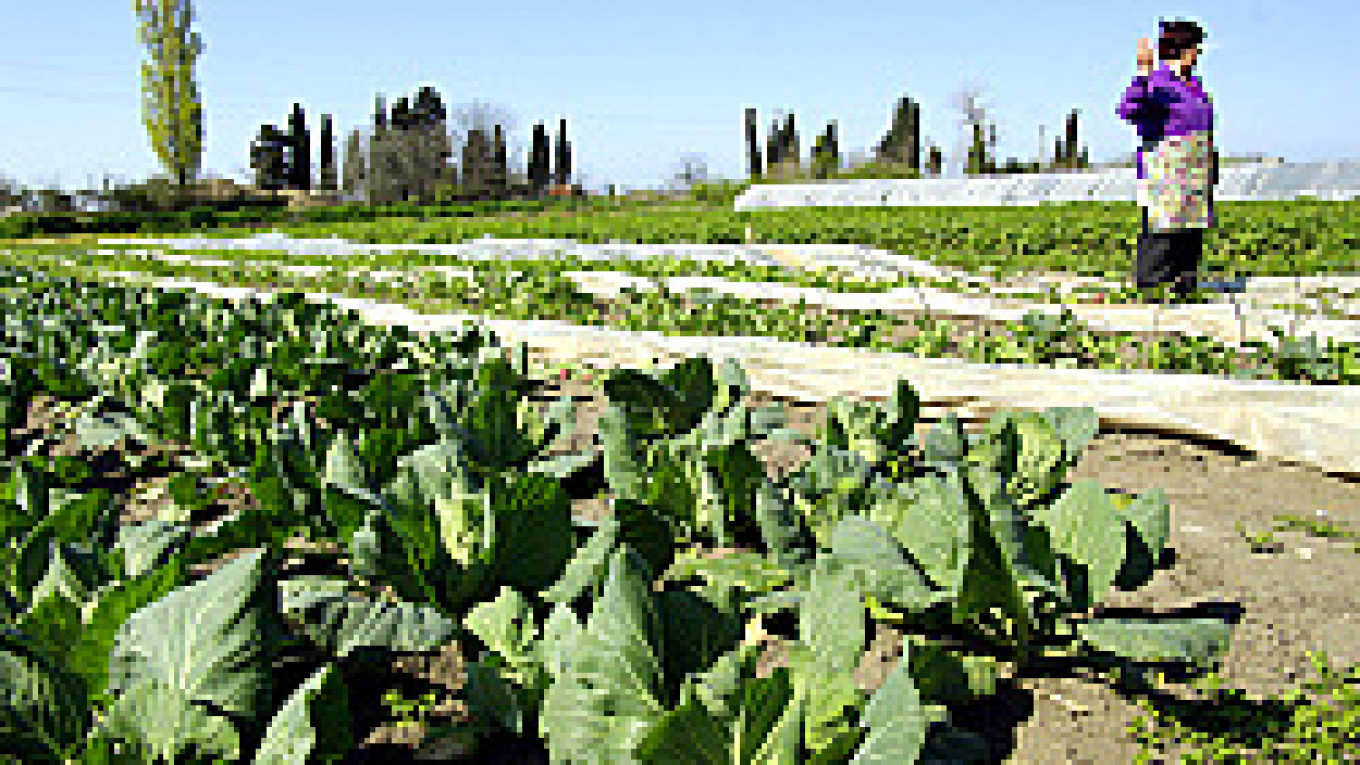
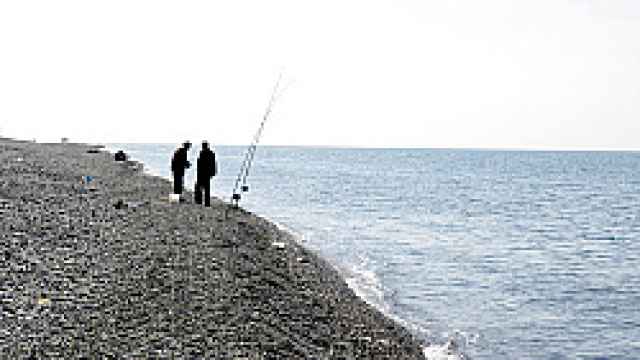
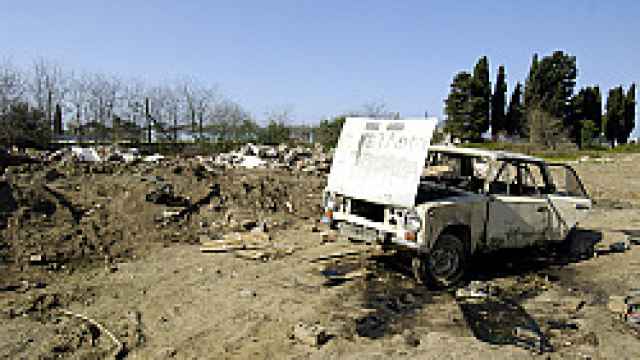
Mounds of garbage, including a rusted Zhiguli car covered with graffiti, are strewn across the area where a cargo port will be built to receive construction materials for Olympic venues. A rocky beach where the ships will dock remains untouched. A farm worker who was kicked off the land last year has returned to plant radishes.
A construction foreman at Olimpstroi's site, Igor Makushev, told The Moscow Times that he was not authorized to tell journalists what kind of work was under way and advised that questions be faxed to the Moscow office of Olimpstroi, the state corporation set up to handle construction of most venues.
Maria Antonova / MT
Sochi residents fishing on a rocky Imeretinskaya beach where a cargo port is supposed to be built.
|  |
| |
An Olimpstroi spokeswoman said Tuesday that the perimeter fence had been built in the past two weeks and workers were now developing temporary engineering networks for the future construction of the sports venues. She said work also had begun on preparing future construction sites for four venues.
On a recent afternoon, some construction workers at the site didn't seem to know what was going on. Two workers from Uzbekistan were found squatting near the site where Olimpstroi plans to build a village for some 100 residents to be displaced by construction. "We don't know what we are doing yet," one said.
About 3,000 people live in Imeretinskaya, a part of Sochi's Adler district on the Black Sea coast that is sandwiched between the Mzymta River to the north and the Psou River to the south. The Psou River also marks Russia's border with Georgia's breakaway region of Abkhazia.
Many of the locals worked at a communal farm established in Imeretinskaya when most of the local swamps were drained in the 1930s and a malaria epidemic was suppressed.
The farm was razed last fall after authorities decided to put the cargo port in the area. Locals responded with violent protests, leading to several arrests.
"To this day, nobody has showed us any documents that prove that the port's construction is legal," said Natalya Kalinovskaya, head of the local landowners' association who owns a house close to the beach.
Locals are convinced that the port project is a pretext to evict residents and develop resorts for the rich.
"We are not supposed to be moved under their plan, but we know that we won't be living here in the end," said Nina Opara, pausing from picking radishes in a guerrilla gardening plot among the farm's debris.
Port development has not moved far beyond the demolition of the farm, so some former farm workers have gone back to their patches.
The port, which will be built by the Transportation Ministry's Rosmorport company and Turkish firm Kolin Construction, was originally supposed to be located at the mouth of the Psou River, a virtually uninhabited area, according to a government decree signed last June. But an amended decree, signed by Prime Minister Vladimir Putin in December, puts the port in a 5-hectare spot adjacent to the residential areas.
"They will trash the best beach in Sochi," said Vladimir, a former farm worker who was hired to guard the port's construction site.
Maria Antonova / MT
A discarded Zhiguli car and piles of debris are the only visible features to some parts of the sprawling Olympic construction area in Sochi's Imeretinskaya district.
| |
| |
The beach, spreading across 700 meters of the coastline, is the widest in Sochi and the only segment of the coast with no nearby railroad tracks, residents said. Most of them make their living by renting out rooms to vacationers during high season.
"The port's territory starts 10 meters away from my house," Kalinovskaya said. "Nobody will come to Imeretinka again." Imeretinka is the nickname that residents have for the area.
The port is expected to open next year and have the capacity to process up to 5 million tons of cargo per year, according to government documents. Amid protests from residents, the government announced that the port would be turned into a yacht marina after the Olympics. But the contract with Kolin Construction is for a permanent cargo port, according to the firm's web site. Under the contract, signed last July, Kolin will invest $85 million into docks, warehouses and office buildings and operate the port under a 49-year lease.
Efforts to locate someone at Kolin for comment were unsuccessful. A representative at the head office in Ankara declined to provide contacts for Kolin managers based in Sochi or to connect a reporter with anybody with knowledge of the project. A representative with Kolin's legal adviser, Tenzor Consulting, said their contract with Kolin did not allow for any disclosure of information on the project.
The Transportation Ministry's Rosmorport declined to comment on the port. "Our management has not decided whether to answer any questions," a company representative said Tuesday when asked about questions faxed to the company last week.
Kalinovskaya has been one of the more vocal opponents of the port and another cargo port, which is to be built by Oleg Deripaska's Basic Element at the mouth of the Mzymta River. She has sued the government to stop both ports.
According to the lawsuit, a copy of which was obtained by The Moscow Times, the ports breach the Land Code, two federal environmental laws and a law that prohibits large-scale construction in resort areas.
The Supreme Court rejected the lawsuit last week and has yet to provide an explanation of its ruling, Kalinovskaya's lawyer Mikhail Benyash said.
Kalinovskaya said she was filing an appeal Tuesday and would complain to the European Court of Human Rights if her efforts proved futile in the Russian court system.
The lowland was recognized as a unique ecosystem in tsarist times, and its marshes are still home to endangered species, said environmentalist Valery Brinikh. "Once they raise the ground level for construction with sand, every living thing will be destroyed," he said.
Water will start rising up once the ditches and channels draining it to the sea are filled with gravel, he added. "It's madness to build large structures in Imeretinka," he said.
Some residents concurred. "How are they going to build venues on a swamp?" resident Svetlana Beresteneva said. "People have been afraid to build two-story houses here. There is water 2 meters underground."
Chernyshenko, the head of the Sochi Olympic Committee, thinks otherwise. In his report to the International Olympic Committee last week, he said Imeretinskaya was a flat land and it would not take "rocket science" to build there.
As the inspectors arrived in Sochi on Tuesday for two days of evaluations, Chernyshenko insisted once again that all was well.
"I … look forward to showing them the excellent progress the Sochi 2014 Organizing Committee has made since their first official visit," Chernyshenko said in a statement. "Not a single day has been lost in our preparations, and we have much to update them on."
A Message from The Moscow Times:
Dear readers,
We are facing unprecedented challenges. Russia's Prosecutor General's Office has designated The Moscow Times as an "undesirable" organization, criminalizing our work and putting our staff at risk of prosecution. This follows our earlier unjust labeling as a "foreign agent."
These actions are direct attempts to silence independent journalism in Russia. The authorities claim our work "discredits the decisions of the Russian leadership." We see things differently: we strive to provide accurate, unbiased reporting on Russia.
We, the journalists of The Moscow Times, refuse to be silenced. But to continue our work, we need your help.
Your support, no matter how small, makes a world of difference. If you can, please support us monthly starting from just $2. It's quick to set up, and every contribution makes a significant impact.
By supporting The Moscow Times, you're defending open, independent journalism in the face of repression. Thank you for standing with us.

Remind me later.