

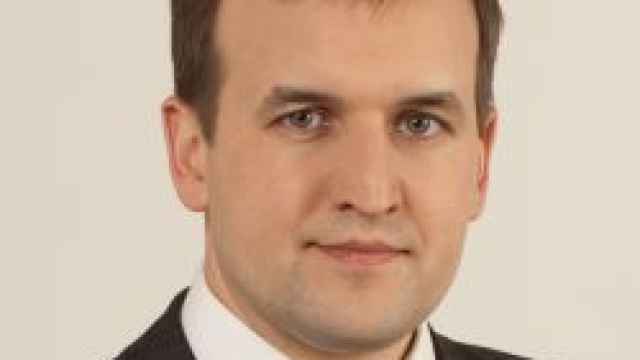
Andrey Rego
Deputy director of legal department
MTS
Telecommunications are a fundamental factor for stable economic development in the modern world. They provide a means for effective communication among society, business and government and help attract international funds and investments, influencing the business community. At the same time, the state legal environment is essential for ensuring fair competition and introducing high technologies to national markets. This incontrovertible influence creates the indispensable conditions and guarantees for further development of telecommunications.
As we can see, the legal regulation of telecommunications influences business in almost every state. Authorities define the trends of telecommunications development, establish regulatory and legal frameworks and supervise providers’ activities.
If we take a close look at telecommunications legislation in the CIS, we may come to a conclusion that its structure differs from country to country. Moreover, some legislative provisions create administrative barriers that interfere with development of the telecommunications market. Licensing procedures in telecommunications are a perfect example.
Normally it is the government (in Russia) or ministry sections (Uzbekistan and Moldova) that determine subjects and domains for licensing. In Belarus, such issues are determined by the president; in Kyrgyzstan, Kazakhstan and Armenia, they are stipulated by law.
There are essential differences in lists of licensed activities in different countries. In Russia, there are 20 types of telecommunications activities that must be licensed; in Belarus — 15, in Uzbekistan — 8, and in Armenia — 4. In Moldova, telecommunications services are provided without additional permits or other certification procedures; however, the usage of radio channels or frequencies, as well as numerating resources, is subject to licensing.
The Ukrainian legal system allows market players to perform certain telecommunications operations upon notification. The business entity intending to carry out telecommunications activities is obliged to submit a notice to the national regulating commission no less than 30 days prior to starting telecommunications services. Only fixed and mobile telecommunications services, as well as television and radio broadcasting, are subject to licensing.
Licensing of specific telecommunications services is customary for the majority of CIS countries. Sometimes, licenses determine strictly the technological means used to provide telecommunications services (in Russia and Belarus). At the same time, this stipulation of a certain standard in license (such as GSM or UMTS) does not allow operators to expand their telecommunications services and to improve service quality, thus limiting their possibility to introduce innovations to the market freely and adequately.
Unlike CIS legislation, the European Union allows operation upon notification. Separate licenses are given out in special cases, such as limited resource or special restrictions and limitations.
To provide the telecommunications sector in the CIS with additional opportunities for development, it is necessary to unify the existing licensing procedures and move forward from licensing of specific services and technologies to multiservice licensing, allowing the applicant to receive a general license, according to which the applicant provides services without limitations by technological means or standards. Introducing operation upon notification is reasonable when limited resource is not involved (like in the EU and Ukraine). This will give way to a more effective development of modern and popular telecommunications services, including LTE-based services, and will help plan investment policy and future economic strategy.
A Message from The Moscow Times:
Dear readers,
We are facing unprecedented challenges. Russia's Prosecutor General's Office has designated The Moscow Times as an "undesirable" organization, criminalizing our work and putting our staff at risk of prosecution. This follows our earlier unjust labeling as a "foreign agent."
These actions are direct attempts to silence independent journalism in Russia. The authorities claim our work "discredits the decisions of the Russian leadership." We see things differently: we strive to provide accurate, unbiased reporting on Russia.
We, the journalists of The Moscow Times, refuse to be silenced. But to continue our work, we need your help.
Your support, no matter how small, makes a world of difference. If you can, please support us monthly starting from just $2. It's quick to set up, and every contribution makes a significant impact.
By supporting The Moscow Times, you're defending open, independent journalism in the face of repression. Thank you for standing with us.

Remind me later.