

SOFIA, Bulgaria — The United States encouraged Bulgaria’s new government on Friday to press ahead with a review of major Russian-backed energy projects agreed on by the previous Socialist-led cabinet.
The center-right cabinet, which won July elections, has been examining whether Bulgaria’s participation in the South Stream gas pipeline and a trans-Balkan oil pipeline, as well as plans to build a nuclear plant, suit the country’s interests. It wants to diversify the routes and sources of its energy supplies.
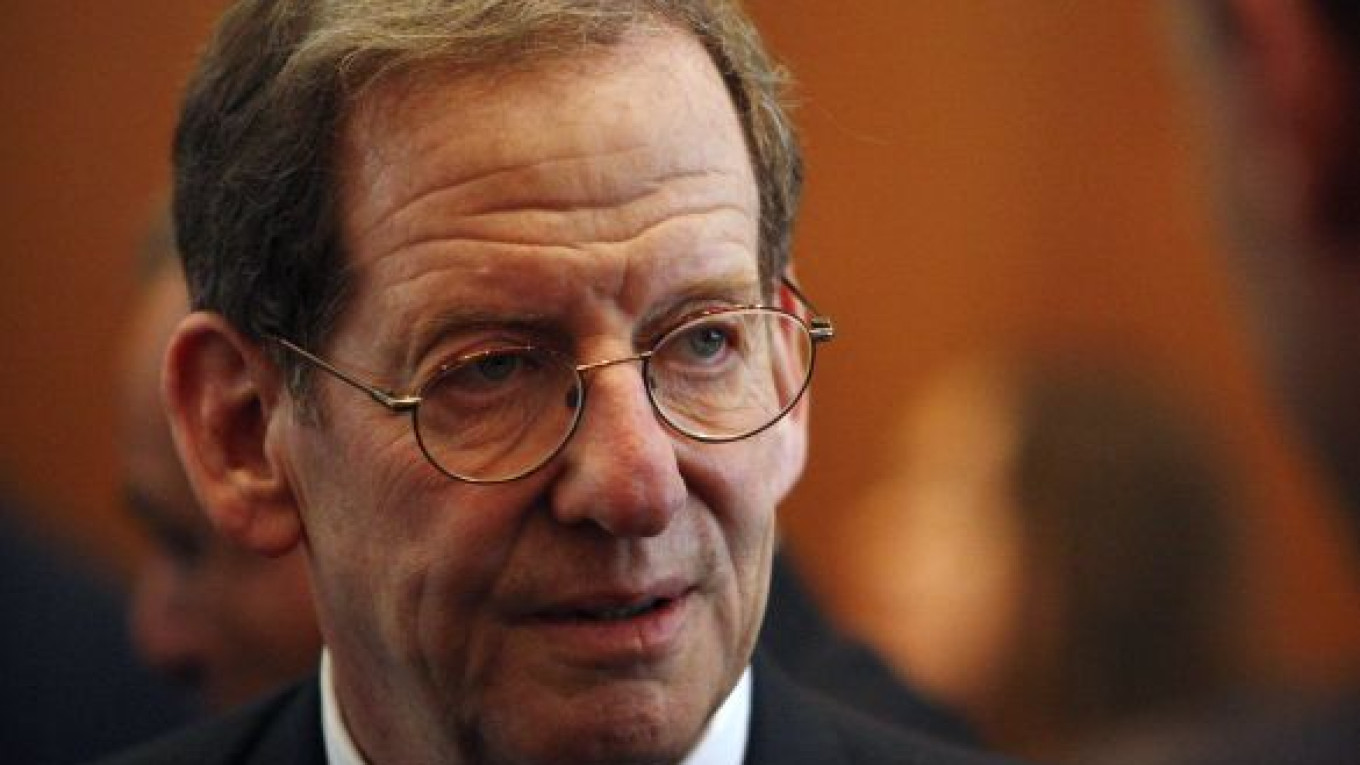
“Bulgaria is doing a lot of the right things right now,” said Richard Morningstar, U.S. Special Envoy for Eurasian Energy. “Russia is a reality. Bulgaria has to talk to the Russians. Bulgaria has to talk about South Stream, no way to avoid that.”
“But at the same time, Bulgaria is doing the right thing relooking at its energy policies, looking at South Stream for example and determining what’s the best way to proceed,” he told a business event in Sofia.
South Stream, led by Gazprom, is seen as a rival to the EU-sponsored Nabucco pipeline project. It is planned to bring Russian gas under the Black Sea to Bulgaria’s shores and then to southeastern and central Europe.
Sofia has already said it will give priority to the Nabucco scheme, which is meant to bring Caspian gas via the Balkans to central Europe and thereby reduce the European Union’s dependence on Russian gas.
Morningstar, who met Bulgaria’s President Georgi Parvanov and Prime Minister Boyko Borissov, said Washington did not aim to influence Sofia’s energy strategy. “We can’t come here and tell Bulgaria what’s in Bulgaria’s interest, nobody can. … Bulgaria does recognize and does see its interest to diversify routes and sources of supply.”
Russian officials have in the past accused the United States of interfering in Sofia’s energy decisions.
The EU receives a quarter of its gas from Russia, and its desire to reduce its reliance gained impetus from a price row between Moscow and transit country Ukraine that disrupted supplies to Europe in January, with Bulgaria badly hit. So far the bloc has had limited success in securing supplies for Nabucco.
Bulgaria agreed in September to speed up initial preparatory work on South Stream, which aims to bypass Ukraine, but has yet to make a final investment decision. Despite fears in Brussels that South Stream may hurt Nabucco’s prospects, European companies are eager to join it.
On Thursday, French power group EDF signed a deal to take part in South Stream and Italian oil group ENI is already involved in the project.
Sofia is also reviewing its participation in a planned oil pipeline due to carry Russian crude to Greece because of concerns about the environment and the lack of benefits. Last month, the government froze the multibillion Belene nuclear power plant project, due to be built by a Russian contractor, after German utility RWE pulled out.
A Message from The Moscow Times:
Dear readers,
We are facing unprecedented challenges. Russia's Prosecutor General's Office has designated The Moscow Times as an "undesirable" organization, criminalizing our work and putting our staff at risk of prosecution. This follows our earlier unjust labeling as a "foreign agent."
These actions are direct attempts to silence independent journalism in Russia. The authorities claim our work "discredits the decisions of the Russian leadership." We see things differently: we strive to provide accurate, unbiased reporting on Russia.
We, the journalists of The Moscow Times, refuse to be silenced. But to continue our work, we need your help.
Your support, no matter how small, makes a world of difference. If you can, please support us monthly starting from just $2. It's quick to set up, and every contribution makes a significant impact.
By supporting The Moscow Times, you're defending open, independent journalism in the face of repression. Thank you for standing with us.

Remind me later.