

The company, Russia's first electricity company to be included on the index since the July 1 liquidation of state-owned power utility Unified Energy System, has been hit hard this summer. Its stock has tumbled since the company's forecasted full-year net profit was cut by more than 20 percent to 13 billion rubles ($530 million) because of low annual water levels.
The drop in water levels, after reservoirs in Siberia and central Russia had as much as 50 percent less water than the multiyear average, prompted Goldman Sachs to remove RusHydro from its list of "Russian focus ideas" on Aug. 19 and slash the stock's price estimate by 3.5 percent to 8.3 cents.
The power firm had its biggest decline ever that day, dropping by 7.2 percent.
But RusHydro spokesman Yevgeny Druzyak said the company did not expect the low reservoir levels to leave a negative effect on the company long term.
"We are going to have less water this year, but this news is not a tragedy for our investors and shareholders," he said. "There is no forecast for our shares to have a lower price."
Like Russia's other natural resource industries, hydropower took a hit this month because of investor uneasiness over Russia's military involvement in Georgia and Prime Minister Vladimir Putin's verbal attack against coal and steel firm Mechel.
RusHydro, the largest subsidy of the liquidated UES, reported in July that 2007 profit dropped to 6.53 billion rubles ($277 million), while sales last year more than doubled to 47.8 billion rubles, according to international financial standards.
The company has said it hopes to double its net profit next year to $1 billion and double its electricity output by 2020. To fulfill these goals, the company will have to rely on the state to front the industry's high capital expenditure costs and continue its policy of gradual market liberalization.
Matvey Taits, a utilities analyst at UralSib, said in an Aug. 15 report that "investors should not overestimate the detrimental impact on the company's financials, as the low water levels are a one-off event." The company is on track to meet next year's targets of $3 billion in revenue and net profit of $1 billion, Taits said.
Over the longer term, RusHydro carries the risk that its need for capital will continuously outpace its revenue.
Mattias Westman, chief executive of Prosperity Capital Management, which runs Russia-focused funds worth $5 billion, including in the country's electricity sector, said the primarily state-owned RusHydro might face the same problems that characterize other Kremlin-affiliated companies, such as Gazprom, which also carry high capital expenditure costs.
"If you look at what happens with Gazprom, they never have any money left at the end of the year," Westman said. "A similar thing might happen to RusHydro."
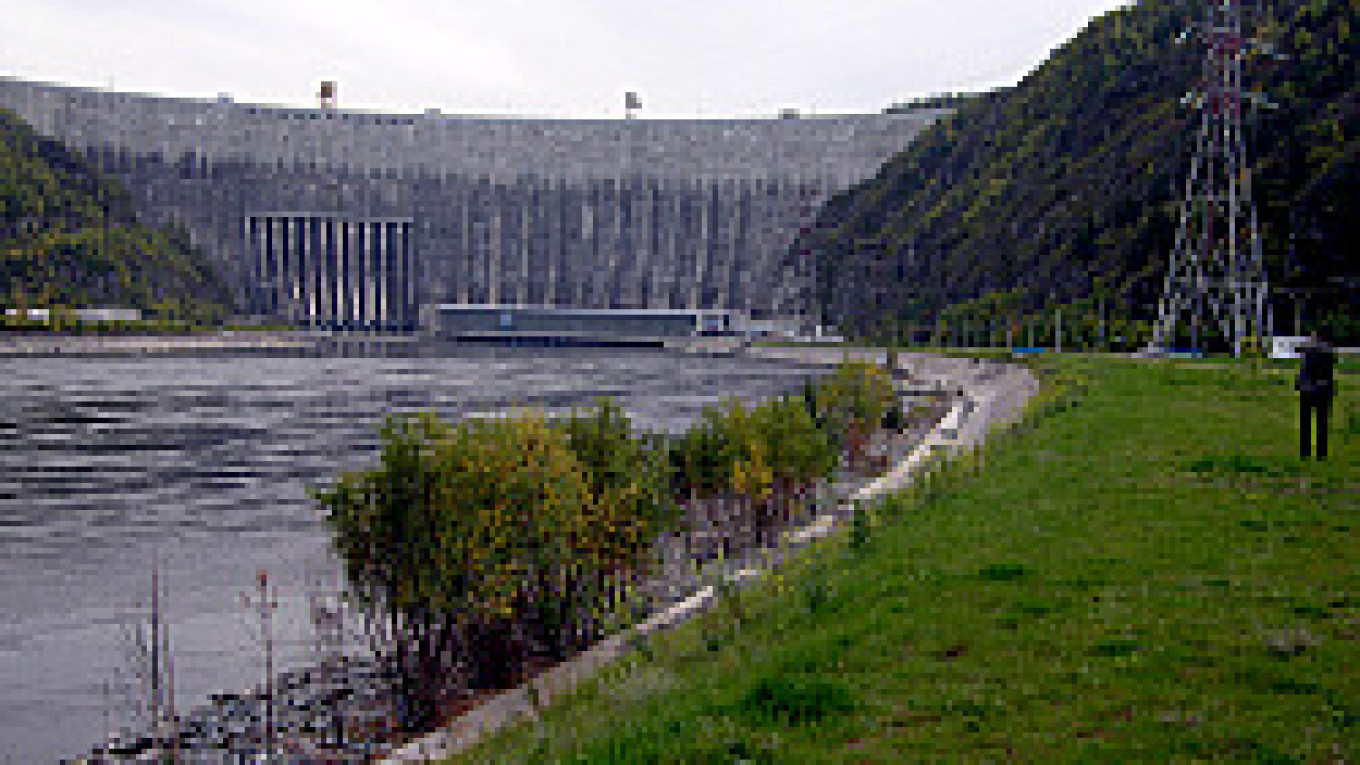
RusHydro, also known as Hydro-OGK, currently operates a total of 15 hydropower plants spread out across the country, from the Caucasus to the Far East. Its Sayano-Shushenskaya plant in Khakassia, the biggest in the former Soviet Union, powers United Company RusAl's giant Sayanogorsk aluminum smelter nearby.
Analysts say Russia has one of the highest capacities for undeveloped hydropower in the world and that RusHydro is in a position to offset domestic coal and natural gas demands with renewable energy alternatives.
The company currently produces 20 percent of Russia's power and has a hydro generating capacity of 25 gigawatts.
To increase its capacity by 22 gigawatts as planned, RusHydro will have to put significant capital into creating new hydropower facilities and updating old Soviet-era ones.
After ranking second only to the United States for installed hydropower capacity during the Soviet period, Russia allowed the hydropower industry to stagnate for the majority of the 1990s while it completely restructured its electric power industry.
Since the creation of UES in 1997, the state has put renewed interest into the hydropower sector, and companies like RusHydro are dependent on the continuation of this interest. Beyond capital, the state will have to maintain a favorable water tax regime and fulfill its promise of market deregulation for RusHydro to actually fulfill the goals it has set for itself.
Isabel Murray, Russia program manager for the Paris-based International Energy Agency, said the state's separate interest in oil and natural gas could only benefit the burgeoning hydropower sector.
"If anything hydro would help Russia export oil or coal," Murray said by telephone, citing the fact that hydropower production would offset domestic consumption of coal and natural gas, leaving more resources available for export.
It is also possible that the government will decide to change the favorable conditions it has set for the hydropower industry.
This is one of the primary risks associated with investment in RusHydro, Alexander Korneyev, a Citibank analyst, said in a report on the company.
"A change in government policy could damage the financial performance of RusHydro, as the government determines the pace of gas price liberalization and water taxes for RusHydro," Korneyev said.
A Message from The Moscow Times:
Dear readers,
We are facing unprecedented challenges. Russia's Prosecutor General's Office has designated The Moscow Times as an "undesirable" organization, criminalizing our work and putting our staff at risk of prosecution. This follows our earlier unjust labeling as a "foreign agent."
These actions are direct attempts to silence independent journalism in Russia. The authorities claim our work "discredits the decisions of the Russian leadership." We see things differently: we strive to provide accurate, unbiased reporting on Russia.
We, the journalists of The Moscow Times, refuse to be silenced. But to continue our work, we need your help.
Your support, no matter how small, makes a world of difference. If you can, please support us monthly starting from just $2. It's quick to set up, and every contribution makes a significant impact.
By supporting The Moscow Times, you're defending open, independent journalism in the face of repression. Thank you for standing with us.

Remind me later.