

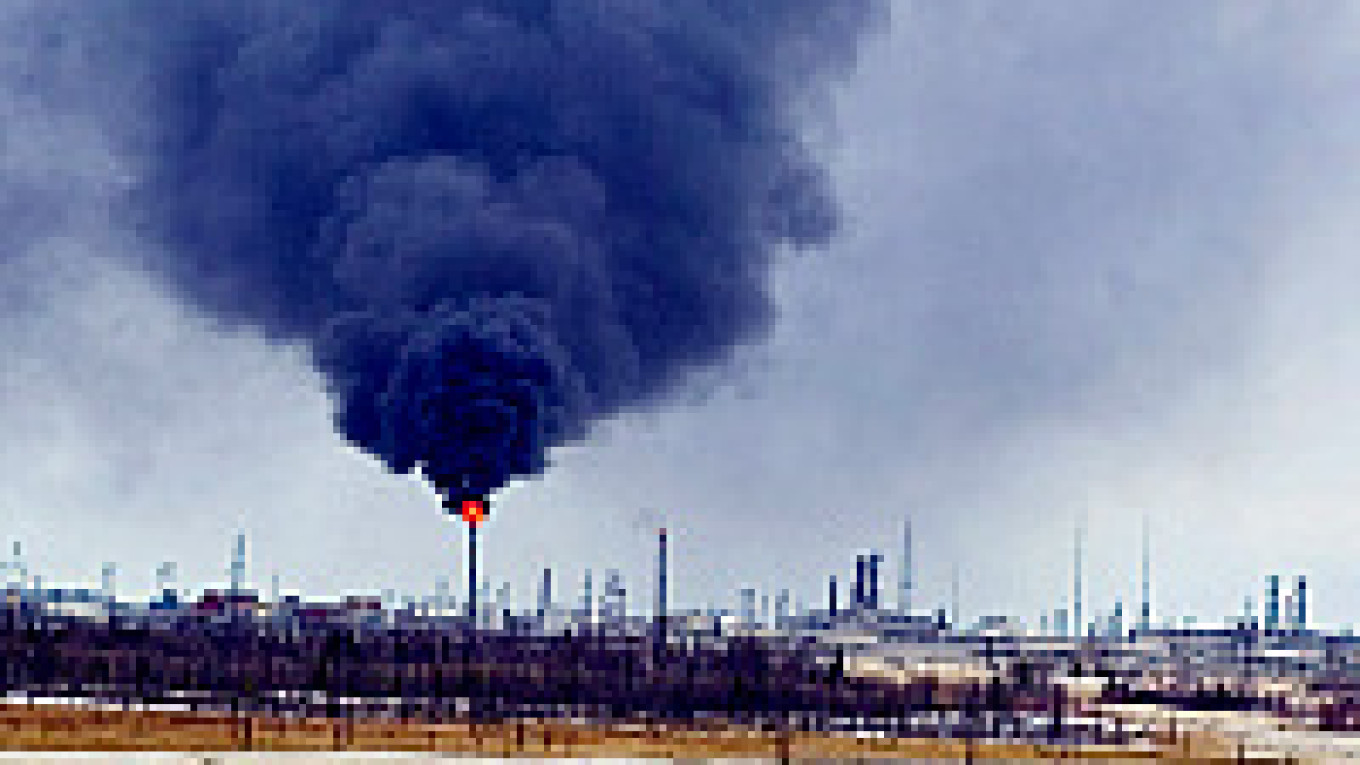
Flaring gas, found when extracting oil and considered too difficult and expensive to get to the market, sends tons of the greenhouse gas carbon dioxide into the atmosphere.
Both the Energy and Natural Resources ministries have decided to postpone the target date, Trutnev told reporters, declining to name a reason for the delay.
The two ministries had previously disagreed over how to stop the country from flaring nearly $13 billion worth of gas each year, reinforcing doubts that the country would meet Prime Minister Vladimir Putin's 2011 deadline.
Some experts say Russia, the world's biggest gas exporter, is also the leading flarer of gas, but by its own calculations it is only the second-largest after Nigeria.
For some, a fear of government-proposed fines combined with the commercial prospect of selling the gas encouraged firms to establish vigorous programs to curb gas flaring.
The country's largest oil producer and biggest flarer, Rosneft, will spend 67 billion rubles ($2.74 billion) over the next five years on gas utilization.
Gazprom Neft has said it will invest 17.6 billion rubles ($714.6 million) in cutting gas flaring in 2008 to 2010.
Putin said in July that Gazprom must grant oil companies greater access to its pipeline network to cut the wasteful flaring of associated gas.
Russia burns off 38 billion cubic meters of gas a year, a World Bank study said. The government has set a goal of using 95 percent of associated gas by 2011.
Currently, the country flares about 45 percent of the gas it produces at oil fields, the World Bank said in its report.
(Reuters, Bloomberg)
A Message from The Moscow Times:
Dear readers,
We are facing unprecedented challenges. Russia's Prosecutor General's Office has designated The Moscow Times as an "undesirable" organization, criminalizing our work and putting our staff at risk of prosecution. This follows our earlier unjust labeling as a "foreign agent."
These actions are direct attempts to silence independent journalism in Russia. The authorities claim our work "discredits the decisions of the Russian leadership." We see things differently: we strive to provide accurate, unbiased reporting on Russia.
We, the journalists of The Moscow Times, refuse to be silenced. But to continue our work, we need your help.
Your support, no matter how small, makes a world of difference. If you can, please support us monthly starting from just $2. It's quick to set up, and every contribution makes a significant impact.
By supporting The Moscow Times, you're defending open, independent journalism in the face of repression. Thank you for standing with us.

Remind me later.