

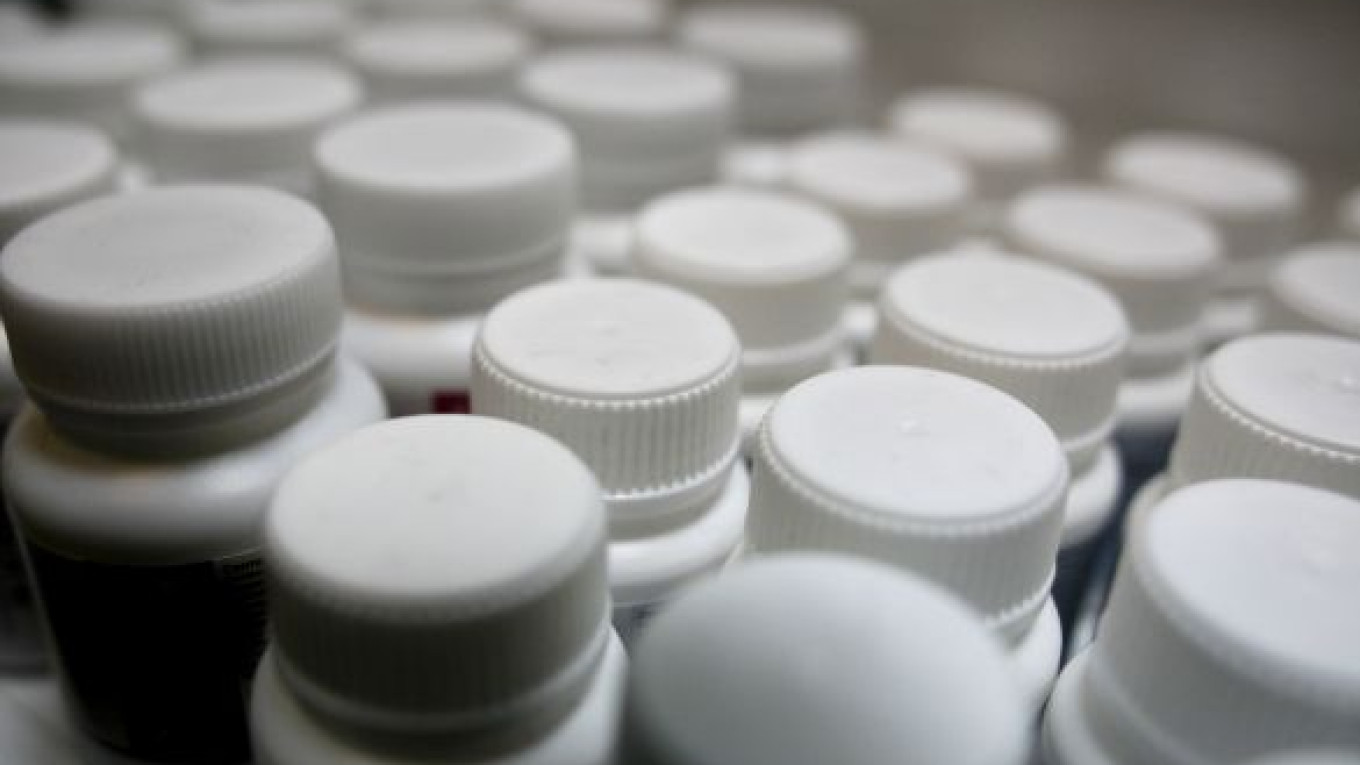
Russia, France, Germany and several other mostly European countries on Friday signed the first-ever international treaty to combat the growing multibillion-dollar counterfeit drugs industry.
The Council of Europe-sponsored Medicrime Convention, signed in Moscow, obliges signatory states to criminalize a broad range of activities that make possible the sale of fake medicines that harm patients and deprive legal producers of revenues.
Health and Social Development Minister Tatyana Golikova, who signed the treaty on behalf of Russia, said the government would beef up penalties for the crimes to comply with the new requirements, Interfax reported.
The convention introduces minimum standards for the criminal law of the signatory countries, said Council of Europe media officer Estelle Steiner.
"The global trend has been that these crimes were often not considered as serious enough to merit criminal law measures," she said. "In some countries, these activities have already been criminalized. In others, the governments will have to introduce new measures."
Ambassadors and diplomats of Austria, Finland, Italy, Israel, Iceland, Portugal, Switzerland and Ukraine have signed the treaty. It establishes as criminal offenses such activities as the manufacturing of counterfeit medical products (including equipment), their supply and offers to supply, trafficking and the falsification of related documents.
In an Interpol operation last month, law enforcement officers seized more than 2.5 million doses of fake and unlicensed medicines in 79 countries. The drugs were being sold on pharmacy web sites that were run, hosted or facilitated by Russians or Chinese, while most of the counterfeit products came from Chinese suppliers, British police said.
Many fake drugs contain an insufficient amount of active ingredients, which could cause fatal consequences for the patient.
According to the World Health Organization, counterfeit medical products sometimes account for more than 50 percent of market value in developing countries. In some parts of Europe they represent between 6 percent and 20 percent of the market.
That number is less than 1 percent in developed countries where there is efficient regulatory control.
Non-members of the Council of Europe may also accede to the convention.
A Message from The Moscow Times:
Dear readers,
We are facing unprecedented challenges. Russia's Prosecutor General's Office has designated The Moscow Times as an "undesirable" organization, criminalizing our work and putting our staff at risk of prosecution. This follows our earlier unjust labeling as a "foreign agent."
These actions are direct attempts to silence independent journalism in Russia. The authorities claim our work "discredits the decisions of the Russian leadership." We see things differently: we strive to provide accurate, unbiased reporting on Russia.
We, the journalists of The Moscow Times, refuse to be silenced. But to continue our work, we need your help.
Your support, no matter how small, makes a world of difference. If you can, please support us monthly starting from just $2. It's quick to set up, and every contribution makes a significant impact.
By supporting The Moscow Times, you're defending open, independent journalism in the face of repression. Thank you for standing with us.

Remind me later.