

The competition was founded in 1955 by three Dutch photographers with one practical aim. "Basically," explained WPP director Michiel Munneke, "they felt that the quality of photography in neighboring countries was much higher than in the Netherlands. They wanted to convince their editors and commissioners that this was the case."
Since then, it has grown into an annual who's who of photojournalists, and the exhibition travels annually to 95 cities worldwide. The jury selected winners in 21 categories out of more than 96,000 submissions sent in by more than 5,000 photographers from 124 different countries.
World Press Photo
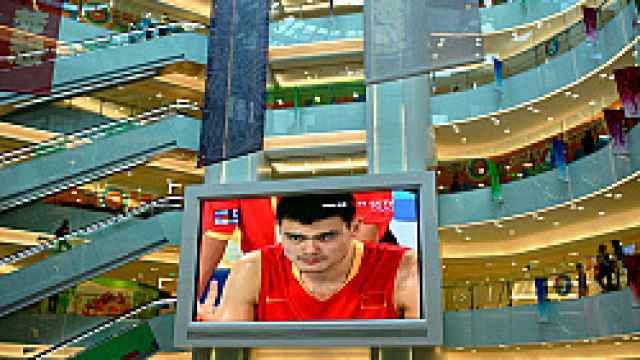
Zhao Qing won in the sports section with this shot from the Olympic Games.
|  |
| |
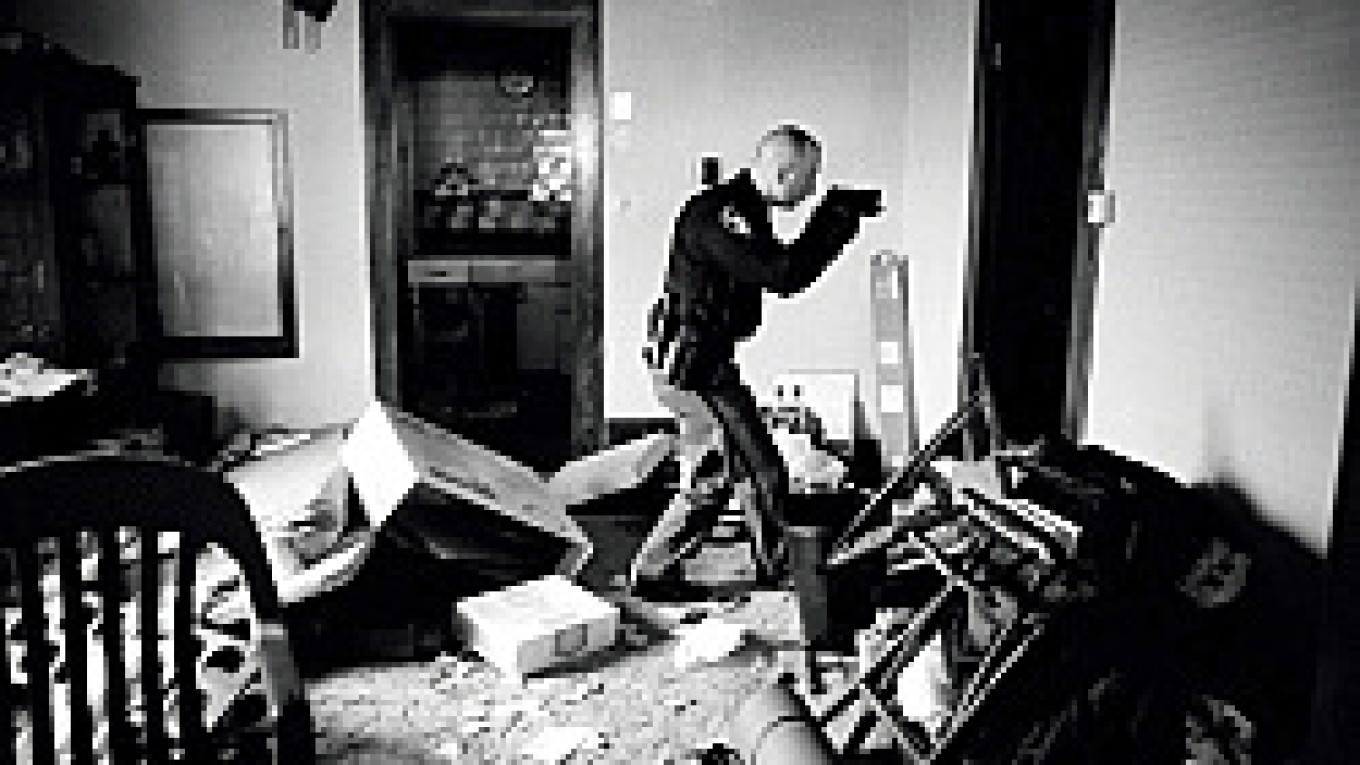
The grand prize went to Anthony Suau for a black-and-white action still of a Cleveland policeman forcibly repossessing a foreclosed house, pistol in hand. "The financial crisis was something that needed to be addressed," said Munneke. "It's a rather abstract news event, it's very difficult to visualize. So I think the jury really appreciated the way he did it."
In their own right, the photographs are uniformly excellent. On top of that, the exhibition is a fine demonstration of photojournalism's diversity, quality and social value. Some photos capture events that everyone knows about as if to sum them up in one shot; others bring hidden stories to light that are no less deserving of attention.
"You don't have to go to conflict zones to make important photographs," Suau explained. "There're a lot of different situations that illuminate important aspects of what life is. It's really up to the photographer to find a certain sensibility to his photographs, to his eye, and to how he feels about his subject. "
For all, however, there is to recommend World Press Photo as a competition, as an exhibition it punches far below weight.
The photographs themselves are printed in relatively low quality on a flimsy cardboard base and metal stands -- presumably to minimize the cost of their jet-setting. This makes experiencing them firsthand feel rather cheap and deprives them of a greater power they would undoubtedly have in the pages of a newspaper or magazine.
They cope very badly in the notoriously difficult Krasny Oktyabr space. Suau's winner is hidden in the middle of the room amid a random jumble of other works, arranged with seemingly little regard toward explaining these events and fashioning a story out of them. This, it turns out, was mainly from the factory's many windows, which let in too much light. Worse things have happened a floor downstairs, where artworks have been placed directly in the sunlight and thus rendered unwatchable, but there's no good reason why the organizers couldn't have shelled out on some curtains.
You won't find any fault with the snaps themselves. Still, if there's one thing a photojournalism exhibition should do, it's fashion some sense out of the events depicted. For that, you'll have to turn to the news stand.
World Press Photo 2009 runs at Krasny Oktyabr through July 27. 6 Bersenevskaya Naberezhnaya. Metro Polyanka. Tel. 230-3930.
A Message from The Moscow Times:
Dear readers,
We are facing unprecedented challenges. Russia's Prosecutor General's Office has designated The Moscow Times as an "undesirable" organization, criminalizing our work and putting our staff at risk of prosecution. This follows our earlier unjust labeling as a "foreign agent."
These actions are direct attempts to silence independent journalism in Russia. The authorities claim our work "discredits the decisions of the Russian leadership." We see things differently: we strive to provide accurate, unbiased reporting on Russia.
We, the journalists of The Moscow Times, refuse to be silenced. But to continue our work, we need your help.
Your support, no matter how small, makes a world of difference. If you can, please support us monthly starting from just $2. It's quick to set up, and every contribution makes a significant impact.
By supporting The Moscow Times, you're defending open, independent journalism in the face of repression. Thank you for standing with us.

Remind me later.