


Honoring the 60th anniversary of the end of World War II and freshly warmed up from a pair of performances in London and Berlin, the musicians will present classical favorites alongside a brand-new work by Finnish composer and conductor Esa-Pekka Salonen in the Great Hall of the Moscow Conservatory, before heading off to a final concert in Beijing and disbanding.
The World Orchestra for Peace is perhaps one of the more unusual musical groups around. It is not actually an ensemble that performs -- or even rehearses -- together on a regular basis. In fact, over its 10-year existence it has played only five times, due, no doubt, to the logistical nightmare of uniting over 100 musicians representing almost 80 orchestras in over 40 countries.
There are no contracts and no paychecks, Gergiev told the online magazine of Credit Suisse, which is sponsoring the orchestra's current tour. "The idea is to meet up sporadically with colleagues from around the world and to play at the very highest level," he said. The maestro went on to note that his goal in leading the all-star ensemble was to "fight cultural poverty" around the globe.
The orchestra was the brainchild of the legendary Hungarian-born conductor Sir Georg Solti. Mesmerized by a conductor-less performance of Richard Wagner's "Siegfried Idyll" performed by musicians from around the world for his 80th birthday celebration in 1992, Solti had the idea of joining the world's finest musicians together to harness "the unique strength of music as an ambassador for peace," according to the orchestra's web site. His idea came to life in 1995, when Solti assembled players from 40 countries at the behest of the United Nations for a concert commemorating the organization's 50th anniversary.
Solti, however, only lived to conduct the orchestra's inaugural performance in Geneva. After his sudden death in 1997, the baton was passed to Gergiev, who led the orchestra to Germany for the 1998 gala opening of the Festival Concert Hall in Baden-Baden. Reportedly thrilled by the experience, Gergiev seized a chance in 2000 to summon the musicians to Britain in concert marking the start of the London Blitz in 1940. Three years later, Gergiev brought the group to Russia for a performance at St. Petersburg's White Nights Festival, which was dedicated that year to the 300th anniversary of the city's founding, followed by another performance in Moscow.
First on the bill for Tuesday evening is the overture to Gioachino Rossini's opera "William Tell", the same work that Solti himself chose for the ensemble's first concert 10 years ago. Next comes another one of Solti's favorites, the shimmering and languorous strains of Claude Debussy's "Prelude to the Afternoon of a Fawn," followed by the dramatic overture to Wagner's "The Mastersingers of Nuremburg."
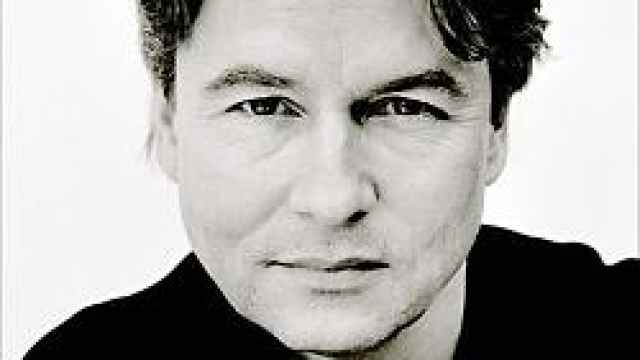 Kasskara / DG Tuesday's concert features a new piece by Esa-Pekka Salonen. |  |
| |
Bringing together players from orchestras around the world inevitably hints at trouble in the offing. Everything from tuning -- different orchestras tune to varying pitches -- to incongruent national styles threaten to be potential pitfalls. Yet the orchestra has garnered consistent praise in the past, and Gergiev is confident that the musicians blend well together. "We are very fortunate that we have music as the common language; it provides us with a basis for working together," he said in the Credit Suisse interview.
Still, combating friction between the colliding egos of seasoned orchestral soloists remains a priority. In 2003, for example, the ensemble's violin sections contained 15 concertmasters. Gergiev has done what he can to soothe the situation: Not only does he have the musicians continually rotate seating and solos, but for Tuesday night, he picked a fitting final piece for an orchestra consisting of star soloists. Nikolai Rimsky-Korsakov's incandescent and lyrical tone poem "Scheherazade" fills the second half of the program, promising to let each of the orchestra's sections showcase their international virtuosity.
The World Orchestra for Peace plays Tues. at 7 p.m. in the Conservatory Great Hall, located at 13 Bolshaya Nikitskaya. Metro Pushkinskaya, Biblioteka Imeni Lenina. Tel. 229-9401.
A Message from The Moscow Times:
Dear readers,
We are facing unprecedented challenges. Russia's Prosecutor General's Office has designated The Moscow Times as an "undesirable" organization, criminalizing our work and putting our staff at risk of prosecution. This follows our earlier unjust labeling as a "foreign agent."
These actions are direct attempts to silence independent journalism in Russia. The authorities claim our work "discredits the decisions of the Russian leadership." We see things differently: we strive to provide accurate, unbiased reporting on Russia.
We, the journalists of The Moscow Times, refuse to be silenced. But to continue our work, we need your help.
Your support, no matter how small, makes a world of difference. If you can, please support us monthly starting from just $2. It's quick to set up, and every contribution makes a significant impact.
By supporting The Moscow Times, you're defending open, independent journalism in the face of repression. Thank you for standing with us.

Remind me later.