

A sweep of the 57 Russia-related books reviewed this year in The Moscow Times stays remarkably faithful to the survey's results, with more books about communism than any other subject, followed by Cold War histories starring undercover agents, submarines and the like. Even snow figured prominently among Russia-related books this year; ice floes and polar vistas were featured on at least three different dust jackets. For the most part, specialists and readers seem to be on the same page. Which isn't necessarily a bad thing. Much remains to be explored in all of these areas, and the best of this year's books made a crucial contribution.
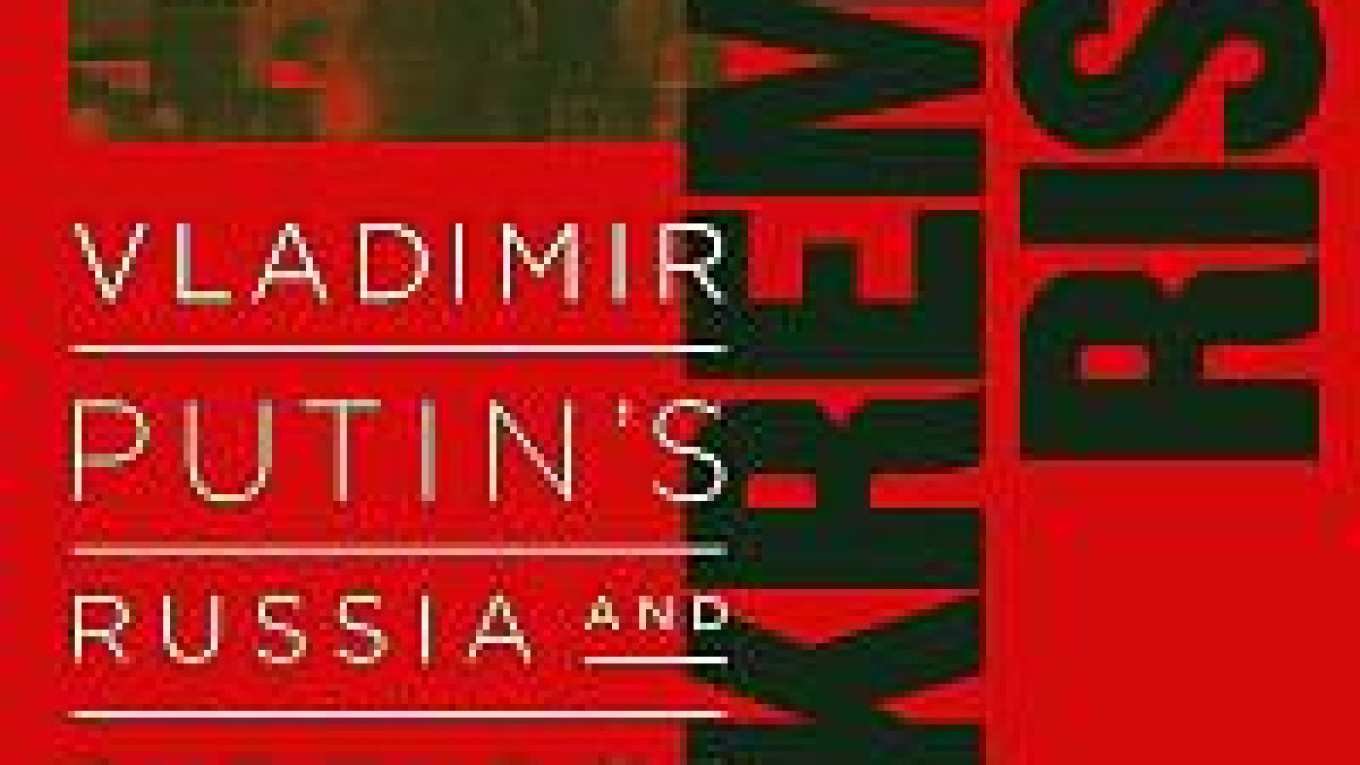
Current Affairs: Fresh from a four-year assignment in Moscow, Washington Post correspondents Peter Baker and Susan Glasser sum up the experience in their essential and authoritative "Kremlin Rising: Vladimir Putin's Russia and the End of Revolution." The authors consider a wide range of issues, from the booming oil-fed economy and the emerging middle class to the AIDS epidemic and the war in Chechnya. They are at their best, however, when they turn to politics, providing what our reviewer, Robert C. Toth, called "the first comprehensive account by U.S. journalists of the Putin presidency so far."
History: Josef Stalin, who dominated the list in 2004, emerges as a human if unattractive figure in Robert Service's "Stalin: A Biography." According to our reviewer, Sheila Fitzpatrick, Service correctly emphasizes the dictator's intelligent -- even intellectual -- approach to governance and ideology, his jealous control of Party politics and his penchant for ruthlessness and cruelty, which predated the purges by several decades. Though Stalin the man still eludes his biographer, Service proves "well-equipped" to provide the historical context.
Memoir: Svetlana Alexievich's "Voices From Chernobyl: The Oral History of a Nuclear Disaster" opens a window on the experiences of those who were poisoned, displaced or forgotten in the wake of the 1986 nuclear power-plant accident. Sometimes proud, sometimes humiliated, and often angry, these testimonies of personal crisis eerily expose the weaknesses of Soviet society. Indeed, as our reviewer, Anna Reid, noted, Chernobyl may be "as much of a magnifying glass for the economic wreckage of the post-Soviet years as it was for the mendaciousness and brutality of communism in its time."
Fiction: The vast sweep of the "Russian" novel -- its historical panoramas, immense cast of characters and grandiose religious and philosophical preoccupations -- has been repeatedly invoked by reviewers of James Meek's "The People's Act of Love." Our reviewer, Oliver Ready, praised Meek's novel about a Siberian town during the Civil War as "an exhilarating story told with skill and invention." Yet can a novel written by a foreigner for a foreign audience ever be regarded as "truly Russian"? Noting Meek's "cultural ventriloquism," Ready observes: "It would seem ... that we need the semblance of a 'truly Russian' novel as much as, if not more than, the thing itself."
 Random House |  |
| |
Cultural Study: Anthropologist Piers Vitebsky has spent much of the last 17 years traveling with the Eveny, an ancient reindeer-herding tribe that makes its home in the frigid reaches of northeastern Siberia. In "Reindeer People: Living With Animals and Spirits in Siberia," he dwells in detail on the Eveny's dismal prospects as Soviet collectivization gives way to an aggressive new enterprise culture. Our reviewer, Roger Took, called Vitebsky's observations "unerring" and "moving," and praised his light, accessible touch: "This book is required reading for all foreigners who think they know something of Russia's rural soul."
Rebecca Reich is the books editor of The Moscow Times.
A Message from The Moscow Times:
Dear readers,
We are facing unprecedented challenges. Russia's Prosecutor General's Office has designated The Moscow Times as an "undesirable" organization, criminalizing our work and putting our staff at risk of prosecution. This follows our earlier unjust labeling as a "foreign agent."
These actions are direct attempts to silence independent journalism in Russia. The authorities claim our work "discredits the decisions of the Russian leadership." We see things differently: we strive to provide accurate, unbiased reporting on Russia.
We, the journalists of The Moscow Times, refuse to be silenced. But to continue our work, we need your help.
Your support, no matter how small, makes a world of difference. If you can, please support us monthly starting from just $2. It's quick to set up, and every contribution makes a significant impact.
By supporting The Moscow Times, you're defending open, independent journalism in the face of repression. Thank you for standing with us.

Remind me later.