


Yubka," or "Skirt," the first novel by Oleg Nesterov, founder of the music label Snegiri and lead singer of the rock group Megapolis, is a reimagining of the origins of rock 'n' roll through the life of legendary German filmmaker Leni Riefenstahl in 1930s Berlin.
The novel's protagonist -- famed for her "Triumph of the Will" film depicting the National Socialists' rally in Nuremberg, and "Olympia," documenting the Berlin Olympics of 1936 -- befriends four architects who are working on creating an electric guitar. After a secret performance, where Leni perceives that this is the music of the future and "can change the world," she informs Hitler of her discovery. The F??hrer orders the creation of a project codenamed "Yubka," or "Rock" in German. Britain's MI6 gets wind of the project and, fearing that the Germans may have an irresistible weapon, it uses occultist Aleister Crowley to persuade Hitler, a firm believer in mysticism, to put a stop to the project. Many years later, during the Cold War, recordings of the project are discovered in the United States, where the music's original promise is fulfilled: "There was no need for rockets or uranium: They won with THIS [rock music]."
The idea of the political power of rock music is certainly not new -- Tom Stoppard's 2006 play "Rock 'n' Roll," for example, examines the music's significance in the democratic movement in Czechoslovakia; the flip side of the Cold War coin sees is as a potent weapon in the cultural imperialism of the United States.
Nesterov spent five years researching and writing "Yubka" and he seems determined to prove it. His attempt to capture the bohemian atmosphere of 1930s Berlin is hindered by torturous descriptions of contemporary events, music and clothes. At times the genre line between novel and cultural history becomes blurred -- footnotes are written to remind us that the information is factual.
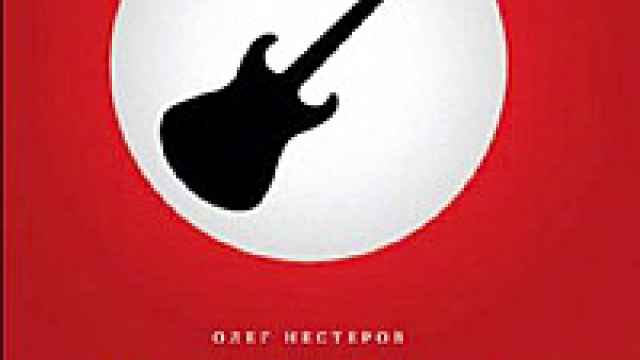 Ad Marginem |  |
| |
But the novel form allows Nesterov possibilities that the historical genre doesn't -- to reimagine history and wallow in its dubious anecdotes. Gubbels wants to leave his wife for Leni; Hitler fancies her: "In front of me now is one of the most beautiful women in the world," he says.
While this is a historical fantasy, or "vintage novel" as Nesterov prefers to call it, asking the reader to imagine a figure as written-about as Hitler as a doting father to Riefenstahl's children rather than a war-mongering tyrant is perhaps a little too much. We should not be asked to suspend our credence in reality -- everyone in the novel seems blessed with an almost psychic vision of the future of rock music for political purposes.
Leni is the most gifted fortune-teller of all, predicting that she will live to 101 and develop an interest in foreign tribes. The author frequently plunges into worship of his protagonist. Again and again we are reminded of how brilliant Leni is by the sycophancy of those around her and of the narrator. She is independent, she is beautiful, she stands up to Hitler and G??bbels.
Where the novel is at its best is in its portrayal of Leni's firm conviction that her art is apolitical. The sympathetic characterization of a woman often maligned as "Hitler's propagandist" is perhaps groundbreaking in Russia, where political capital is still gained on May 9 every year when the country's leaders glory in the victory over "the fascist invaders." This more complex, less caricatured view of Riefenstahl has parallels in the landmark portrayal of Hitler in the 2004 German movie, "Downfall."
Disinterested in politics, it is Leni's personal life that forces her to consider the implications of her moral equivocation when her films are rejected in America because of their perceived pro-Nazi content. But her political naivety means that she cannot see beyond her art: "What am I guilty of? Of making a film about the beauty of the human body?"
Her American friend Hubert reminds her of totalitarian regimes' use of art -- be it film or rock 'n' roll -- as a powerful weapon for transmitting ideology. Yet, so captivated is she by Hitler, that she refuses to believe in any malicious intentions on his part. "I know Hitler ... I trust my heart. And I'm not alone -- all Germans love him ... Hitler doesn't want to harm anyone."
This attitude is surely familiar to Russians from the tendency of attributing good intentions to the tsar-batyushka, or father tsar, whatever the consequences (which, if bad, are the fault of his underlings).
In fact, this is where this book really hits the spot, perhaps unintentionally: its relevance to modern Russia. As well as Leni, one of the architects, Walter, is seduced by the F??hrer's talents as a political orator and blinded to the danger he poses by Germany's rapid transformation. "For the first time, I'm not ashamed of my country," he says. "Sure, some people hate it. But we're here, and we need to be reckoned with." Sound familiar?
"Yubka," or "Skirt," by Oleg Nesterov is published by Ad Marginem.
A Message from The Moscow Times:
Dear readers,
We are facing unprecedented challenges. Russia's Prosecutor General's Office has designated The Moscow Times as an "undesirable" organization, criminalizing our work and putting our staff at risk of prosecution. This follows our earlier unjust labeling as a "foreign agent."
These actions are direct attempts to silence independent journalism in Russia. The authorities claim our work "discredits the decisions of the Russian leadership." We see things differently: we strive to provide accurate, unbiased reporting on Russia.
We, the journalists of The Moscow Times, refuse to be silenced. But to continue our work, we need your help.
Your support, no matter how small, makes a world of difference. If you can, please support us monthly starting from just $2. It's quick to set up, and every contribution makes a significant impact.
By supporting The Moscow Times, you're defending open, independent journalism in the face of repression. Thank you for standing with us.

Remind me later.