


Readers familiar with Tolstoy's longest novel will find much that is new in Pevear and Volokhonsky's translation. Hailed for their work on Fyodor Dostoevsky and others, the prolific husband-and-wife team takes pains to preserve Tolstoy's stylistic idiosyncrasies and French dialogue (estimated by Pevear at 2 percent of the original).
Tolstoy spent the better part of the 1860s drafting and redrafting his panoramic family chronicle of Russia during the Napoleonic wars. To evoke the world of half a century earlier, he visited the Borodino battlefield and drew prototypes for his characters from his own family. The result was "not a novel, still less an epic poem, still less a historical chronicle," as Tolstoy wrote, but something new: a vibrant tapestry of history and ideas, viewed by his characters at eye-level.
By contrast with Pevear and Volokhonsky's 1,296-page version, Andrew Bromfield's translation of an earlier draft stands a slim 912 pages. Tolstoy completed the draft in 1866 before taking it back to revise it further, leaving it to Soviet scholar Evelina Zaidenshnur to spend five decades piecing it together through analysis of ink, handwriting and Tolstoy's notes.
Reissued for a general audience in 2000, the draft was hyped by Moscow publisher Zakharov as the "first" version of the novel ("less war and more peace, no philosophical digressions"). Bromfield follows suit with the subtitle "Original Version," while advising readers to compare it to the finished novel "for the rare insights it offers into the 'creative laboratory' of a consummate artist."
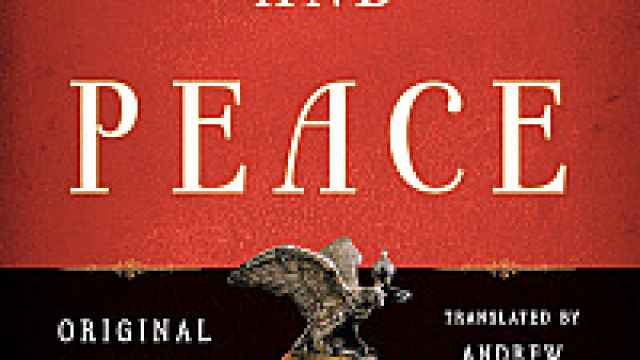 Ecco War and Peace By Leo Tolstoy Translated by Andrew Bromfield Ecco 912 pages. $34.95 |  |
| |
A Message from The Moscow Times:
Dear readers,
We are facing unprecedented challenges. Russia's Prosecutor General's Office has designated The Moscow Times as an "undesirable" organization, criminalizing our work and putting our staff at risk of prosecution. This follows our earlier unjust labeling as a "foreign agent."
These actions are direct attempts to silence independent journalism in Russia. The authorities claim our work "discredits the decisions of the Russian leadership." We see things differently: we strive to provide accurate, unbiased reporting on Russia.
We, the journalists of The Moscow Times, refuse to be silenced. But to continue our work, we need your help.
Your support, no matter how small, makes a world of difference. If you can, please support us monthly starting from just $2. It's quick to set up, and every contribution makes a significant impact.
By supporting The Moscow Times, you're defending open, independent journalism in the face of repression. Thank you for standing with us.

Remind me later.