

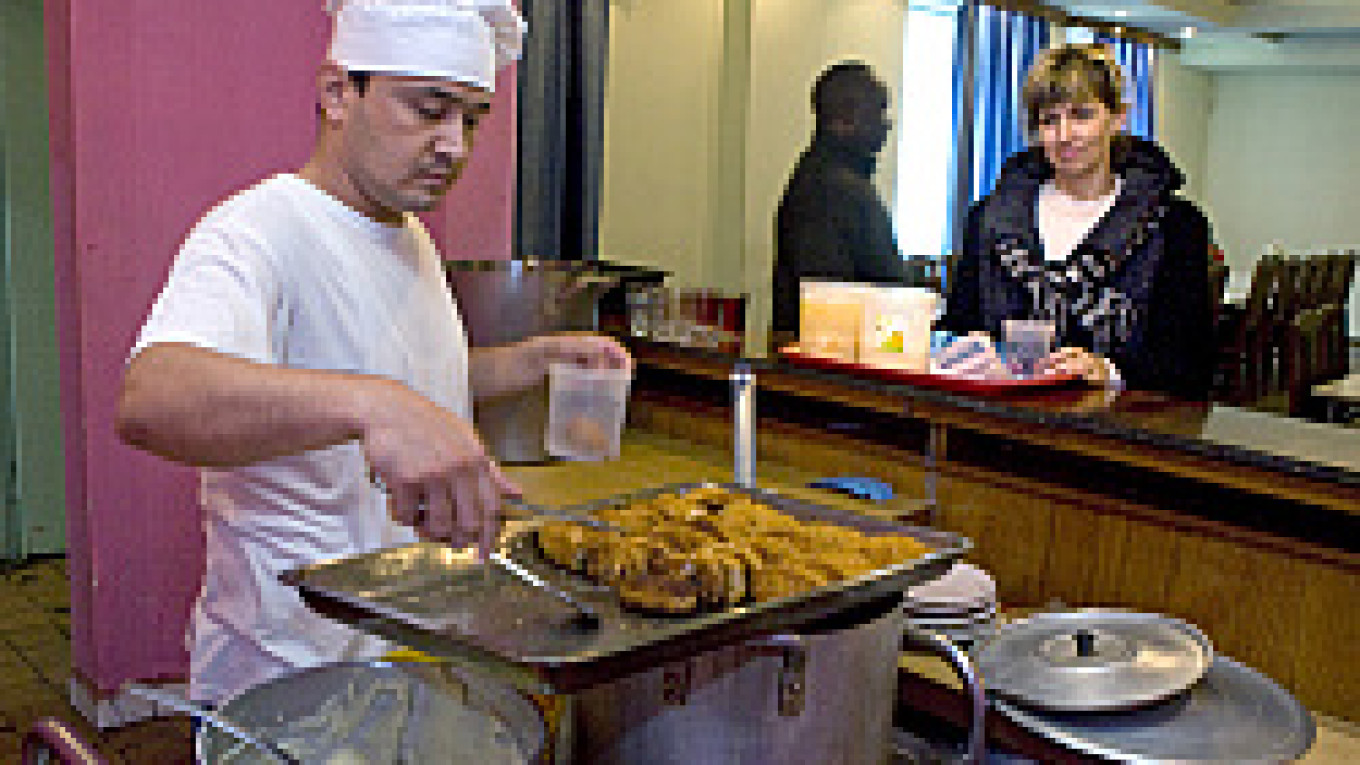
Pastor Robert Bronkema, director of the MPC, said that in 1991 the MPC ran four soup kitchens that fed 1,500 people a day combined. By the end of the decade, he said the MPC began to redirect its resources toward aid for refugees and nonwhite ethnicities living in Russia. Only the original soup kitchen at Mosfilmovskaya Ulitsa remained open, feeding 200 people a day, mostly pensioners. Now the MPC believes it can sustain its aid to these people while opening another soup kitchen.
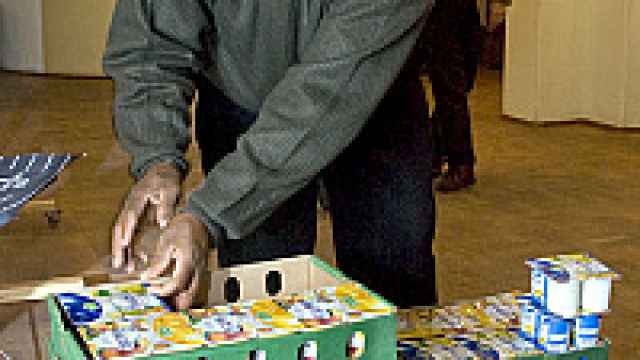 Vladimir Filonov / MT One of the Moscow Protestant Chaplaincy's volunteer workers at the soup kitchen. |  |
| |
Bronkema is optimistic about the success of a second soup kitchen, but he said working with a new demographic posed additional challenges to organizers.
"One thing we've encountered is that mothers often take food back home to their children rather than bringing their whole family to eat here," Bronkema said.
The soup kitchen does not discourage this practice. The MPC understands that taking food home is more convenient for needy mothers, who often live far away from the city center, and it provides each family with take-away containers. However, Bronkema said that ultimately he hoped a community would develop around the soup kitchen.
 Vladimir Filonov / MT Pastor Robert Bronkema of MPC. | |
| |
Svetlana Burkutskaya, a 42-year-old mother of four who came to pick up food at the soup kitchen, agreed that in addition to free meals, single mothers and their families needed a social outlet.
"My kids and I live in the one room," she said. "We have about 2 square meters of space per person and I can't get out much, even to work, because one of the kids is always sick and needs me to be home. My 7-year-old twins just started going to a special school for children with speech problems because they don't have enough opportunity to socialize."
The MPC emphasizes the importance of serving the food as a symbol of charity and togetherness. The recipients don't line up for their food; they sit down and have their meal served to them as in a restaurant. This practice is meant to facilitate a more relaxed environment in which people can interact with more ease.
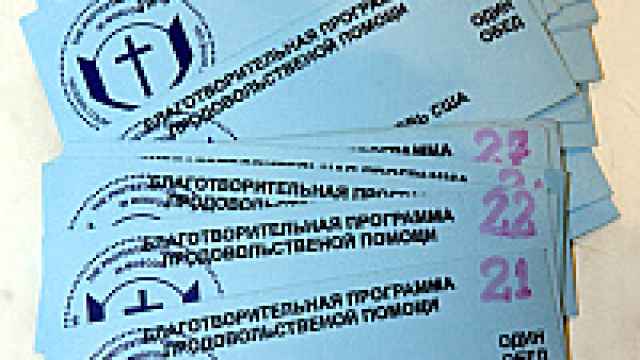 Vladimir Filonov / MT Daily meal tickets -- each for a three-course meal. | |
| |
The babushkas often don't know how this works," Solomon said. "They think that the government has created these soup kitchens and that Mayor [Yury] Luzhkov is behind it."
The new soup kitchen receives the majority of its funding from Moscow's International Women's Club, the German embassy and the MPC.
Another soup kitchen visitor, Leonarda Stanislavovna, who did not provide her surname, said she understood that MPC volunteers organized and funded the soup kitchen. She expressed her frustration with the lack of assistance from the state, and how grateful she was to have the soup kitchen as a resource, "I live with my daughter and her three kids in a damp first-floor communal apartment and even though we are eligible for social benefits and a bigger apartment we haven't seen anything come of it. I want to tell everyone we love this establishment. Everyone is friendly and you always get served with a smile. It makes one less ashamed about needing to ask for help."
Bronkema said he hoped that in the future the soup kitchen will find funding to feed more families.
***St. Andrew's Anglican Church, 8 Voznesensky Per., Parsonage 143-3562, Parish Center 143-5748, M. Arbatskaya, Okhotny Ryad, Pushkinskaya, www.moscowprotestantchaplaincy.org.
A Message from The Moscow Times:
Dear readers,
We are facing unprecedented challenges. Russia's Prosecutor General's Office has designated The Moscow Times as an "undesirable" organization, criminalizing our work and putting our staff at risk of prosecution. This follows our earlier unjust labeling as a "foreign agent."
These actions are direct attempts to silence independent journalism in Russia. The authorities claim our work "discredits the decisions of the Russian leadership." We see things differently: we strive to provide accurate, unbiased reporting on Russia.
We, the journalists of The Moscow Times, refuse to be silenced. But to continue our work, we need your help.
Your support, no matter how small, makes a world of difference. If you can, please support us monthly starting from just $2. It's quick to set up, and every contribution makes a significant impact.
By supporting The Moscow Times, you're defending open, independent journalism in the face of repression. Thank you for standing with us.

Remind me later.