

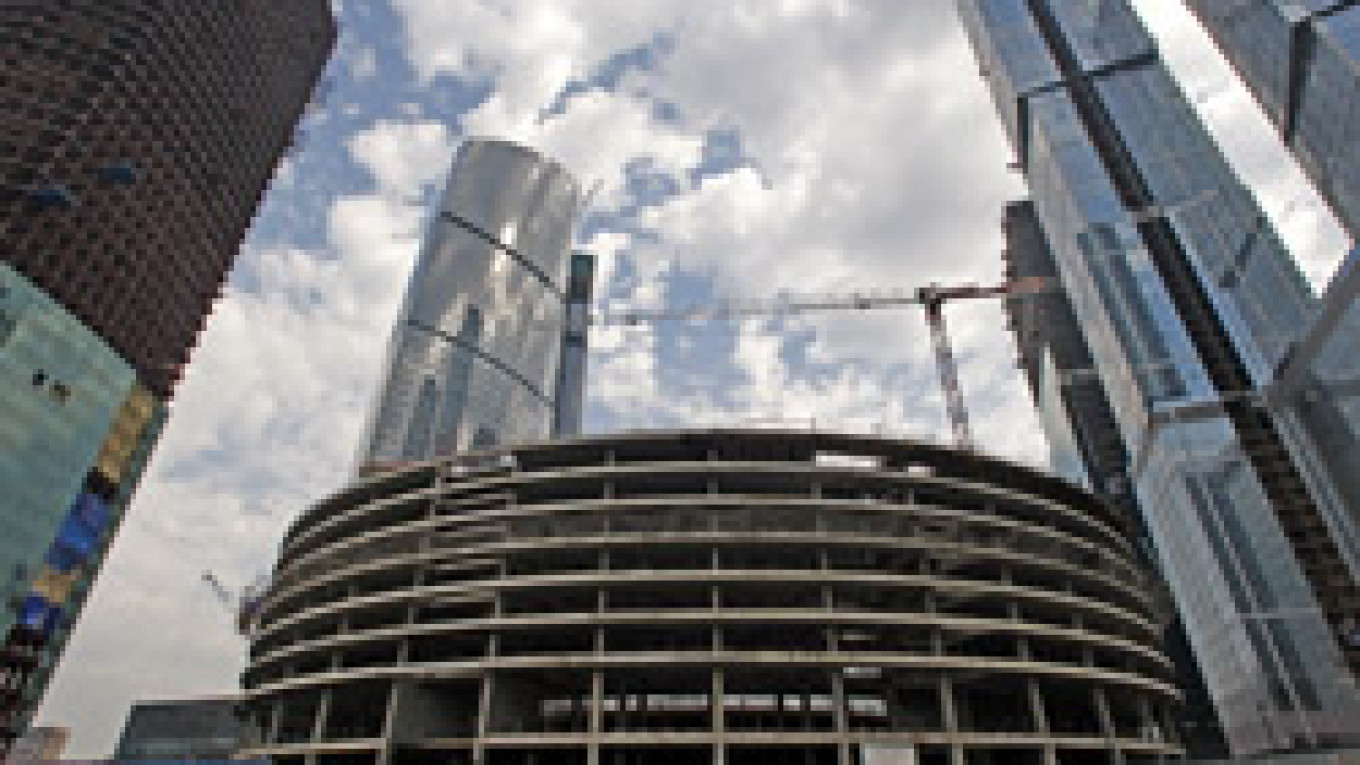
At a small office in the Dorogomilovo district, which includes Kutuzovsky Prospekt and the decade-long building site that is Moskva-City, 10 residents badgered two architectural officials from the city with questions for an hour earlier this week about the architectural future of their area.
As they left, one consultant gave a sigh of relief only for the other to say half mockingly, “Don’t relax. The elevator is bringing up another bunch.”
The Moscow city government is for the first time asking for public consultation on the city’s future on a large scale. Residents have had close to two weeks to look at the plans, and the consultation runs until Friday.
Local meetings will then take place on Sept. 12, when the recommendations and criticisms that residents make are supposed to be taken into account.
“This is a pioneer attempt to create an institution for the people’s feedback,” said Alexei Klimenko, a veteran preservationist who has long been a fierce critic of the city’s architecture policy.
Klimenko urged people not miss their chance to go to the hearings, speak up, get their comments noted and follow up on the plan’s future to make sure that they are taken into account before it is approved by the Moscow City Duma.
Homeless people have visited the plans in one Moscow area, and a resident asked the consultants on hand if his house could be knocked down and moved to the other side of the road, reported TVS, the Moscow government-controlled television station.
Some of visitors on Dorogomilovo found the experience less than enlightening.
Visitors were faced with 10 maps of Moscow, which describe various aspects of the city’s development, but none of these displays individual buildings.
“These maps are made for professional architects, not for ordinary human beings,” said resident Valentin Kuzmin, who said it felt as if the government was going through the motions just to appear as if they were consulting the public.
Most visitors naturally wanted to find out if there was something happening to or around their building, but there was no information on individual buildings.
An architecture consultant at Dorogomilovo, who not quite getting into the spirit of public consultation refused to give her name, said the idea was to discuss the broad changes to the city and that specific buildings would be discussed at a later meeting.
The Yabloko party, whose leader Sergei Mitrokhin is one of the few opposition deputies in the City Duma, criticized the viewings as flawed, saying they were designed for specialists and not for ordinary people.
Those who have worked out how the plan will change Moscow — proposals include the construction of about 100 skyscrapers and increased demolition of Khrushchev-era housing and Brezhnev-era buildings, 5 million square kilometers of demolition in total — have attacked much of it.
Among its failings, the plan, critics say, does not adequately plan for Moscow’s traffic problem or overcrowding in the metro.
“It only exacerbates the overflow of the city center by continuing to concentrate business and governmental offices at the heart of the city,” said Klimenko.
The Yabloko party said in a statement on their web site that the plan “only takes into account the interests of commercial builders and bureaucrats and not Muscovites.”
To find out the address for the Gen Plan meeting in your area, check out the web site Mka.mos.ru/mka/mka.nsf/va_WebPages/Ann_20090716-01Rus. Each site is open noon to 8 p.m.
A Message from The Moscow Times:
Dear readers,
We are facing unprecedented challenges. Russia's Prosecutor General's Office has designated The Moscow Times as an "undesirable" organization, criminalizing our work and putting our staff at risk of prosecution. This follows our earlier unjust labeling as a "foreign agent."
These actions are direct attempts to silence independent journalism in Russia. The authorities claim our work "discredits the decisions of the Russian leadership." We see things differently: we strive to provide accurate, unbiased reporting on Russia.
We, the journalists of The Moscow Times, refuse to be silenced. But to continue our work, we need your help.
Your support, no matter how small, makes a world of difference. If you can, please support us monthly starting from just $2. It's quick to set up, and every contribution makes a significant impact.
By supporting The Moscow Times, you're defending open, independent journalism in the face of repression. Thank you for standing with us.

Remind me later.