

To be sure, developments since Sept. 11, 2001, are proof enough that the politicization of memory is not unique to Russia. But for a country still sorting out its post-communist identity, the questions of what Russia chooses to remember, and how it remembers it, are urgent and revealing. Those questions came to the fore in this year's crop of Russia-related books, as the following selection of the best fiction and nonfiction shows.
FICTION: In 2002, British author Martin Amis published a book of essays arguing that the evils of the Soviet system had been too quickly dismissed or forgotten. His latest novel, "House of Meetings" (Knopf), dramatizes the problem through the unsavory recollections of an 84-year-old Russian emigre who has returned by river cruise to the Siberian prison camp where he and his brother were incarcerated. Our reviewer, Michael Scammell, wrote that the narrator's confessions of rape and murder, and his tendency to blame "history" for his crimes, may not offer much in the way of sympathetic characterization, but they do correct "the last vestiges of censorship" by a polite society that airbrushed the brutality of the gulag experience.
MEMOIR: Stalin's collectivization of the peasants into state-run farms devastated the Soviet Union in the 1930s. But for the nomads of Kazakhstan, used to migrating with their animals between mountains and steppe, the imposition of an agricultural way of life left especially deep wounds. Mukhamet Shayakhmetov's "The Silent Steppe" (Rookery) probes the scars to the point of "an exorcism, through storytelling, of personal demons," as our reviewer, Robert Rosenberg, noted. From the arrest and deportation of Shayakhmetov's father to the famine that decimated the Kazakh population, to the author's indoctrination as a Soviet soldier on the front lines of Stalingrad, Shayakhmetov's past -- and his decision to record it -- is "its own private hell."
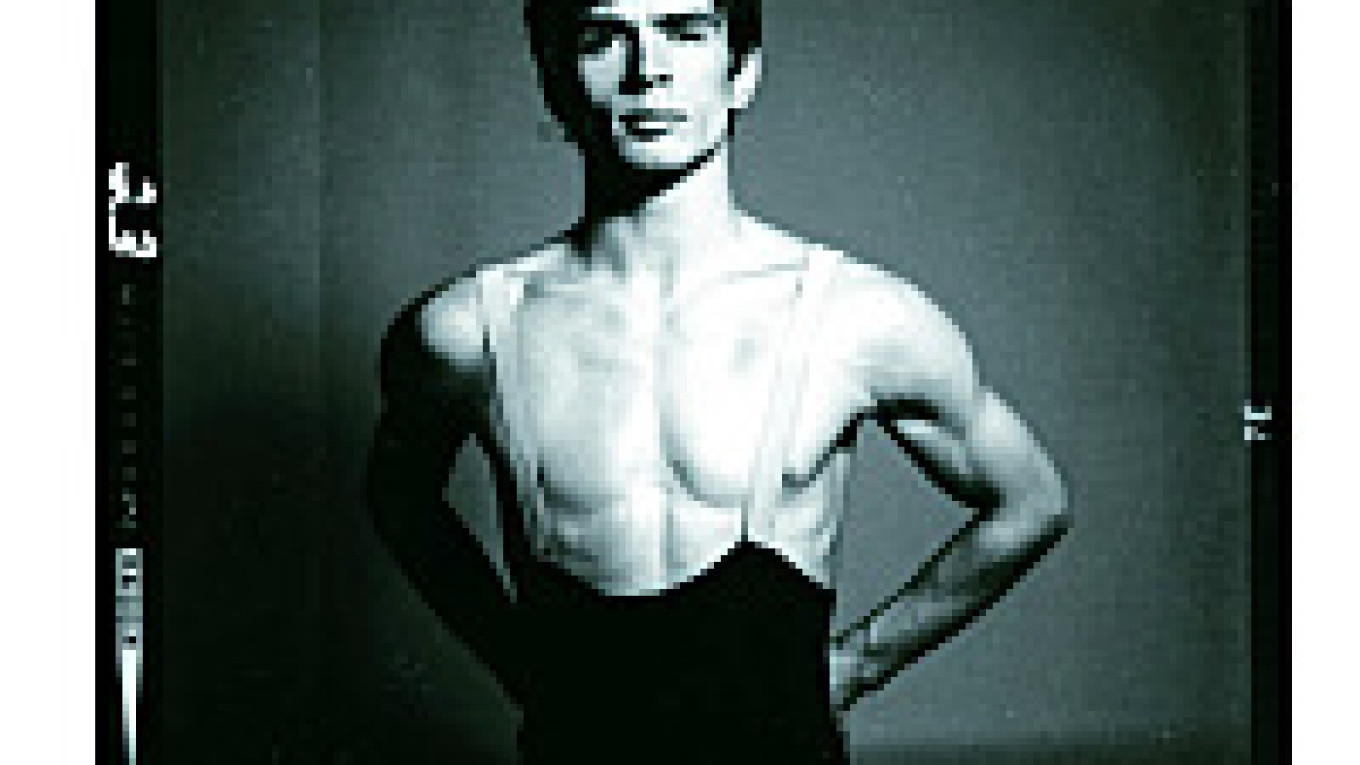
BIOGRAPHY: Researched and written over the course of more than a decade, Julie Kavanagh's "Nureyev" (Pantheon) is "so unusual in its depth of both reporting and integrity that a reader arriving at the last page is left dumbstruck," as our reviewer, Mindy Aloff, observed. For many of Rudolf Nureyev's friends and fans, the dancer's volatile behavior and artistic decline marred their memories of him at the height of his powers. Yet Kavanagh's vivid, even-handed reassessment of Nureyev as both dancer and man allows her subject to emerge "from chapters of degradation with his dignity intact -- a figure ... whose godlike energy, intermittent capacity for human feeling and permanent legacy for the world of dance it is finally possible to understand."
PHOTOGRAPHY: If visitors to Moscow tend to associate the ornate classicism of Stalinist architecture with Soviet power, that is because the state meant them to. Less imposing but far more radical are the spare buildings erected in the modernist style during the brief burst of artistic experimentation in the 1920s. Today these avant-garde structures stand forgotten, many unnoticed or fated for demolition. The magnificent array of photographs in "The Lost Vanguard" (Monacelli) -- water towers, theaters, bus stops, factories -- represent Richard Pare's decade-long effort to both document this period in Soviet culture and record the buildings' state of neglect. Reviewer Nicole Rudick wrote that Pare "becomes both poet and mourner, at once celebrating a building's 'radical purity' and grieving for its ill fortune."
HISTORY: Among the most challenging tasks for historians of the Stalin era is to reconstruct Soviet citizens' private lives -- the thoughts, secrets and hopes that they preferred not to write down, or at least not to mention too loudly. Orlando Figes takes on this state of mind in "The Whisperers" (Metropolitan), an ambitious study of the psyche of ordinary Soviets under Stalin's rule. Immensely readable yet poignant and terrifying, Figes's book sets individual stories within their historical context to show how people carved out private lives in a society that viewed public and private as one. Our reviewer, Ronald Grigor Suny, praised the book as an "extraordinary work of synthesis and insight" that gives a strong sense of the mix of enthusiasm and fear that accompanied the Soviet mission to create a new world.
Rebecca Reich is the books editor of The Moscow Times.
A Message from The Moscow Times:
Dear readers,
We are facing unprecedented challenges. Russia's Prosecutor General's Office has designated The Moscow Times as an "undesirable" organization, criminalizing our work and putting our staff at risk of prosecution. This follows our earlier unjust labeling as a "foreign agent."
These actions are direct attempts to silence independent journalism in Russia. The authorities claim our work "discredits the decisions of the Russian leadership." We see things differently: we strive to provide accurate, unbiased reporting on Russia.
We, the journalists of The Moscow Times, refuse to be silenced. But to continue our work, we need your help.
Your support, no matter how small, makes a world of difference. If you can, please support us monthly starting from just $2. It's quick to set up, and every contribution makes a significant impact.
By supporting The Moscow Times, you're defending open, independent journalism in the face of repression. Thank you for standing with us.

Remind me later.