

Buying a ticket to a museum may seem like a simple process — but not at the Arkhangelskoye Estate Museum complex recently. There you are spoiled for choice.
You can buy a ticket from the people who maintain the estate’s 18th-century buildings and provide excursions, or you can buy a ticket from their neighbors, a military sanatorium where, unlike at the museum, you can also pay for the privilege of taking a photo.
Outraged estate officials say the sanatorium has been illegally selling tickets in a move that has cost them more than 100,000 rubles ($3,160).
“Only the museum is authorized to sell tickets to the territory of the complex,” said Lyudmila Grinyova, the head museum curator.
The sanatorium opened a cashier office across from the museum earlier this month and began selling tickets to the complex.
“By selling illegitimate tickets without an official notice and without the museum’s agreement, the sanatorium administration is bluntly stealing money from the museum’s main financial resource for the restoration works,” said Grinyova.
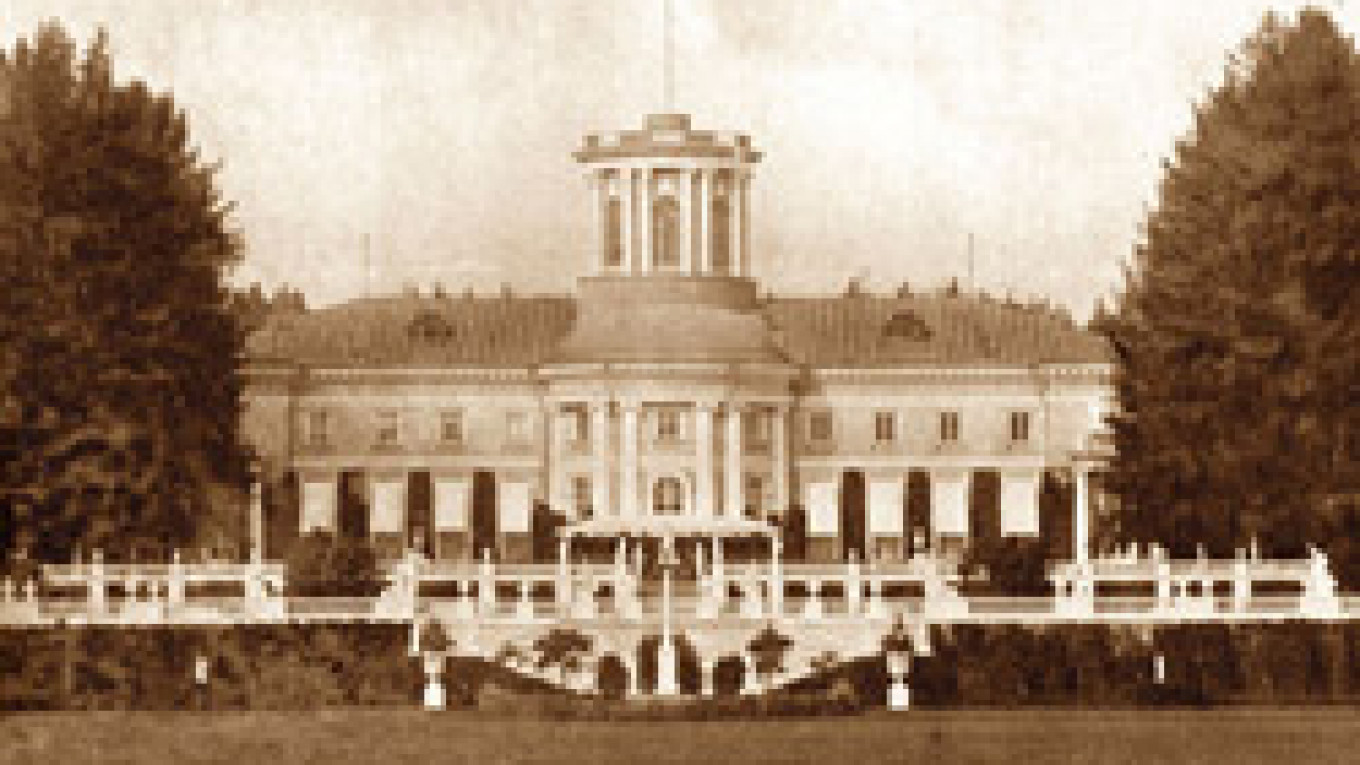
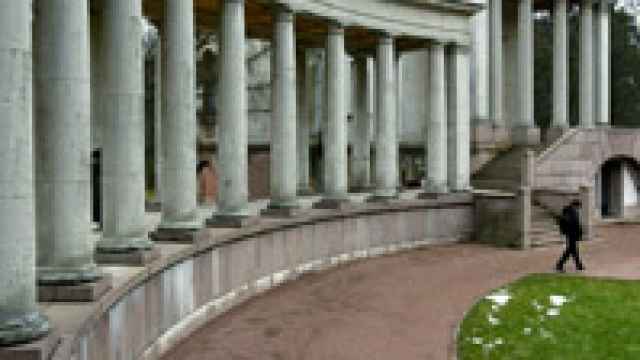
The Arkhangelskoye Estate was built between 1780 and 1831 according to French architect Charles de Gerne’s design. Planned as a traditional European park complex with symmetrical straight alleys, Arkhangelskoye showcases 141 original 18th-century outdoor sculptures. The colonnade and mini-palace “Caprice” have been renovated and are open to the public, while the main Yusupov Palace has been closed for renovation since 1985.
|
|
Vladimir Filonov / MT
Arkhangelskoye draws up to 10,000 visitors on weekends during summer. |
Once the grand estate of the Yusupov family, the Soviet government turned Arkhangelskoye into a military sanatorium. The Yusupov Palace chambers were converted into doctors’ offices and patient bedrooms, while the family’s mausoleum became a civil defense headquarters.
It was only in 1997 that the Culture Ministry took the historical territory under its protection, but 35 of the 100 hectares of Arkhangelskoye territory remain in the sanatorium’s possession.
“In 1997, when Arkhangelskoye received formal recognition as an independent entity from the sanatorium, the museum administration decided that we should not separate the territory between the two organizations by a fence, which would’ve ruined the completeness of the park complex,” said Vladimir Dlugach, director of the museum. “Over the course of 12 years, we managed to coexist as mutually respectful neighbors.”
Selling tickets at the same price as the museum — 80 rubles — Dlugach estimates that the sanitorium made at least 100,000 rubles during the first sales weekend. Arkhangelskoye attracts approximately 5,000 to 10,000 visitors a day, he said.
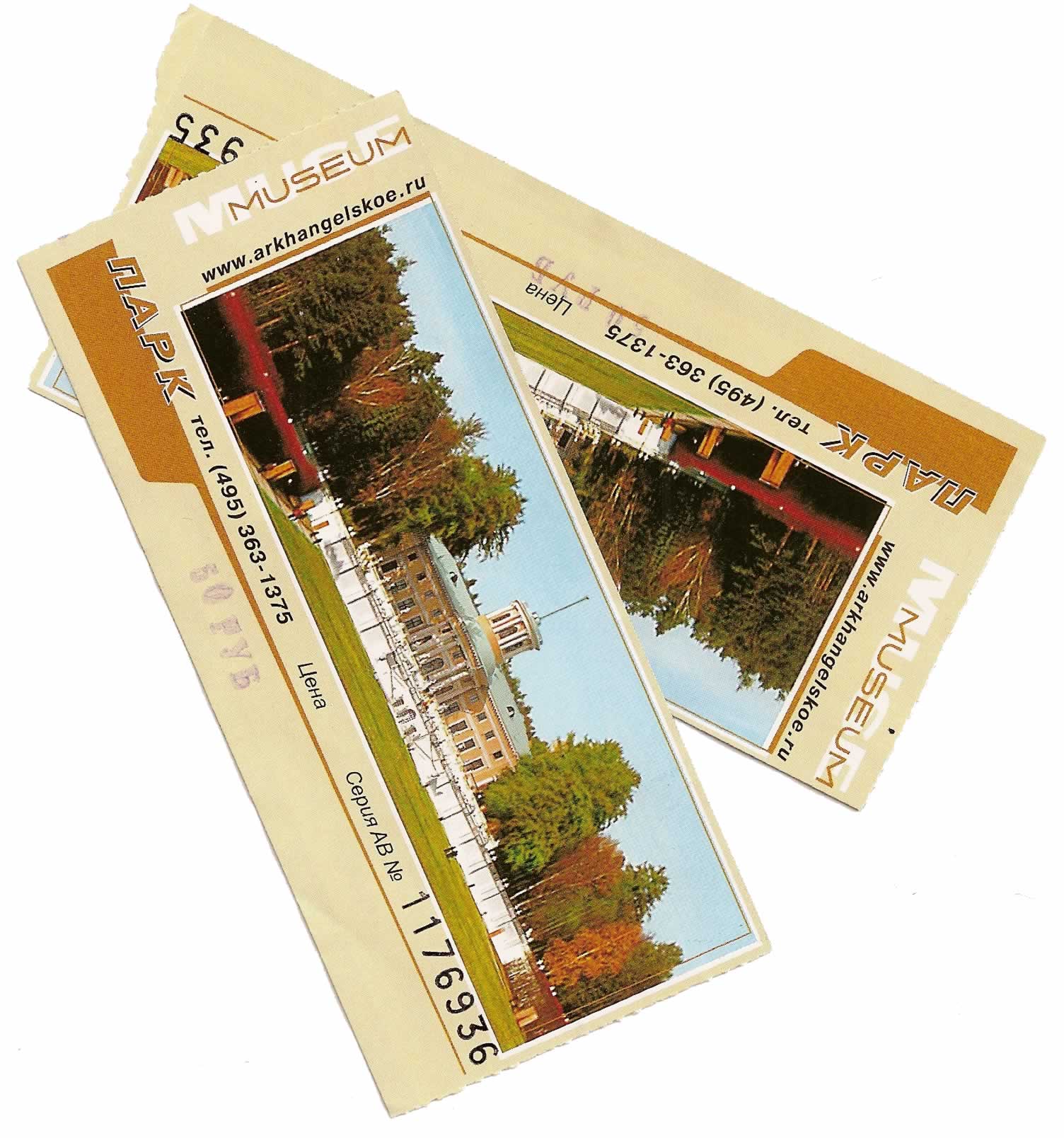
The sanatorium-issued ticket says it allows access to the medical walks, called dozirovannaya khodba, or dosed walks, used as a medical treatment for patients with heart problems at the sanitorium and which go through the museum property.
“People don’t come to Arkhangelskoye merely to take a “dosed walk” by the sanatorium but chiefly to enjoy the classical architecture of the museum complex,” said Dlugach.
The sanatorium cashier office additionally sold photo and video permission tickets, even though the museum does not charge for such practices.
“I can hardly imagine anyone willing to pose for a photo in front of the sanatorium structures,” said Irina Kozlova, a museum employee.
Officials at the sanatorium refused to comment and asked a reporter without a ticket to leave the territory. Sanatorium director Vyacheslav Bakhitov’s secretary said he could not be contacted because of “frequent business trips.”
“They are keeping all the money from ticket sales to themselves and don’t want to share with the sanatorium — this is unfair,” said an elderly sanatorium employee, who refused to give her name. “The Yusupov Palace has been under renovation for the past 20 years, and no visitor is interested in looking at the closed-down palace. People come to take pictures by the sanatorium.”
Arkhangelskoye Estate Museum. Metro Tushinskaya, then bus 549 to Arkhangelskoye or bus 151 to Sanatory Park. Open 10 a.m. to 8 p.m. Closed Mon., Tues. and the last Wed. of the month. Tel. 561-9660.
Official Arkhangelskoye tickets can be seen at Arkhangelskoe.ru/images/ticket.jpg
A Message from The Moscow Times:
Dear readers,
We are facing unprecedented challenges. Russia's Prosecutor General's Office has designated The Moscow Times as an "undesirable" organization, criminalizing our work and putting our staff at risk of prosecution. This follows our earlier unjust labeling as a "foreign agent."
These actions are direct attempts to silence independent journalism in Russia. The authorities claim our work "discredits the decisions of the Russian leadership." We see things differently: we strive to provide accurate, unbiased reporting on Russia.
We, the journalists of The Moscow Times, refuse to be silenced. But to continue our work, we need your help.
Your support, no matter how small, makes a world of difference. If you can, please support us monthly starting from just $2. It's quick to set up, and every contribution makes a significant impact.
By supporting The Moscow Times, you're defending open, independent journalism in the face of repression. Thank you for standing with us.

Remind me later.