
The Kremlin said on Friday that Europe must show it is ready to contribute to the Ukraine peace process before a decision is made on letting Europeans join the negotiations.
The comment by Kremlin spokesman Dmitry Peskov suggests Russia has not yet committed to including Europeans in the next round of talks, despite U.S. negotiators saying on Thursday that President Vladimir Putin had agreed to their participation.
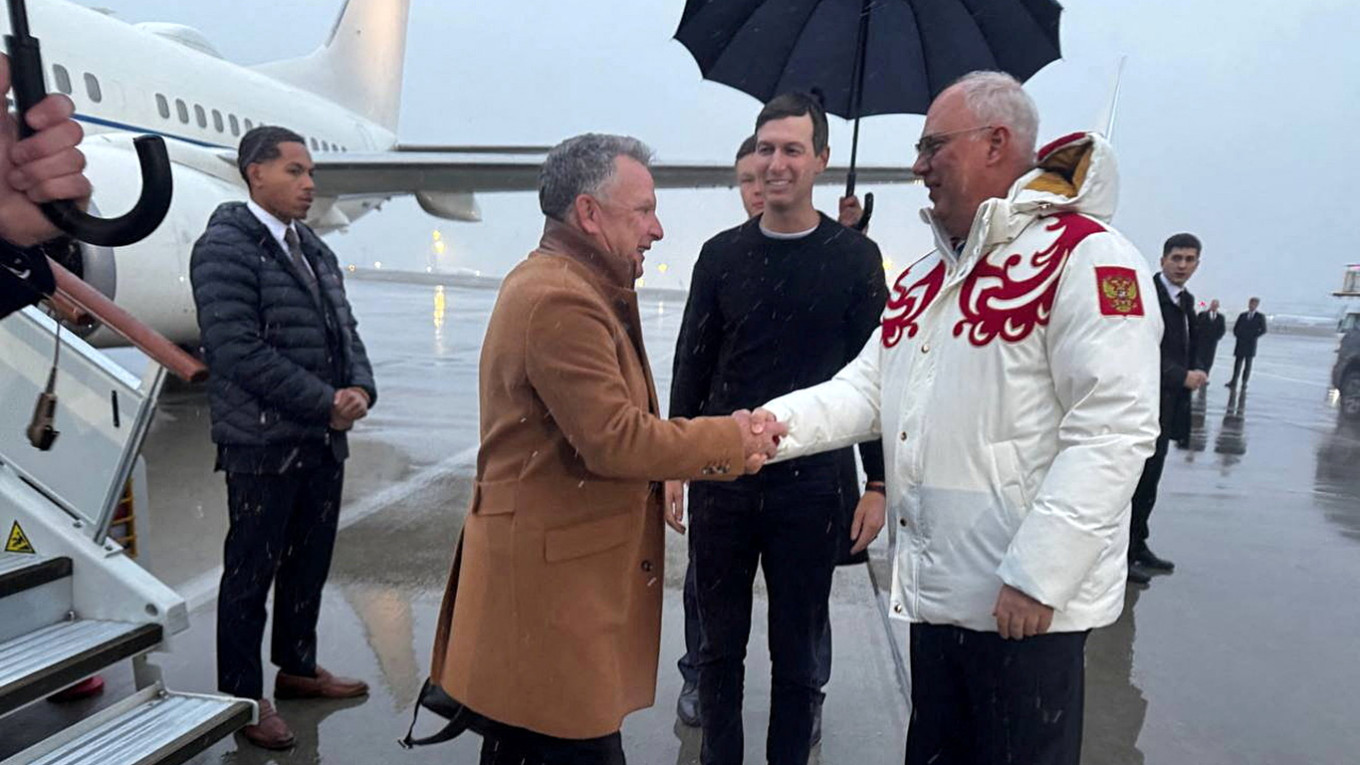
The talks have so far involved Russian, Ukrainian and U.S. officials, who met in Abu Dhabi this week for the first time in nine months. Two U.S. envoys then flew to Moscow to meet Putin and later met Ukrainian President Volodymyr Zelensky in Dublin.
Asked if peace talks would soon resume with the added participation of Europeans, Peskov said: "Once we understand their genuine intention and readiness to contribute to the peace process, then it will be possible to make a decision on holding dialogue on a Ukrainian settlement in an expanded format."
European involvement would mark a new phase in efforts to end the nearly five-year conflict, which has defied attempts by U.S. President Donald Trump to secure a peace agreement.
Russia's relations with European powers are dire. European states have armed Ukraine and imposed sanctions on Moscow, and most have shunned direct contact with Putin since he sent troops to Ukraine in February 2022.
Putin said on Thursday the U.S. must work with its European allies to understand whether they wanted peace or war in Ukraine.
Peskov said Moscow would be open to the idea of some form of contacts with Europe before any European participation in peace negotiations, but that no concrete discussions on this had taken place.
Asked how the Kremlin would view French President Emmanuel Macron as a potential interlocutor at peace talks, Peskov said: "Every hour, reports are appearing that name completely different candidates. So for the time being we are not in a position to say anything specific."
Who would represent EU?
Peskov declined to comment on the possibility of European Union foreign policy chief Kaja Kallas representing the EU at negotiations. Kallas has frequently questioned Russia's good faith in the peace process and taken a lead in imposing successive waves of sanctions on Moscow.
She said on Friday it was not up to Russia to say who should represent the EU in peace talks.
"They don't want anybody strong on the other side because they want to push through their maximum demands," she said.
Russia says it wants a full peace settlement, not a ceasefire. Foreign Minister Sergei Lavrov said this week that Moscow wanted to negotiate a broad European security framework before tackling the specifics of the war.
Russian and Ukrainian officials said some progress was made at the Abu Dhabi talks, but there was no sign of a major breakthrough on key issues such as territory.
Putin has shown no signs of being ready to moderate his territorial demands, which include a buffer zone in parts of Ukraine which Russia has not formally claimed as its own.
Ukraine has refused Russia's demands to give up territory in the eastern Ukrainian region of Donbas that it has not lost in fighting.
A Message from The Moscow Times:
Dear readers,
We are facing unprecedented challenges. Russia's Prosecutor General's Office has designated The Moscow Times as an "undesirable" organization, criminalizing our work and putting our staff at risk of prosecution. This follows our earlier unjust labeling as a "foreign agent."
These actions are direct attempts to silence independent journalism in Russia. The authorities claim our work "discredits the decisions of the Russian leadership." We see things differently: we strive to provide accurate, unbiased reporting on Russia.
We, the journalists of The Moscow Times, refuse to be silenced. But to continue our work, we need your help.
Your support, no matter how small, makes a world of difference. If you can, please support us monthly starting from just $2. It's quick to set up, and every contribution makes a significant impact.
By supporting The Moscow Times, you're defending open, independent journalism in the face of repression. Thank you for standing with us.

Remind me later.