A year ago, Russia announced its withdrawal from the European Convention for the Prevention of Torture and Inhuman or Degrading Treatment or Punishment. That withdrawal became official and final on Nov. 2, 2026.
That day, as the news spread around the globe, a court in St. Petersburg handed down a telling sentence that reflects the tendency to ignore the problem of torture in Russian law enforcement practice.
The court sentenced a former traffic police lieutenant to three and a half years in a general-regime penal colony and barred him from holding positions in government agencies for two years. He was accused of beating two taxi passengers so severely after their vehicle failed to stop when he signaled to pull it over, that one of the victims ended up in intensive care and permanently lost sight in one eye.
The lieutenant was initially charged under Part 5 of Article 286 of the Russian Criminal Code, exceeding official authority through the use of torture. The charge was later reduced to Part 3 of the same article, under which the violence was not classified as torture. This less severe provision carries a maximum sentence of 10 years in prison and a three-year ban on holding public office. Nevertheless, the court handed down a slap on the wrist of three and a half years in a penal colony and a two-year ban on working in government agencies.
Human rights experts note a persistent trend. The new Parts 4 and 5 of Article 286 of the Criminal Code, which mention torture, go unused and law enforcement officers’ actions continue to be classified under the less severe Part 3, which investigators and courts are accustomed to using.
The provisions allowing criminal prosecution for torture committed by law enforcement and security officers on the job, namely Parts 4 and 5, were added to the Criminal Code in July 2022. This was an important achievement. A note to Article 286 provided a definition of torture consistent with international instruments, which also took years of work by human rights advocates and lawyers.
Russia’s final withdrawal from the convention is primarily symbolic and declaratory. It is another opportunity to articulate the state’s choice of isolation over openness and a willingness to cooperate. The Russian authorities are certainly consistent, in this regard. If the country is no longer part of the Council of Europe, why bind itself to obligations under its conventions? All the more so given that Russia withdrew from the European Convention on Human Rights in 2022, bringing an end to the European Court of Human Rights’ jurisdiction over Russia.
As for what the convention meant in practice for life in Russia, experts say it was hardly a particularly effective tool. The Russian authorities did allow international experts into the country, and there were quite a few such visits during Russia’s 23 years as a party to the convention. In total, there were 30 visits, but they authorized the publication of only four visit reports. Even so, over those years, experts visited more than 450 places of detention, including some that were entirely closed off and received no public attention whatsoever. These included psychiatric hospitals with enhanced supervision. There are only eight of these in the country, and they hold people for compulsory treatment after they committed socially dangerous acts while legally insane. The committee’s recommendations were sometimes heeded. The publicity they generated helped improve conditions for individual prisoners in specific cases.
Of course, local officials prepared for these visits and tried to show facilities in their best light.
But the committee’s experts are hard to fool and were under no obligation to give advance notice of their visits. They could show up unannounced. The last such visit took place in 2021, but the committee continued to send requests afterward, even after Russia was expelled from the Council of Europe in 2022. Russia ignored these requests, including one in 2024 concerning Alexei Navalny’s death in a penal colony, and accused the committee of being “politicized” and engaging in “blackmail.”
In theory, international monitoring of torture in Russia remains possible through the United Nations. Russia is still a party to the UN Convention Against Torture and submits periodic state reports to the UN Committee Against Torture (CAT). It is also supposed to cooperate with the UN Special Rapporteur on Torture, whose mandate, incidentally, extends even to countries that have not ratified the UN convention.
However, no UN special rapporteur on torture has ever visited Russia. In 2006, Manfred Nowak was officially invited but declined to make the trip under the conditions Moscow suddenly imposed. The authorities barred him from speaking confidentially with prisoners and inspecting detention sites without advance notice. Subsequent special rapporteurs were either turned down outright or presented with unacceptable conditions. In 2018, for example, Nils Melzer was required to enter Crimea under Russian protocols rather than as part of the UN mission to Ukraine.
Meanwhile, torture has remained systemic in Russia. It spilled beyond Russia’s borders in 2014 after the seizure of Crimea and the occupation of eastern Ukrainian territories and escalated after the full-scale war began in 2022.
As experts from the Kharkiv Human Rights Protection Group point out, torture is routinely used against all Ukrainians held in places of detention under Russian control. This applies to prisoners of war and civilians alike. The widespread, systematic, and uniform use of torture in all places where Ukrainian captives are held indicates that it has become a coordinated, authorized, and centralized policy of the Russian Federation toward Ukrainians.
Virtually anyone who ends up in territory under Russian control and comes into direct contact with its representatives, whether military personnel, law enforcement officers, or representatives of the so-called people’s republics or occupation administrations, is subjected to torture or other inhuman treatment. This also applies to people considered missing. Those among them who were not killed and were unable to evade the Russian authorities undoubtedly endured torture. Victims include women and men, civilians and prisoners of war. The torture of children has also been documented.
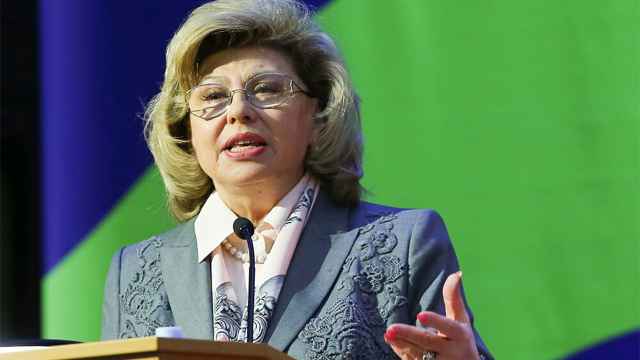
Reports by international experts also corroborate the evidence that torture is systemic and pervasive. The first report by Mariana Katzarova as UN Special Rapporteur on the situation of human rights in Russia (2024) convincingly shows how the state encourages and supports the systematic and widespread use of torture, including to control society and suppress dissent and anti-war protests.
Many reports note the “normalization” of torture as a horrific part of everyday life in Russia. “Courts routinely ignore credible reports of torture, siding with the perpetrators instead of upholding justice,” Mariana Katzarova writes. “Torture has ‘become the norm in Russian society, where violence is seen as perfectly acceptable and is even encouraged, as it was after the March 2024 terrorist attack in Moscow, when state television showed the suspects being tortured.”
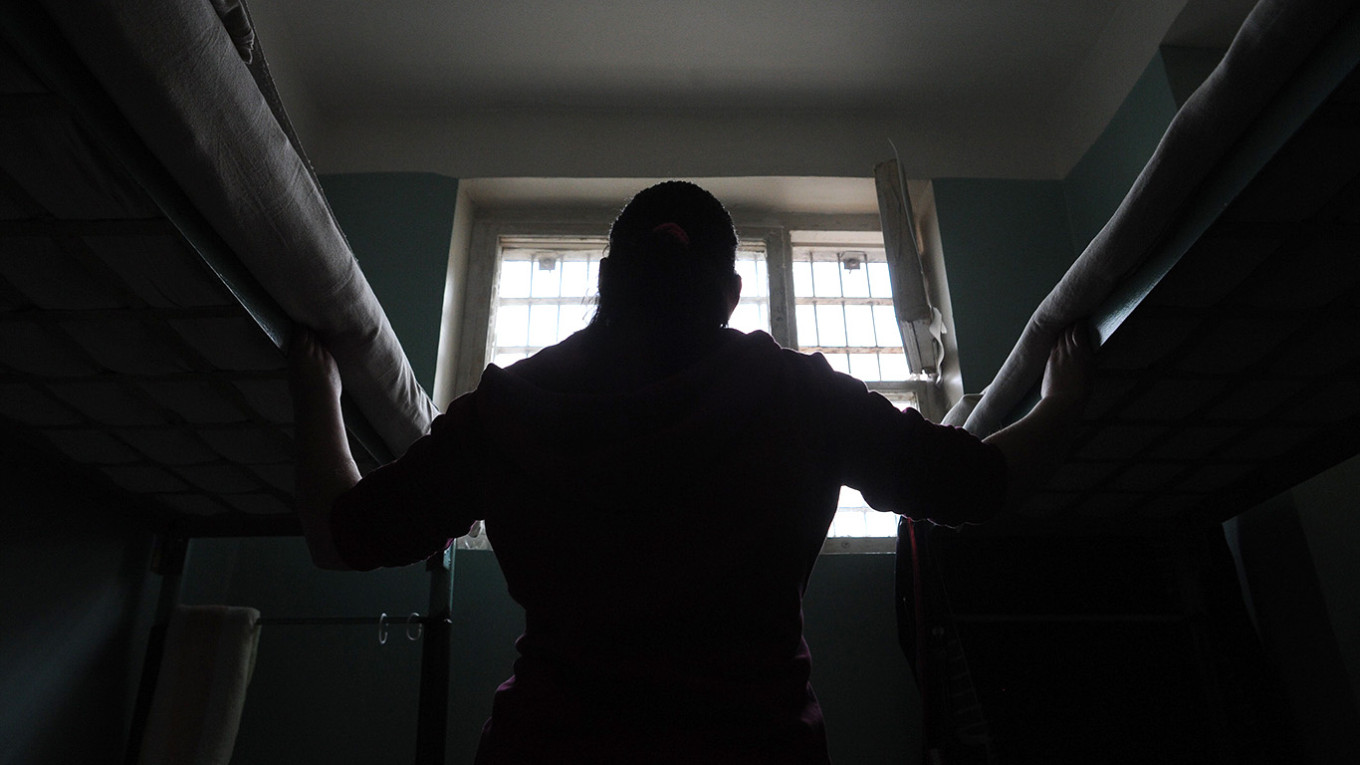
Independent monitors have no way of getting into the basements of temporarily occupied Ukrainian territories, secret torture chambers in Chechnya, the FSB’s recently established separate pretrial detention centers, and many other horrifying places where people are abused. Ordinary places of detention, deprived of outside oversight, are turning into the same kind of black hole.
A Message from The Moscow Times:
Dear readers,
We are facing unprecedented challenges. Russia's Prosecutor General's Office has designated The Moscow Times as an "undesirable" organization, criminalizing our work and putting our staff at risk of prosecution. This follows our earlier unjust labeling as a "foreign agent."
These actions are direct attempts to silence independent journalism in Russia. The authorities claim our work "discredits the decisions of the Russian leadership." We see things differently: we strive to provide accurate, unbiased reporting on Russia.
We, the journalists of The Moscow Times, refuse to be silenced. But to continue our work, we need your help.
Your support, no matter how small, makes a world of difference. If you can, please support us monthly starting from just $2. It's quick to set up, and every contribution makes a significant impact.
By supporting The Moscow Times, you're defending open, independent journalism in the face of repression. Thank you for standing with us.

Remind me later.