Russian and Ukrainian delegates will meet in Abu Dhabi next week as part of efforts to negotiate an end to the war, the Kremlin confirmed Tuesday, after the United States said it would once again stand in as a mediator between the two countries.
Kremlin spokesman Dmitry Peskov told reporters at a daily briefing that the trilateral talks, the first to take place since negotiations stalled in February, will be held next Tuesday and Wednesday.
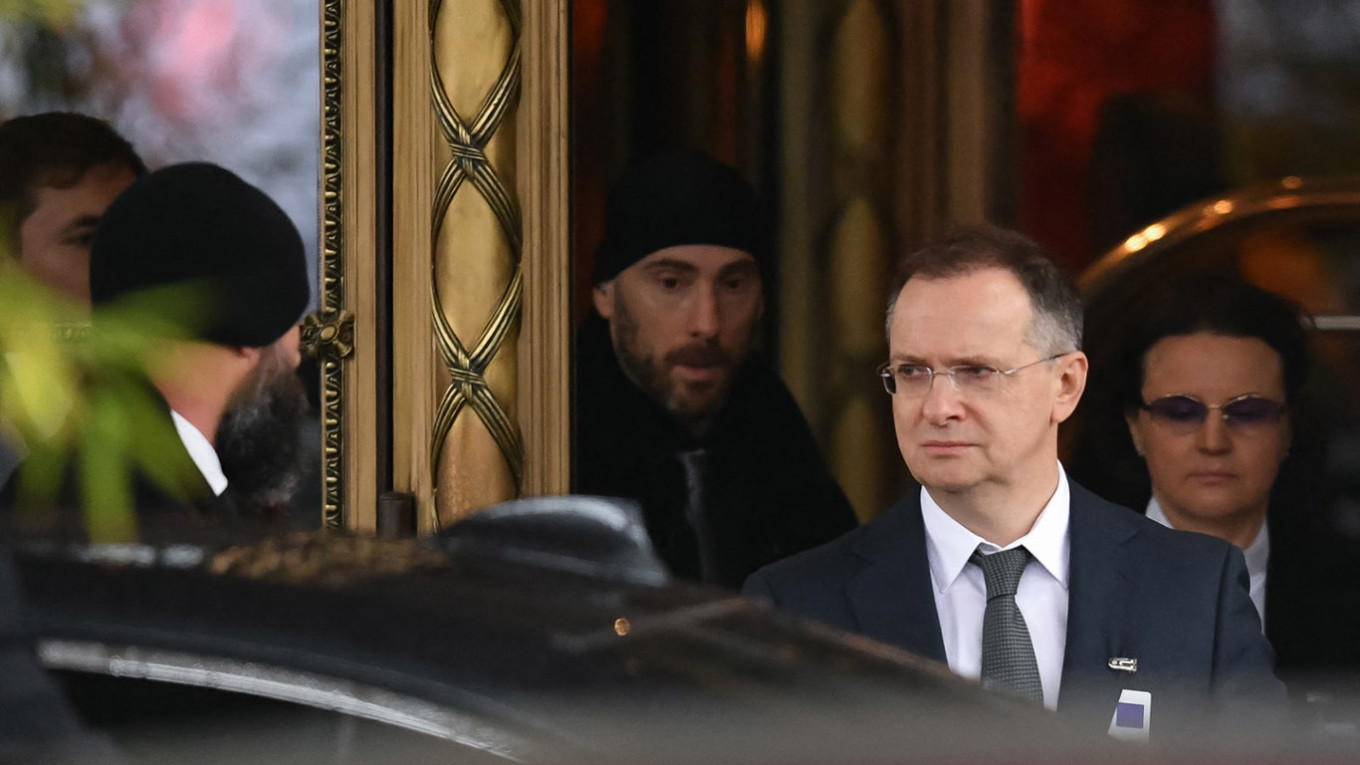
Peskov said presidential adviser Vladimir Medinsky, an arch-conservative who previously served as Russia's culture minister, will continue to serve as the chief negotiator of the Russian delegation.
White House special envoy Steve Witkoff said earlier that the United States would "mediate working-level negotiations" in Abu Dhabi to advance President Donald Trump's "mission to end the war."
In a post on X, Witkoff said the talks will "focus on post-war security arrangements, de-escalation, humanitarian efforts and next steps toward peace."
Witkoff added that American negotiators also plan to meet with French, German, British, EU and NATO representatives in Brussels this week to discuss security guarantees for Ukraine, which would be part of Europe's broader post-war security framework.
A senior U.S. official told Reuters that Witkoff and Trump's son-in-law, Jared Kushner, are expected to represent the U.S. in Abu Dhabi.
Witkoff, who has engaged in a frenzy of shuttle diplomacy on both the wars in Ukraine and Iran in recent months, met with Russian President Vladimir Putin in St. Petersburg last month to restart talks to end the Ukraine war.
Following that meeting, Russian officials said a new round of trilateral negotiations would take place in Abu Dhabi sometime in November.
Trump, who vowed to end the war on day one of his presidency, has so far struggled to broker a peace deal between Russia and Ukraine.
In recent weeks, the American leader has leveled increasingly harsh criticism at Ukrainian President Volodymyr Zelensky while claiming Putin is interested in signing an agreement.
Zelensky has resisted pressure from the White House to turn over his country's land in exchange for peace with Russia, arguing that doing so would only encourage further Russian aggression.
The Ukrainian president, who was visiting Berlin on Tuesday, said he hoped next week's talks in Abu Dhabi would pave the way for him to eventually meet face-to-face with Putin, who has rejected previous calls for a sit-down with Zelensky.
"We are counting on the fact that work in this format and our other diplomatic steps will open the way to a trilateral format at the level of leaders," Zelensky told reporters.
Putin, meanwhile, continues to demand that Ukraine cede full control of the partially occupied Donetsk region of eastern Ukraine as a prerequisite for any ceasefire agreement — a condition Kyiv has repeatedly rejected.
While U.S. negotiators are looking to broker a settlement to the war before the end of the year — something they had also hoped to do last year — Ukraine and Russia remain far apart on key issues in their negotiations, including territorial questions and those related to post-war security guarantees.
Reuters and AFP contributed reporting.
A Message from The Moscow Times:
Dear readers,
We are facing unprecedented challenges. Russia's Prosecutor General's Office has designated The Moscow Times as an "undesirable" organization, criminalizing our work and putting our staff at risk of prosecution. This follows our earlier unjust labeling as a "foreign agent."
These actions are direct attempts to silence independent journalism in Russia. The authorities claim our work "discredits the decisions of the Russian leadership." We see things differently: we strive to provide accurate, unbiased reporting on Russia.
We, the journalists of The Moscow Times, refuse to be silenced. But to continue our work, we need your help.
Your support, no matter how small, makes a world of difference. If you can, please support us monthly starting from just $2. It's quick to set up, and every contribution makes a significant impact.
By supporting The Moscow Times, you're defending open, independent journalism in the face of repression. Thank you for standing with us.

Remind me later.