
The brown bear may be a symbol of Russia, but the 19 people killed by these animals between January and October show that the relationship is not always harmonious.
The Russian Association of Hunters and Fishermen (Rosokhotrybolovsoyuz) has proposed a solution: extending the hunting season until February 28, abolishing annual quotas for hunting brown bears and simplifying the process for obtaining permits. The organization justifies its proposals by pointing to the growing bear population and an increase in dangerous encounters with humans.
The problem is real. In 2026, bear sightings and fatal attacks in Russian towns and cities prompted authorities to restrict residents' movements, close forests to visitors and declare heightened states of alert. People who are afraid to leave their homes are unlikely to find much comfort in arguments that bears have a right to life as well.
But before allowing hunters to pursue hibernating animals, it would be worth examining why bears are turning up near people's homes in the first place. That would be the best way to actually solve this problem. And here it becomes clear that the bears are not the only ones who deserve blame.
During the fall, bears must accumulate enough fat to survive the winter without food, gorging on plant matter including berries and nuts, as well asinsects, meat and fish. If food becomes scarce in their usual habitat, they have to look elsewhere. Sometimes, that means the nearest human settlement.
In 2026, experts linked some encounters between bears and humans to a shortage of their natural food sources. An early, dry spring caused berries in some areas to ripen and fall earlier than usual, meaning there was less food available as winter approached. Reports from Siberia also pointed to a shortage of pine nuts, an important food source.
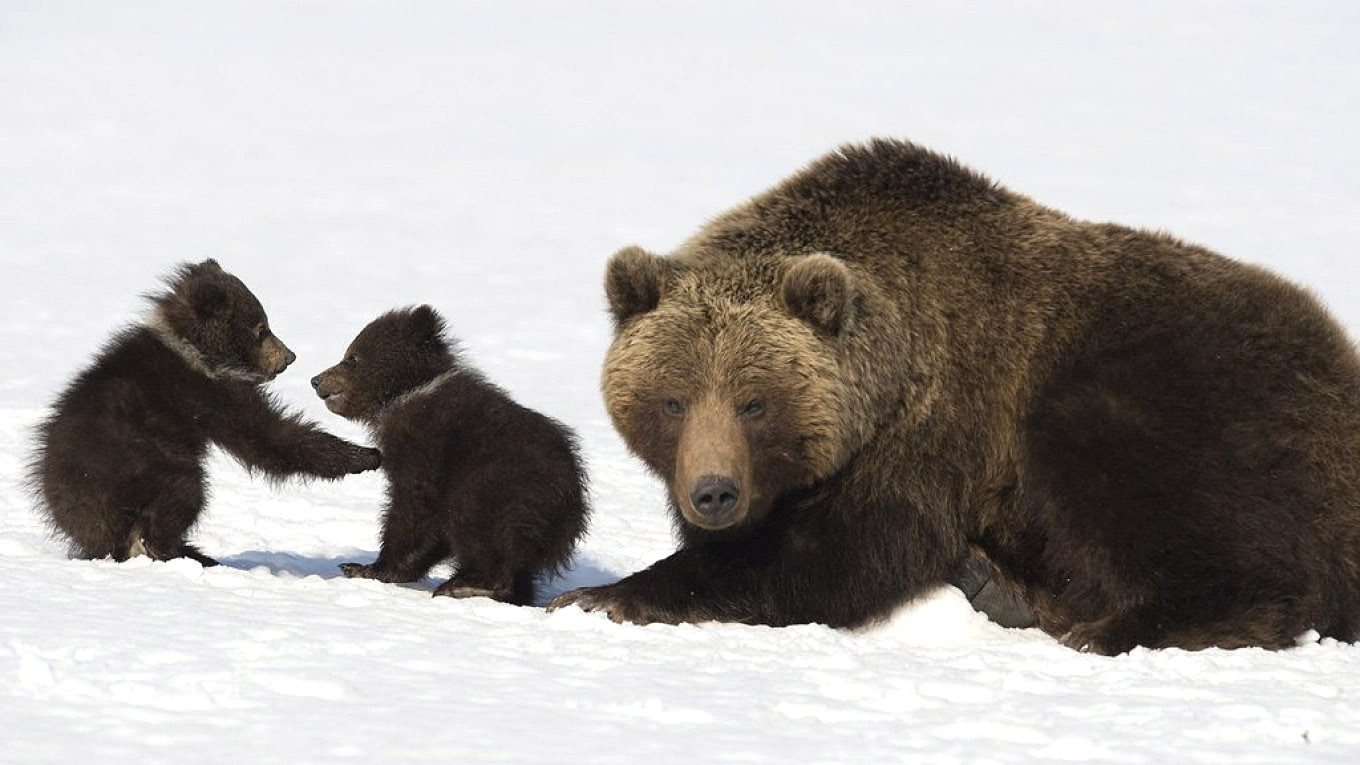
Under such circumstances, the smell of food waste near a settlement becomes a compelling invitation. Bears can remember places where they scavenged successfully and return to them repeatedly, gradually becoming accustomed to the presence of humans. Furthermore, female bears sometimes bring their cubs to these food sources, passing on their behavior and teaching them to regard human settlements as a natural feeding ground.
It is especially convenient when humans themselves extend the invitation. Open dumps, overflowing garbage containers, food scraps near tourist facilities and fish-processing waste can all attract bears. The Natural Resources Ministry acknowledges that readily available food near human settlements has become one of the main causes of human-bear conflicts.
But the most remarkable part of Rosokhotrybolovsoyuz's proposal is its desire to bring back the traditional practice of hunting bears in their dens.
In a letter to Natural Resources Minister Alexander Kozlov, the organization complains that bear hunting is prohibited after January 1, limiting hunting opportunities and preventing the full use of established quotas.
How unfortunate. A bear spends months preparing for hibernation, building up fat reserves, finding shelter and finally settling into its den, only for hunters to find it terribly inconvenient because the law does not allow them to kill bears in February.
Yet hibernation is one of the most vulnerable periods in a bear's life. Its metabolism slows significantly; it stops eating and survives on stored energy reserves. Being awakened and forced to find another shelter means expending additional energy.
Disturbances can be particularly dangerous for female bears. They give birth in January and February to cubs that are blind, almost hairless and weigh just a few hundred grams. Those cubs depend entirely on their mother, who feeds them milk and keeps them warm while continuing to go without food herself.
In a 1997 study, researchers monitored the hibernation of brown bears in Sweden and Norway. Some of the 194 bears studied abandoned their dens and settled elsewhere, potentially due to human disturbance.
The researchers found that three of the five pregnant females that changed dens before giving birth lost at least one cub. Among the 36 pregnant females that stayed where they were, such losses were significantly less common. The sample of females that abandoned their dens was small and the study did not examine the consequences of hunting in February. Nevertheless, it shows that forced disturbances during hibernation can have serious consequences for reproduction.
Russia's hunting regulations prohibit the killing of bear cubs under one year old and females accompanied by cubs born that year, with certain exceptions. The trouble is that it is not always possible to determine whether a den contains newborn cubs without disturbing its occupants.
In traditional den hunting, a bear may first be driven out of its den, sometimes using dogs, then shot. At no point is the animal required to have posed a danger to humans or approached a settlement.
This isn’t the first time such calls have been made. After protests from scientists, environmentalists and thousands of citizens, a 2024 proposal from the Natural Resources Ministry to permit hunting brown and Asiatic black bears in winter was abandoned. Bears have not developed any new characteristics that make them particularly dangerous while asleep in those intervening two years.
Rosokhotrybolovsoyuz is not merely proposing to extend the hunting season. It also wants to allow bears threatening human lives to be shot immediately, with the necessary paperwork completed afterward. According to the organization, obtaining approval currently takes up to five days, a delay that could cost lives.
This proposal is separate from the one permitting hunting until the end of February. Moreover, the organization's official letter explicitly states that extending the season and abolishing annual quotas are necessary to “promote the recreational and sport hunting” of brown bears, not to protect human lives.
Shooting a bear that is roaming near homes and threatening people is one thing. Allowing a hunter to approach a den in February is quite another. The proposers do not explain how killing an animal hibernating deep in the forest would prevent another bear from attacking someone near a village garbage dump.
The hunting organization does, however, explain its own motivations in detail. According to its figures, less than 30% of hunting quotas are filled, permits remain valid for too short a period and hunters must pay 3,000 rubles ($37) to kill a brown bear. In these calculations, the problems of scarce natural food and accessible food waste clearly take a back seat to making hunting more accessible.
Rosokhotrybolovsoyuz has other arguments in favor of hunting that are even more illuminating. During discussions about changing licensing fees, the organization cited military bloggers arguing that encouraging young people to hunt helps with "training future soldiers."
It would be difficult to argue against the need to deal swiftly with dangerous animals, as the issue of the day is protecting the public. Yet somehow, alongside this entirely reasonable objective, bears that have never threatened anyone are put in the crosshairs in the name of entertainment or the militarization of society.
In Russia, you can build a road through a forest, leave a village garbage container open, allow food waste to accumulate and wait for a bear to arrive. The proposed solution to the problem of your own creation is to shoot the animal. And while you're at it, why not allow the hunting of bears that have never ventured anywhere near humans? It’s the patriotic thing to do, after all.
A bear's den may be dozens of kilometers from the nearest village. The bear might sleep there all winter without ever encountering a human being. But if hunters are allowed to come after it in February, even its sleep will become a problem that can be solved with a bullet.
Apparently, the easiest way to protect people from bears in Russia is to do so somewhere the two were never likely to encounter each other in the first place.

A Message from The Moscow Times:
Dear readers,
We are facing unprecedented challenges. Russia's Prosecutor General's Office has designated The Moscow Times as an "undesirable" organization, criminalizing our work and putting our staff at risk of prosecution. This follows our earlier unjust labeling as a "foreign agent."
These actions are direct attempts to silence independent journalism in Russia. The authorities claim our work "discredits the decisions of the Russian leadership." We see things differently: we strive to provide accurate, unbiased reporting on Russia.
We, the journalists of The Moscow Times, refuse to be silenced. But to continue our work, we need your help.
Your support, no matter how small, makes a world of difference. If you can, please support us monthly starting from just $2. It's quick to set up, and every contribution makes a significant impact.
By supporting The Moscow Times, you're defending open, independent journalism in the face of repression. Thank you for standing with us.

Remind me later.