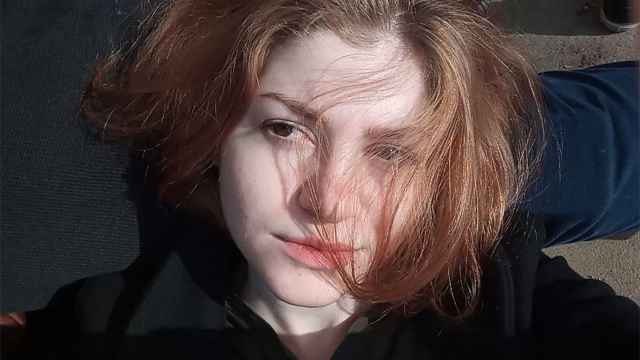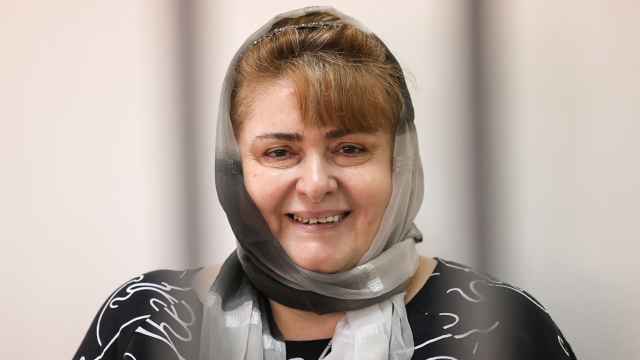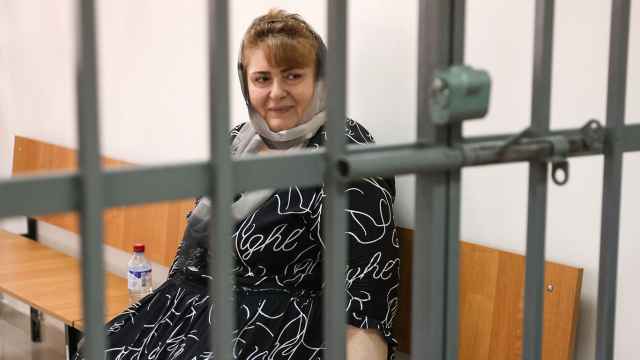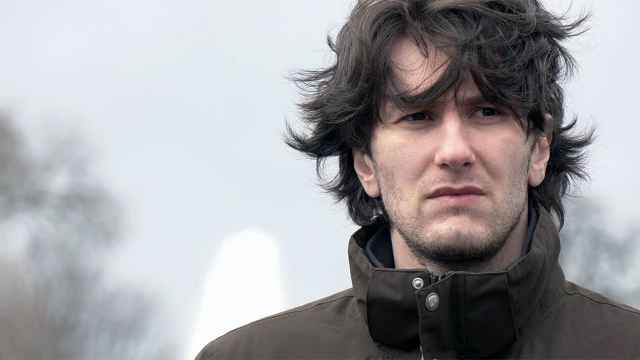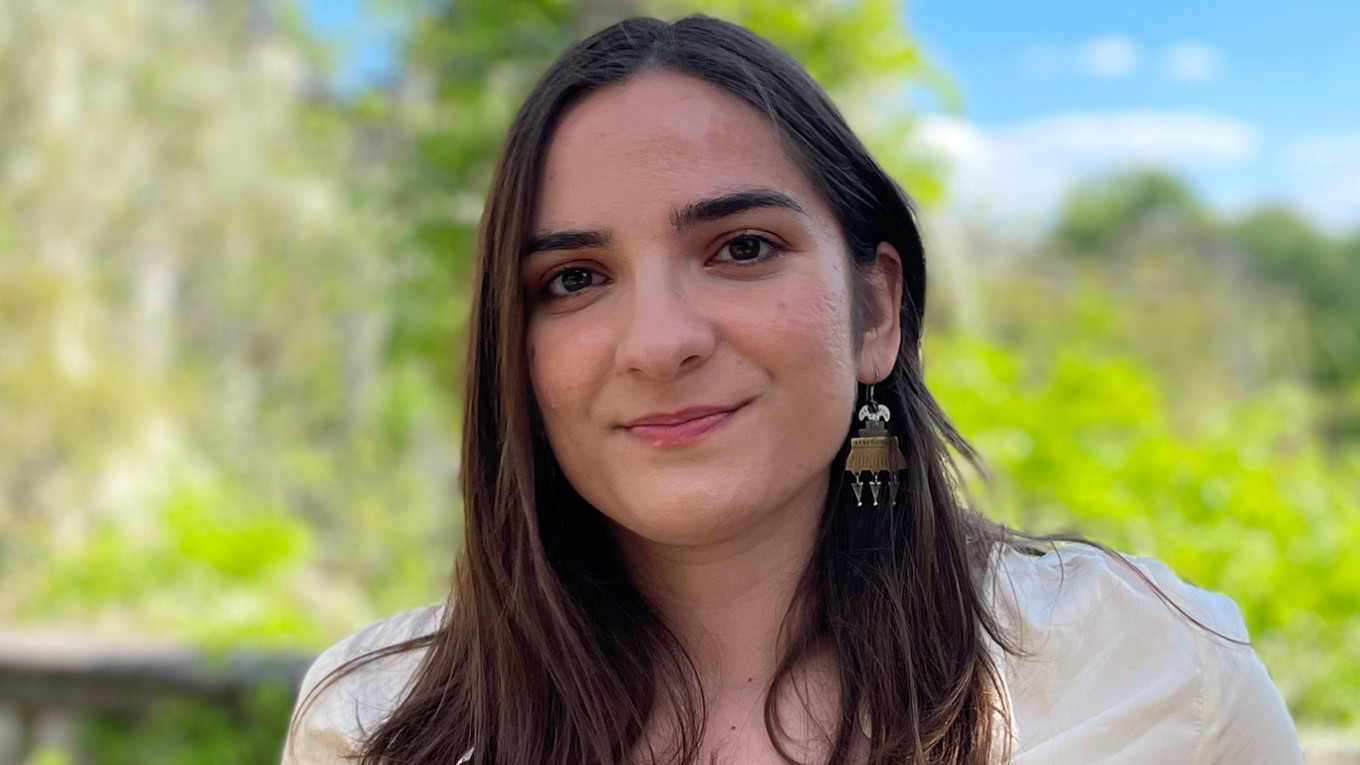
For Lana Estemirova, the history of Russia’s wars on Chechnya is inseparable from the story of her mother, Natalia Estemirova, a prominent human rights defender who documented abuses in the North Caucasus republic. She was abducted and murdered in 2009.
In “Please Live: The Chechen Wars, My Mother and Me,” Estemirova recounts her childhood in war-torn Grozny and her relationship with a mother who continued her work despite growing threats. The memoir, which was shortlisted for the Pushkin House Book Prize, traces the violence of the wars, the rise of Kremlin-backed Chechen leader Ramzan Kadyrov and the struggle to preserve Natalia Estemirova’s legacy in the absence of justice.
In an interview with Pushkin House Book Prize founder Andrew Jack, Estemirova spoke about growing up amid conflict, her mother’s work and murder, the system of repression built in Chechnya and her decision to tell their story.
PH: Why did you decide to write this book?
LE: In 2012, the last time I went to Chechnya, I visited the cemetery with my mother’s grave. It was completely empty. That's where I made a promise to one day write down our story. It was enlightened revenge. It was quite obvious following her murder that there would be no proper investigation. I realized the only way for me to make sure her legacy exists is to immortalize her in literary form. It was very important, because when there's no justice, when the murderers are walking free, you feel so helpless and impotent. Writing was reclaiming that power and making sure hope triumphs over despair. The book is a way of telling the story of Chechnya through the eyes of a child who becomes a teenager, and depicting a mother-daughter relationship that was unique. I wanted to weave in the history and the political context of our bond and mix it all together, because our lives were so intertwined with what was happening at the time.
PH: What happened in the investigation of her death?
LE: They know exactly who’s responsible. At first they were following the correct leads. But then the official version changed completely and they found this militant who very conveniently was eliminated several months after my mum's murder. It was a complete setup. It would be impossible for her murder to not be authorized by Ramzan Kadyrov directly. I believe that one day we'll find out the truth. And I’m planning on living a very long life and seeing justice come to fruition. But in the meantime, I’m doing everything in my power to make sure that my mum's legacy exists and that her life is not just remembered as a tragedy, but also a triumph of humanity.
PH: How did you go about writing?
LE: The book is a memoir and not a precise biography. I started off with my own memories and jotted down the stories that jumped out: living without electricity, lugging all the buckets of water to the 10th floor, the shootings and going to school while soldiers were checking for mines on both sides of the road. I was aided by our family photographs. Then I started involving my mother’s colleagues and friends from Memorial and other human rights organizations. After that I started using more secondary materials including my mum's articles. It was really important that the human story was my starting point. I had this wheel in my head to balance all of the personal memories and my perception of what was going on and my mum's work, and then adding the historical and the political context. I had to make sure the wheel kept turning. On one page, I’m trying to find out how to download music illegally and to find the names of my favorite band without access to the internet. On another, it’s my mum interviewing victims of torture. So it’s a bit morbid probably, but that's how life is in a war zone.
PH: What was your life like in Chechnya?
LE: The biggest challenge wasn’t the lack of electricity or water, because when that's your reality that’s what you operate in. The trickiest thing was this lack of stability. Our lives were so chaotic that one week my mum would come in and say, ‘Okay, you're going to the village for a week’ and obviously my education would be disrupted. Having a routine is quite important for a child. That’s something I had to make up for in the coming years. When living in a war zone is the only thing you know, you adapt very quickly. Sometimes we would leave to go to Moscow or other villages where my relatives lived that had electricity and had water. But then I had to go back to Grozny, which didn't have these amenities, and it was just like coming home and it really felt quite normal. This chaos and the lack of stability made me very adaptable but definitely had some long-term consequences.
PH: How dangerous was life for you?
LE: I knew that we lived in danger. One day in 2001, in Grozny, my mum and I were coming back to our neighborhood after visiting someone. It was already dark and we were walking past a checkpoint when the ‘federals’ — Russian soldiers — were getting drunk as they did every night because there was nothing to do apart from killing people and drinking. Suddenly they started shooting at us. I was six or seven years old. I remember bullets hitting right in front of us and going everywhere. My mother stopped in her tracks and turned to them and started screaming, ‘Stop it. Stop it. I have a child with me. Stop it, you bastards.’ They just thought it would be fun to scare us or kill us. The older I got, the more I understood how mum put herself in the firing line. This realization came properly was she accompanied our friend and her colleague Anna Politkovskaya to an interview with Ramzan Kadyrov in 2004. My mum describes how he tried to abuse her and even threatened to kill her. The more power Kadyrov gained, the more danger my mother was in because he really made a point of silencing his critics.
PH: How do you feel about your mother?
LE: She was full of surprises. I really wanted to depict her not just as this martyr but as a human being who had her own flaws and bad days. She didn't always know what she was doing, and she was very chaotic and disorganized and could be very short-tempered. I wanted to capture that complexity. But I kept being hit with these stories that made me think in many ways she was a saint. She lived quite an ascetic life. We didn’t really have much money. She liked dressing up and simple pleasures like planting flowers and home decor, but she really put other people’s needs above hers. Whether it was going to a mountainous village in the middle of the day to record a testimony of a family member of someone who was kidnapped, or giving away some of my old toys without my permission to an orphanage, or most of her salary to someone she thought was in greater need. She thought she had to solve every problem. We often talk about big cases she was involved in and how she was not afraid to confront officers. She was so empathetic and selfless that she didn’t think twice, even when it was dangerous.
PH: What was her legacy?
LE: The most upsetting thing for me is that I won’t even know half of the things she was involved in. I still have people tell me how she helped them file a lawsuit and how they got a compensation for a missing family member or helped to save someone who was illegally detained. She was doing everything in her power to fight impunity, like the handful of Russian soldiers who faced persecution for their crimes. Sometimes she managed to rescue young men from illegal prisons. At the heart of it is her attempt to fight against this machine that was grinding down human lives with no consequence. She made everything her responsibility. She had a team of colleagues, comrades and friends around her. She didn’t let all this injustice and violence go unnoticed. She wanted the world to know about what was happening in Chechnya and she wanted the world to do something about it. How do you qualify the impact of one person? There are a lot of people who are alive now because of her, or who gained some sense of closure and justice.
PH: How do you compare the federal actions with those of the Kadyrov regime?
LE: I don’t agree with the characterization of his regime that you sometimes see in the independent Russian media, as if it’s something completely separate from the Kremlin. There’s this orientalist thinking that people in the periphery have a capacity for a special sort of brutality. Kadyrov’s ascent to power was a direct policy of the divide and rule strategy that Russia has used historically. Find someone on the spot to do the dirty work for you and then outsource to them. Kadyrov and his kind switched sides and enjoyed all the perks of their association with the Kremlin and received a huge budget they spent on themselves. They inherited and reused all the illegal sites to carry on that brutality. Of course, there was a local flavor he brought to this repression, like the principle of collective responsibility: they would kidnap the whole family of someone accused of being a terrorist and torture them and burn down their houses.
PH: Do you still follow the situation in Chechnya?
LE: If you don’t live there, it’s really impossible to grasp the extent of this open-air prison that it has become. I haven’t visited for many years and it's a completely different place to the one I left back in 2009. That’s why I was focusing on capturing that almost fleeting moment. So much has been written about the first war. I really wanted to capture what it was like living in the consequences of those wars, watching this traumatized society that never got any respite then flung into this horrible dictatorship where human lives had no significance. Is anything fundamentally going to change for Chechens after Kadyrov goes? While someone like Putin is still in power, they’ll find another Kadyrov and I believe these repressions will carry on. There’s a whole line of other people who will be happy to take over and carry on what he was doing, just adding their own flavor to it.
PH: Do you feel afraid yourself?
LE: I anticipate some threats coming my way. But I live somewhere safe. There’s nothing in my book or that I say which I want to backtrack on. I speak openly about who I found responsible for my mother’s murder. The last thing I would want is to be silent. I know my words have consequences, but I also know I have a duty to tell the truth. When I think about who's in real danger, it’s those journalists who are uncovering Kadyrov’s current crimes as we speak, not his past crimes.
PH: What are your current plans?
LE: I've been involved in the human rights sector in my own way, working for an organization that defends media freedoms. I’m currently taking a break because I have two small children. I’ve been working on a novel for younger audiences inspired by Caucasian mythology, about a girl who has to save the world. It’s another way of preserving and celebrating my culture while taking a break from some heavier context and focusing on the power of my imagination. The greatest gift my mother gave me was teaching me how to read. Even when there was shooting at night or we didn’t have electricity, I would just lie in bed with a book of fairy tales. I gave myself permission to explore that greatest passion of my childhood.
A Message from The Moscow Times:
Dear readers,
We are facing unprecedented challenges. Russia's Prosecutor General's Office has designated The Moscow Times as an "undesirable" organization, criminalizing our work and putting our staff at risk of prosecution. This follows our earlier unjust labeling as a "foreign agent."
These actions are direct attempts to silence independent journalism in Russia. The authorities claim our work "discredits the decisions of the Russian leadership." We see things differently: we strive to provide accurate, unbiased reporting on Russia.
We, the journalists of The Moscow Times, refuse to be silenced. But to continue our work, we need your help.
Your support, no matter how small, makes a world of difference. If you can, please support us monthly starting from just $2. It's quick to set up, and every contribution makes a significant impact.
By supporting The Moscow Times, you're defending open, independent journalism in the face of repression. Thank you for standing with us.

Remind me later.