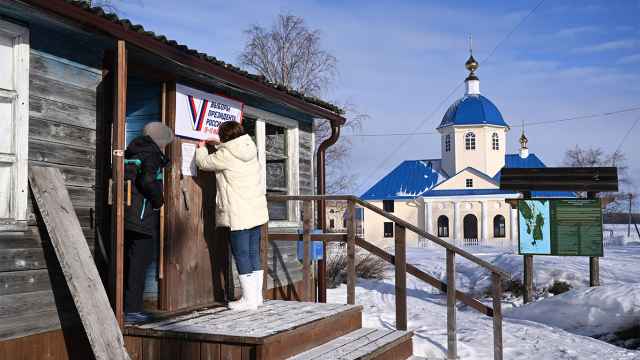

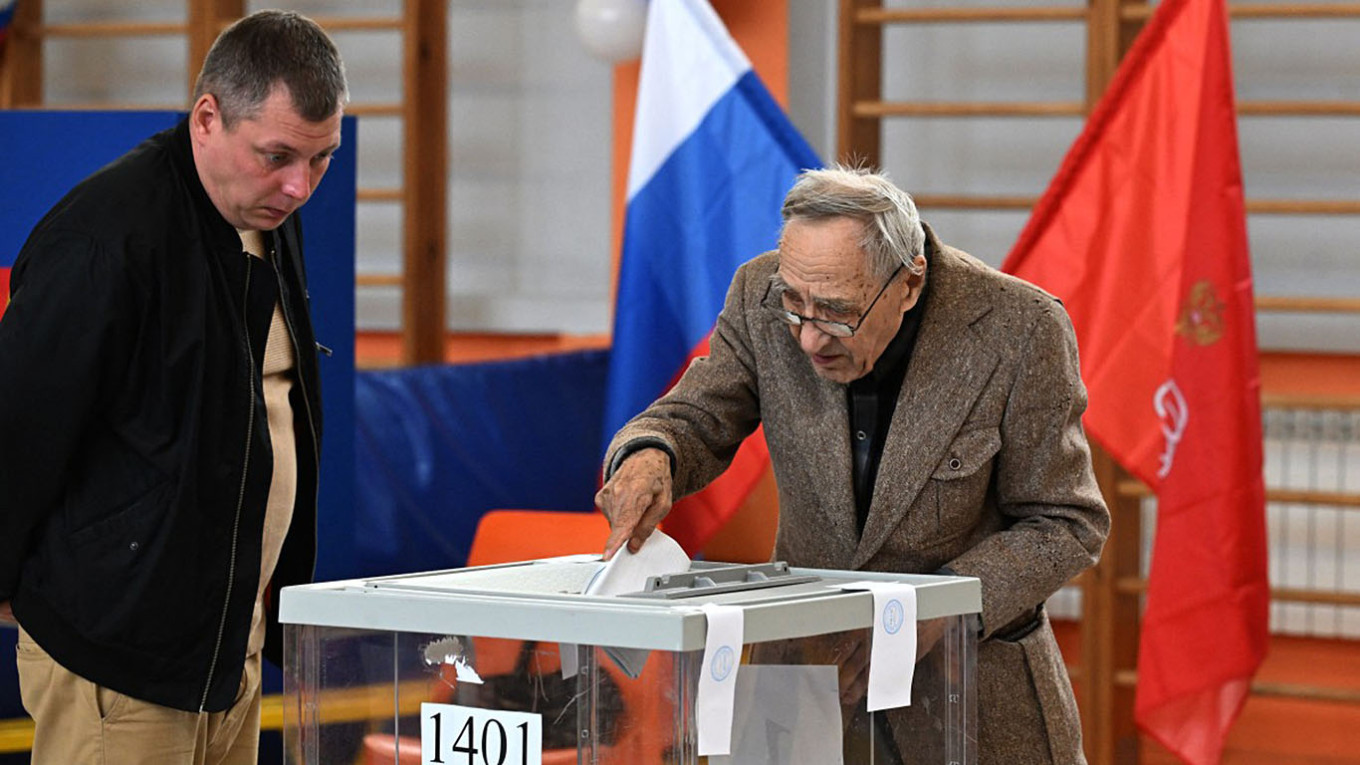
Across Russia, the outcome of this weekend’s State Duma elections seems like a foregone conclusion: a sweep for the ruling United Russia party and its allies. Even so, in St. Petersburg, one woman plans to head to her local polling station as an election observer from the liberal Yabloko party.
“What’s the motivation? A sense of responsibility, I guess — the feeling that this is one part of changing Russia that’s actually within my power,” the woman told The Moscow Times on condition of anonymity due to the risk of political reprisal.
“I can’t overthrow anyone, but I can show up and observe,” she said.
In what experts say is Russia’s most restricted parliamentary elections to date, voters have few options to make a difference at the ballot box. Instead, many are finding other ways to push back against United Russia and show their distrust in the process, from subtle acts of protest to organized voting strategies and poll watching.
The Kremlin has sidelined nearly all real opponents, making it almost impossible to vote for candidates who truly challenge the status quo. With United Russia facing some of its lowest approval ratings since the full-scale invasion of Ukraine, President Vladimir Putin is framing the election as a referendum on the war effort, now in its fifth year.
For authorities, showing strong public backing is critical. A crackdown on anti-war candidates ahead of the vote peaked in August when Russia’s Supreme Court barred Yabloko, the only party campaigning on a pro-peace platform, from the party-list ballot.
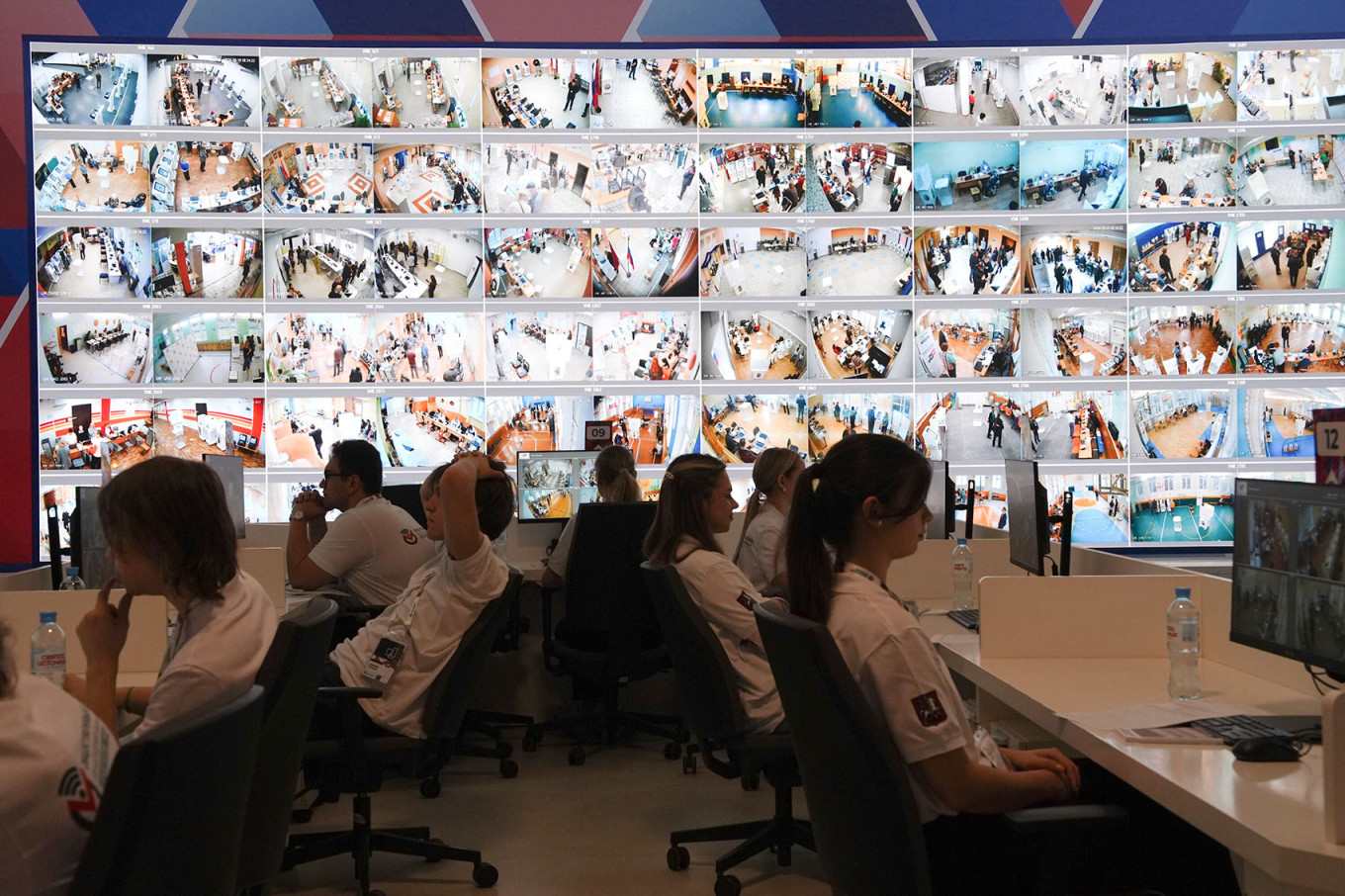
Voters will elect 225 State Duma representatives through party lists and another 225 in single-member districts, where a few Yabloko candidates are still allowed to run. United Russia, which controls 70% of Duma seats, is expected to keep its usual supermajority, with remaining seats going to Kremlin-approved parties that support the war.
The protest efforts that have emerged mostly focus on calling out the lack of real choices and showing that people do not support the war. They are far fewer and smaller than in previous election cycles and are unlikely to yield anything more than symbolic wins for regime critics. For many taking part, though, that is reason enough.
In the northern Vologda region, United Russia candidate Natalia Moskvitina has become a target of one such campaign. Earlier this summer, feminist activists petitioned authorities to remove Moskvitina, the head of an anti-abortion group, from the party list, arguing her platform threatens women’s rights.
When that effort failed, activists shifted their tactics, calling on voters to support any party other than United Russia. The goal is to drive down the party’s vote total enough so Moskvitina loses her spot on the regional representative list.
“I don’t think the campaign will lead to her losing the election,” said Daria Serenko, co-founder of the Feminist Anti-War Resistance group leading the initiative against Moskvitina. “But that doesn’t mean she should get there easily, smoothly and unnoticed.”
Serenko said the summer campaign gave Moskvitina “national negative notoriety,” and she believes authorities will take note of the pushback. Even if she wins a seat, Serenko hopes the public backlash will hamper her legislative agenda.
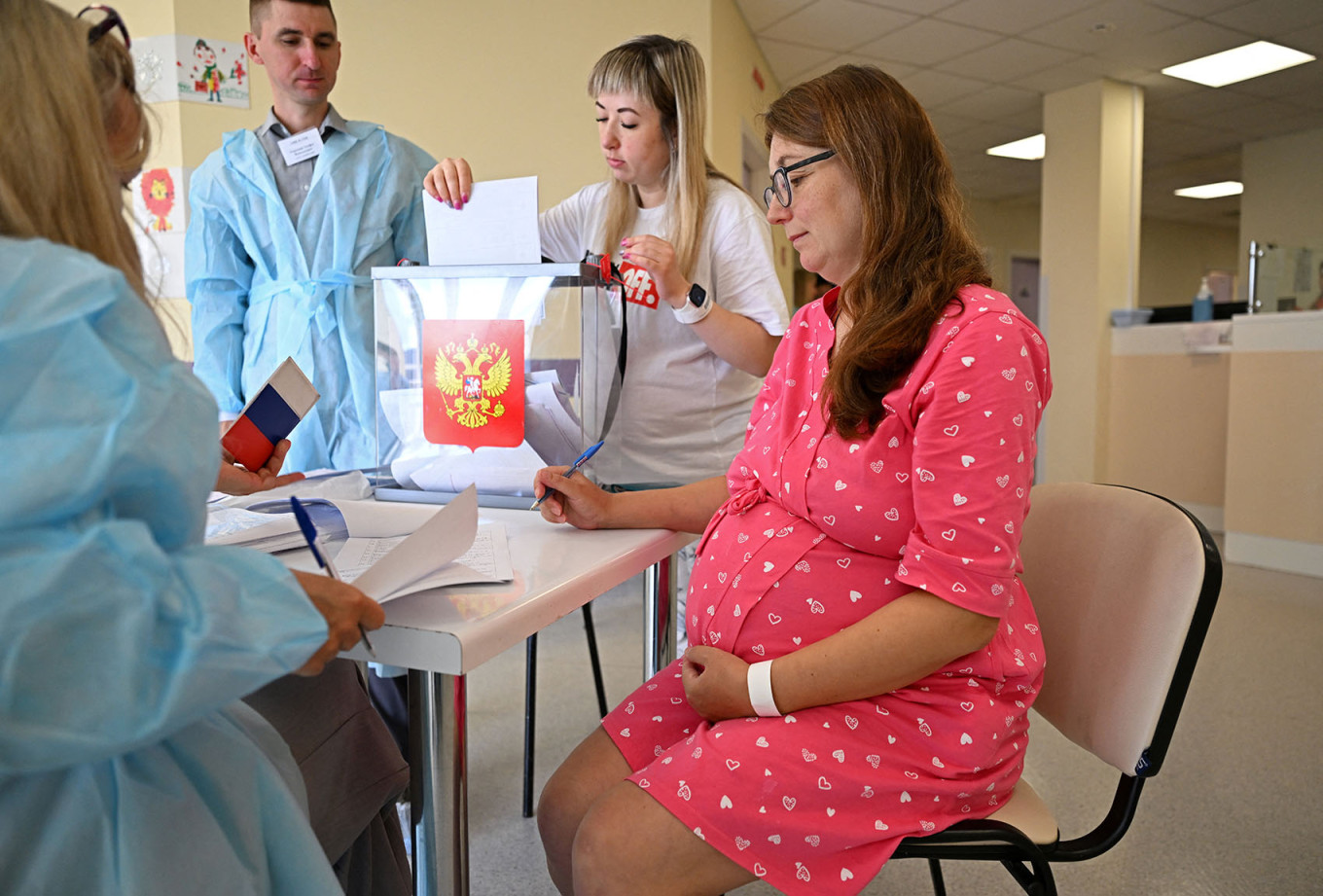
Elsewhere, activists are organizing a symbolic demonstration to draw attention to opposition surrounding the biggest issue in the elections: the war.
Organizers of an initiative called “Noon for Peaceful Russia” are asking voters to show up at polling stations simultaneously — at 12:00 p.m. on Sept. 20, the final day of elections. The goal is to generate striking photos of long lines wrapping around polling stations across Russia and at embassies abroad, giving Russians a way to engage in a low-risk yet visible form of protest.
Organizers say they want to disrupt the tightly controlled optics of the elections and show that Russians are united — not behind Putin, but behind an end to the war in Ukraine.
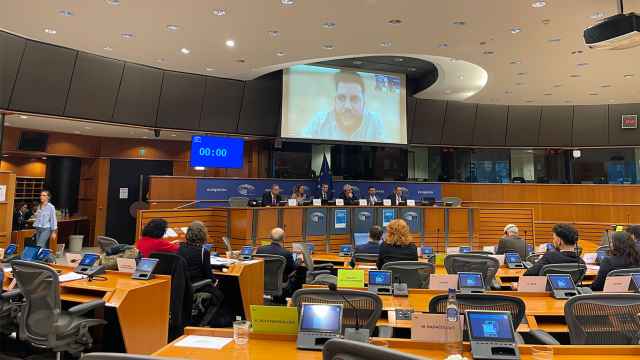
“It’s important not only to see that you are not alone,” said Katerina Kiltau, chairwoman of the political council for Peaceful Russia, the exiled party leading the event. “A simultaneous turnout will also show the world that there are Russians who want a peaceful and democratic future.”
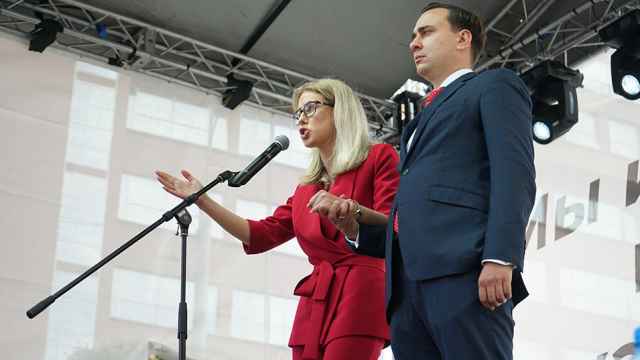
Exiled opposition figures Yulia Navalnaya and Maxim Katz are also calling on Russians to vote for any party other than United Russia. It remains a controversial strategy, as every other option on the ballot, though nominally in opposition, largely backs the Kremlin’s and United Russia’s core policies.
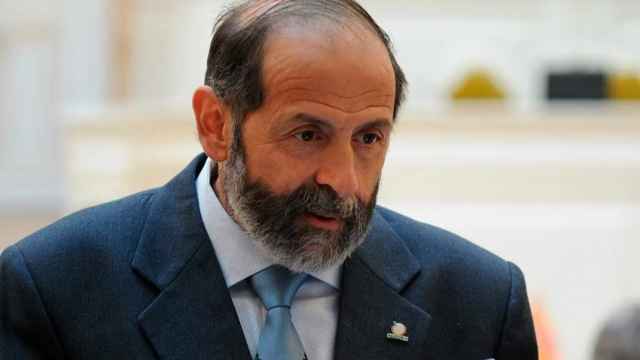
Debate has flared over whether to cast a protest vote or boycott the election entirely. In a rare rebuke aimed at the exiled opposition, Yabloko Chairman Nikolai Rybakov criticized the strategy of voting for systematic opposition parties like the Communist Party or the right-wing Liberal Democratic Party of Russia (LDPR) given their support of the war against Ukraine and political repression inside Russia.
“We understand that this is a choice between bad and very bad,” Kiltau said. “But that is how protest voting works in an environment where elections are not free. The more people who go to the polls and vote for alternative parties and candidates rather than the ruling party, the harder it will be to distort the actual picture of the vote.”
Yet another initiative, called “Vote Abroad,” is taking a different tack by organizing volunteers to conduct exit polls overseas. Irina Vesikko, a coordinator for the group, told The Moscow Times they will work across roughly 40 international cities to survey voters and document potential fraud.
“We’re not encouraging anyone, we’re not calling on anyone to vote or to do anything specific,” Vesikko said. “We’re simply recording the fact that [voting] will happen, and that’s it. A statement of fact. Who will verify [the results] otherwise?”
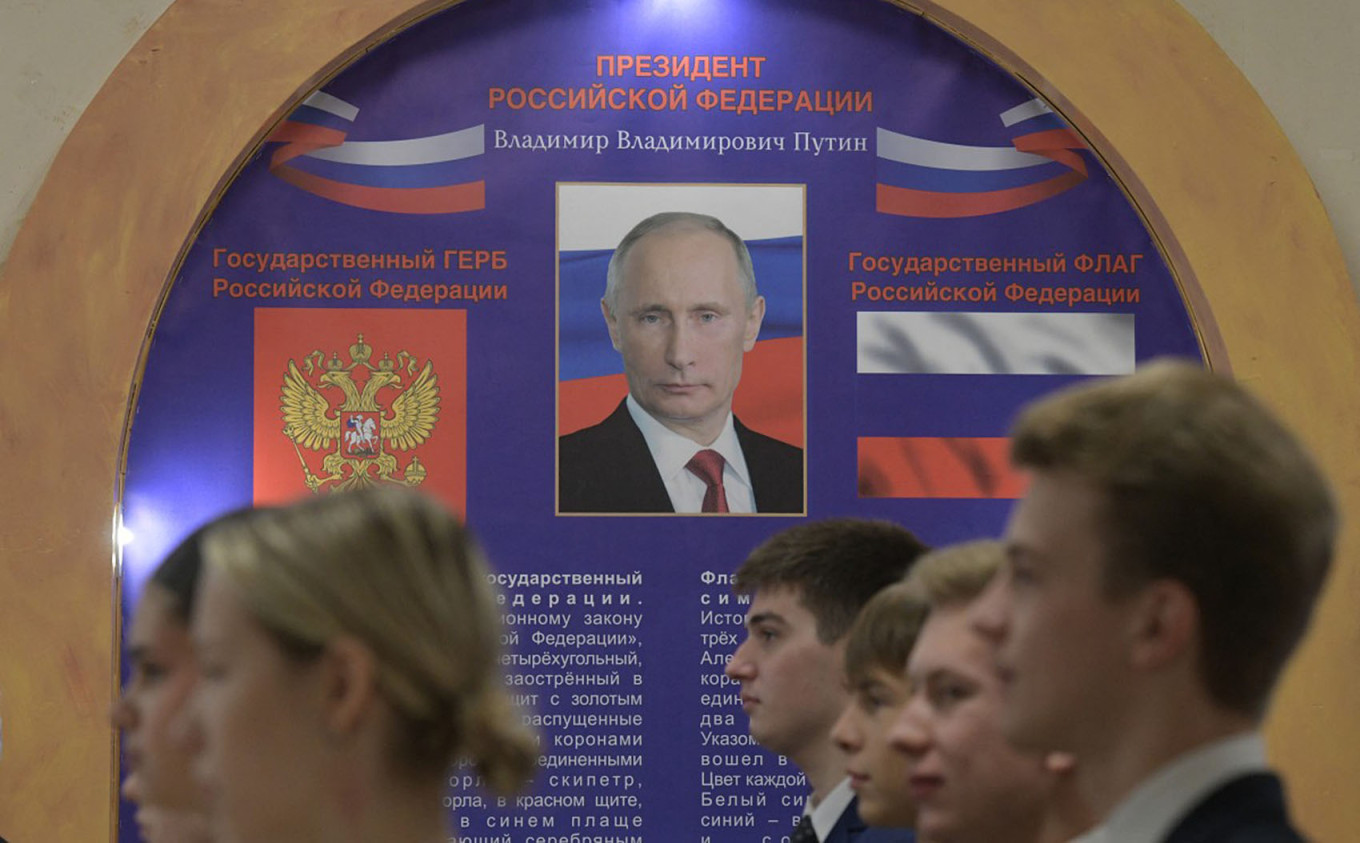
Still, many anti-war Russians are skeptical that any form of activism will make a difference, and some see no point in taking part at all.
“It doesn’t decide anything and has no impact,” Anastasia, a woman living in St. Petersburg, said of her decision not to vote in the elections. However, she said that she stands in solidarity with those who do engage in some form of protest voting.
Ivan, a Russian living in Europe, said he is disillusioned with both pro-Kremlin and anti-war voices and believes getting involved in politics at this point is a waste of time.
“I can’t influence the government in Russia through my vote, so I'll spend my time on something else,” he added. “I don’t consider this apathy, but rather a realistic assessment of the situation.”
Mack Tubridy contributed reporting.
A Message from The Moscow Times:
Dear readers,
We are facing unprecedented challenges. Russia's Prosecutor General's Office has designated The Moscow Times as an "undesirable" organization, criminalizing our work and putting our staff at risk of prosecution. This follows our earlier unjust labeling as a "foreign agent."
These actions are direct attempts to silence independent journalism in Russia. The authorities claim our work "discredits the decisions of the Russian leadership." We see things differently: we strive to provide accurate, unbiased reporting on Russia.
We, the journalists of The Moscow Times, refuse to be silenced. But to continue our work, we need your help.
Your support, no matter how small, makes a world of difference. If you can, please support us monthly starting from just $2. It's quick to set up, and every contribution makes a significant impact.
By supporting The Moscow Times, you're defending open, independent journalism in the face of repression. Thank you for standing with us.

Remind me later.