If President Vladimir Putin is preparing a radical overhaul of Russia’s wartime economy, he is keeping it very quiet. The country’s captains of industry and finance are carrying on as usual, drawing up budgets and publicly discussing their plans. A partial government reshuffle looks possible, but it’s unlikely to lead to a change in strategy.
The time for shifting to the much-discussed “mobilization economy” seems ripe. If the Kremlin ever intended to make that move, now would be the time, with Russia’s elections nearly out of the way.
Yet there is no sign that an economic revolution is being prepared. If Putin is planning one, he is keeping it secret from the officials who run his economy.
Coping without a coup
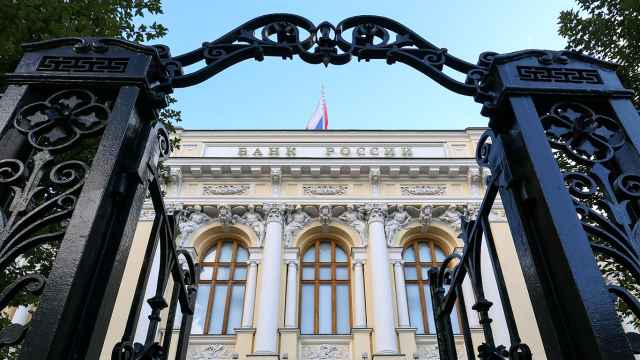
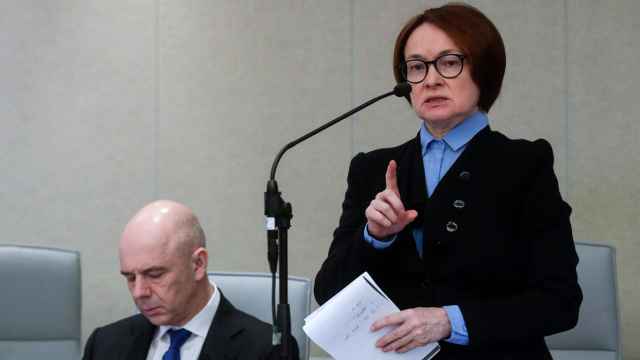
The Central Bank has published its annual monetary-policy blueprint as usual, complete with its perennial promise to bring inflation under control next year. Finance Minister Anton Siluanov, also sounding much as he always does, insists that “there are no problems” and that everything included in the budget is fully funded. In other words, everyone is calmly getting on with the job.
There are three possible explanations. Siluanov, Central Bank Governor Elvira Nabiullina and their colleagues may all be participating in an elaborate deception. Putin may be preparing an unpleasant surprise for the lot of them. Or he may believe that his officials can meet his demands without overturning the system.
In my opinion, the third explanation is more likely.
Budget execution for the first eight months of the year suggests that Russia’s finances remain far from healthy, but they are not getting worse. The deficit has even narrowed by 700 billion rubles ($8.3 billion), to 5.8 trillion rubles ($68.4 billion). That is enormous, though it is rapidly becoming the new normal.
That 700 billion rubles came from dividends, mostly from National Wealth Fund assets. Even without that money, the deficit would not have grown. Siluanov can be trusted to plug the budget hole, even if it is far larger than originally planned.
Although oil revenue came in at a disappointing 1 trillion rubles ($11.8 billion) below the figure for the same period last year, a 2.4-trillion-ruble ($28.3 billion) rise in value-added-tax receipts came to the rescue. Raising VAT from 20% to 22% has, so to speak, saved the revenue side of the budget.
Overall revenue is only slightly below expectations. As usual, the problem is spending. Expenditures are running about 10% above what was planned, producing the swollen deficit. Even here, however, things aren’t all bad for Putin’s financial managers.
Scraping the trillions together
A year ago, while officials were drafting the 2026 budget, Putin shamelessly misled his own government by promising that military spending would not rise. Financial officials had argued that the economy needed a breather, and so he agreed.
A few months later, he naturally changed his mind. He ordered them to rewrite the budget and find roughly 5 trillion rubles ($59 billion) more for the war.
He could have gone further than that. Apparently, though, the past few months have brought no fresh improvisations from the president. His technocrats have more or less managed to cope with the earlier ones, even though they complained bitterly at first.
Given that Putin hasn’t demanded more money yet, the regime’s economic managers — except for Nabiullina — have recovered some of their confidence. They are now whipping up the 2027 budget, a draft version of which is due by the end of this month.
The Central Bank governor has little reason to share their optimism. Wartime spending has forced her to keep interest rates extraordinarily high, making her the preferred scapegoat for the economy’s problems in the eyes of Putin’s elite.
The outlines of the 2027 plan are already visible. The technocrats will achieve a formal balance between revenue and expenditure by cutting civilian spending.
They are unlikely to risk a third sweeping increase in key taxes. Instead, they will raise smaller levies and eliminate exemptions. They will cut “unprotected” spending, scale back subsidized mortgages and squeeze the regions more systematically. Regional governments will be required to adopt medium-term fiscal-recovery programs, from which Moscow hopes to save 800 billion rubles ($9.4 billion) in 2027 alone.
Taken together, these measures could probably scrape up another 5 trillion rubles ($59 billion) for the war while producing a deficit smaller than this year’s.
To ensure the Kremlin’s rainy-day reserves don’t run dry, they decided to lower the oil-price threshold that governs withdrawals from the National Wealth Fund, meaning that money will only be taken from the fund if oil prices fall much further. Should the budget come under pressure, there will simply be no money for secondary needs — meaning anything unrelated to the war.
Nor will anyone go looking for it.
Armed with these rules, Putin’s economic managers believe they know how to hold out for another year. They do not seriously look beyond that. But their system has a weak link: the Central Bank.
A shake-up without radicalism
The Central Bank’s standing assignment is to fight inflation, a mission handed down by Putin himself. For all his years in power, that has been one of his personal priorities. But the longer the war continues, the higher the cost of that fight — and of the high interest rates it requires. The result is stagnation across the economy and outright contraction in many industries.
This year Putin has been signaling that he remains opposed to inflation, but that he also wants interest rates brought down more quickly. At the same time, his own orders require the state to pour ever more money into the war. To professional financial officials, these demands are irreconcilable. War brings inflation.
Even so, most of the civilian commanders of Putin’s economy are prepared to keep serving him while operating broadly within market rules. Only a minority favors a Soviet-style mobilization model, and it is far from clear that this group would know how to build one.
Less radical steps are easier to imagine, though they could still shake up the ruling class. Putin might replace the prime minister and several members of the cabinet.
Prime Minister Mikhail Mishustin has, in some respects, behaved inappropiately this year. At the start of 2026, he appears to have been too persistent in urging Putin not to issue orders that would stretch the budget too thin. It was far from a mutiny. But if Putin decides that Mishustin needs replacing, First Deputy Prime Minister Denis Manturov is close at hand.
Manturov, who has close ties to Putin’s circle and oversees the defense industry, may appear a more natural wartime prime minister. Putin has also been shown meeting him far more often than Mishustin in recent months. His appointment remains speculation, but it would signal a shift in priorities rather than the end of Russia’s market economy.
Until now, Putin’s governments have always given greater authority to the officials who collect and allocate money than to those who ask for it and spend it. Mishustin once ran the Federal Tax Service. Manturov has never collected money. His career has been devoted to receiving and disbursing it.
If he, or someone like him, takes charge of the government, the argument over whether to keep “fighting inflation” would almost settle itself. The Kremlin’s attitude toward inflation would become more forgiving because its attitude toward spending would become more forgiving too.
The literate petitioners
If Putin is indeed preparing to replace Mishustin, the process will be a secret operation in the truest sense. What Putin is not hiding is his vision of the ideal Russian economy.
That vision can be found in a report by experts affiliated with the presidential administration’s Third Rome center. The project was overseen by Maxim Oreshkin, the Kremlin’s leading economic official. Oreshkin would not have risen so far without also becoming an expert on his boss’s moods.
The report contains everything Putin likes: 3% annual growth, an enlightened state machine and plenty of “robotization, artificial intelligence, autonomous systems and platformization.” It gives pride of place to one of his favorite toys, the Moscow-St. Petersburg high-speed railway.
As a guide to Putin’s preferences, the document is revealing in two ways.
First, it contains no Soviet-style economic mobilization. The market system remains. Private capital, naturally directed by the state, is supposed to develop the economy using ordinary people’s bank deposits, generously made available to business as “long-term money.”
Second, the report declares that the time has come to draw a line under Russia’s current economic model. Beginning in 2027, it says, the economy must take “not so much a step forward as a step upward,” moving onto a path where growth directly improves living standards and quality of life.
Translated from bureaucratic prose, the message is simple. Oreshkin — or the collective Oreshkin speaking through the report — is asking Putin to put him in charge of the economy and promising that he can do a better job than the current team. Apparently, the people close to the ruler are now permitted to submit such applications.
What we are seeing at the helm of the Russian economy is therefore less preparation for a new economic order than a struggle among personalities and clans. Putin and his inner circle are probably not preparing to turn the system upside down, at least not in the near future.
They have no urgent need to do so. The system they already have continues to produce as much money for the war as they order it to.
This article was translated with the help of artificial intelligence and was reviewed by a Moscow Times editor before publication. Learn more about our newsroom's AI policy here.
Read this article in Russian at The Moscow Times' Russian service.
A Message from The Moscow Times:
Dear readers,
We are facing unprecedented challenges. Russia's Prosecutor General's Office has designated The Moscow Times as an "undesirable" organization, criminalizing our work and putting our staff at risk of prosecution. This follows our earlier unjust labeling as a "foreign agent."
These actions are direct attempts to silence independent journalism in Russia. The authorities claim our work "discredits the decisions of the Russian leadership." We see things differently: we strive to provide accurate, unbiased reporting on Russia.
We, the journalists of The Moscow Times, refuse to be silenced. But to continue our work, we need your help.
Your support, no matter how small, makes a world of difference. If you can, please support us monthly starting from just $2. It's quick to set up, and every contribution makes a significant impact.
By supporting The Moscow Times, you're defending open, independent journalism in the face of repression. Thank you for standing with us.

Remind me later.