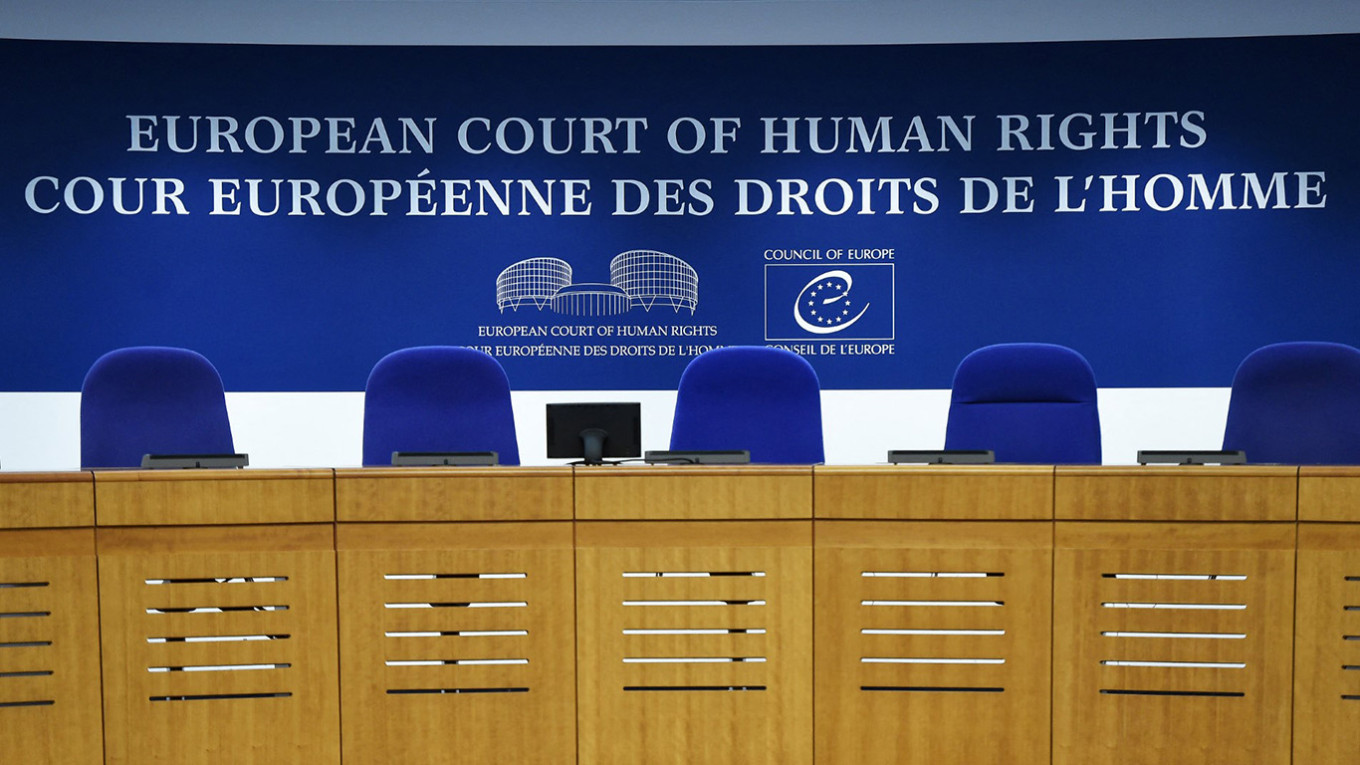
On September 3, the European Court of Human Rights adopted a decision that is unprecedented in the history of international justice as a whole: it struck out 879 remaining applications for cases against Russia, whose applicants included more than 1,500 people and organisations in total.
In its decision in the case of Lebedeva and Others v. Russia, the Court announced that it would continue to examine only interstate and individual applications against Russia connected with the armed conflicts in Ukraine and Georgia. Everything else has been thrown in the bin. Among the applicants in these cases are residents of the Dagestani village of Vremenny, whose homes were destroyed during a 2014 counter-terrorism operation; victims of bombings during the Second Chechen War; relatives of those killed on the Kolskaya drilling platform in 2011; a man who was abducted and tortured several years ago by Kadyrovtsy; relatives of journalist and human rights defender Timur Kuashev, who was killed by Russian security services in 2014; and relatives of the Syrian El-Ismail, who was tortured and killed by Wagner PMC mercenaries in 2017. Many of them had waited decades for a decision from the Court. Today, their wait came to an end: they have been left alone with the Russian state.
On March 16, 2022, shortly after the start of Russia’s full-scale invasion of Ukraine, Russia was expelled from the Council of Europe.
Russian authorities immediately ceased all cooperation with Strasbourg. They stopped responding to requests from the ECHR, presenting their position in court cases and corresponding on the implementation of the Court’s judgments. The Court received its last official letter from Russia on March 28, 2022, in which the authorities stated their intention not to implement its judgments from March 16, 2022 onward. In June 2022, that refusal was enshrined in law: Vladimir Putin signed legislation prohibiting the implementation in Russia of ECHR judgments that became final after March 15, 2022.
It is known that at that moment, voices inside the ECHR were already calling for the Court to stop examining any applications against Russia. At first, the Court did not support this position and confirmed in March 2022 that it would continue examining Russian cases concerning all facts that occurred before Sept. 16, 2022, the date on which the European Convention on Human Rights ceased to apply to Russia. The Court also confirmed that Russia remained obliged to cooperate with the Court and implement all of its judgments.
Since 2022, in addition to cases connected with the armed conflicts in Ukraine and Georgia, the ECHR had been dealing with a backlog of more than 15,000 Russian applications. The Court filtered some of them out, sometimes according to the principle that “when the forest is being felled, chips will fly.” In thousands of others, it issued standardised judgments, in which stories spanning many years were reduced to rows listing the violated articles of the Convention and the amounts of compensation.
Finally, more than 600 applications in landmark cases were examined in detail — among them, for example, Memorial’s cases concerning access to Soviet archives and slave labour in Moscow.
Now, four years later, when fewer than a thousand Russian applications remained and all of them were important and complex enough not to be dealt with under the simplified procedure, the supporters of the shredder inside the Court have nevertheless prevailed.
There can be no doubt that this mass dismissal — a massacre — of applications will go down in history as one of the most shameful decisions the ECHR has adopted in its entire existence. The issue is not even the number of applicants affected — relative to the total volume of cases against Russia, there really are not that many — but the principle itself.
The Court justified its decision on purely bureaucratic grounds. It concluded that, in view of Russia’s non-participation in the Council of Europe, there was no point “deployment of further significant judicial resources” to examining the remaining cases. It is true that the Convention allows the Court to discontinue proceedings in a case if "it is no longer justified to continue the examination of the application.” But the same provision contains an important qualification: the examination must continue “if respect for human rights requires it.”
It is obvious that convenience or the saving of resources alone cannot justify a refusal to administer justice, all the more so when the state in question has been expelled from the Council of Europe and refuses to cooperate with the ECHR or implement its judgments. In effect, today the ECHR has allowed itself to strike cases out if the defendant does not turn up in court and ignores the court’s other judgments. We as lawyers admit that it will not be easy for us to explain this logic to our clients. Even Russian judges have not yet thought of anything like this.
The fact that the Court has already examined, or will continue to examine, thousands of applications against Russia in no way justifies refusing to examine the remaining ones, particularly after so many years of waiting. We should recall that the earliest of the applications thrown out today was submitted to the Court in 2007 — 19 years ago! Moreover, this approach only aggravates the problem because it discriminates between applicants without any coherent justification. The right to access justice should not depend on how well a particular applicant’s story fits the Court’s current priorities.
Today’s decision is an enormous blow to the authority of the ECHR, the Council of Europe and the international human rights protection system as a whole.
First, the Court has let down the people who placed their trust in it. For years, they went through the Russian courts and gathered evidence in the hope that their case would receive an independent assessment in Strasbourg. Now, everyone who has already spent years seeking justice is being told to begin another round: find another suitable international body to protect their rights, understand its rules, prepare the application all over again and be forced to wait again, with no guarantees. Many applicants will discover that access to such bodies — for example, at the UN — is already closed to them because the relevant deadlines have expired.
Second, the Court’s decision is a gift both to the Kremlin and to other states that violate human rights.
For years, the Russian authorities tried to rid themselves of the ECHR’s inconvenient scrutiny: they disputed its findings, restricted the implementation of its judgments and then refused to implement them altogether. Now the ECHR has done the Russian state’s work for it. A huge number of the Kremlin’s human rights violations will receive no judicial assessment at all. No violations — no problems.
Other offending states also receive the message that if they ignore the Court for long enough, they can wait until it stops examining applications against them. Refusal to cooperate becomes a way to weaken judicial oversight, while non-implementation of court judgments becomes an argument against issuing new ones.
When the ECHR plays into the hands of violators in order to reduce its own workload, it is shooting itself in the foot. All the more so because the Court’s authority is already facing a serious and growing threat. One need only recall the recent Chișinău Declaration, in which Council of Europe member states openly put pressure on the Court in an attempt to change its case law to the detriment of human rights. As ECHR President Mattias Guyomar said just a few months ago, the role of the Court is to show that “human rights matter at all times, even during war, when lawlessness may seem to reign.” The Court could have proved that these were not empty words. For example, by supporting the creation of real mechanisms for paying compensation already awarded in cases against Russia.
Concrete proposals on this issue have long been on the table. In its submissions to the Committee of Ministers of the Council of Europe, Memorial has repeatedly proposed ways of securing the payments already awarded. We propose creating a special fund within the Council of Europe system and mechanisms for recovering compensation from Russian state assets abroad. The fund should search for assets, initiate the necessary legal procedures and distribute the funds in a fair and equitable manner. States should create legal grounds for recovery within their jurisdictions. This is an unusual solution that requires political will, but it is legally sound.
Stopping the examination of applications is easier. It does not require legal courage, the search for new approaches or standing up to a state accustomed to getting its way through force and blackmail.
Meanwhile, Europe is creating a compensation mechanism for Ukraine and a special tribunal for the crime of aggression. But promises to hold Russia accountable are worthless if, at the same time, the ECHR denies hundreds of its victims judicial protection and the Council of Europe fails to secure implementation of judgments that have already been delivered. Against this background, the new institutions risk becoming mere decorations of justice. It is difficult to promise justice convincingly in the future while denying it today.
A Message from The Moscow Times:
Dear readers,
We are facing unprecedented challenges. Russia's Prosecutor General's Office has designated The Moscow Times as an "undesirable" organization, criminalizing our work and putting our staff at risk of prosecution. This follows our earlier unjust labeling as a "foreign agent."
These actions are direct attempts to silence independent journalism in Russia. The authorities claim our work "discredits the decisions of the Russian leadership." We see things differently: we strive to provide accurate, unbiased reporting on Russia.
We, the journalists of The Moscow Times, refuse to be silenced. But to continue our work, we need your help.
Your support, no matter how small, makes a world of difference. If you can, please support us monthly starting from just $2. It's quick to set up, and every contribution makes a significant impact.
By supporting The Moscow Times, you're defending open, independent journalism in the face of repression. Thank you for standing with us.

Remind me later.