
Every "redpilled" man who comes of age seems to experience an identical fantasy: to leave his liberal, feminist country for somewhere much poorer and more traditional to find a wife who will replace his mother in her caretaking duties, with the bonus of providing all the sex they could want.
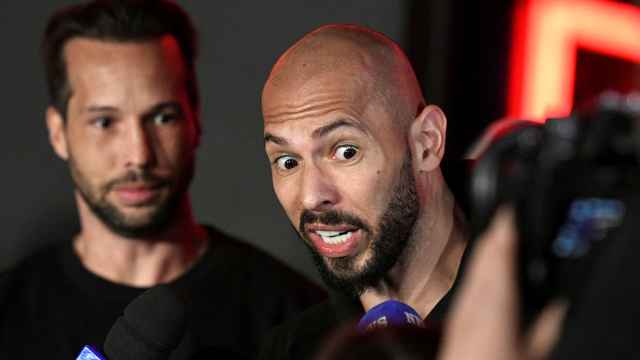
Russia has become a haven for a number of such figures ostracized in the West. Andrew and Tristan Tate, arrested just this week in the United States over charges ranging from rape to human trafficking and controlling prostitution, and previously arrested in Romania in 2022 on similar charges, were welcomed to Russia with a traditional greeting of bread and salt.
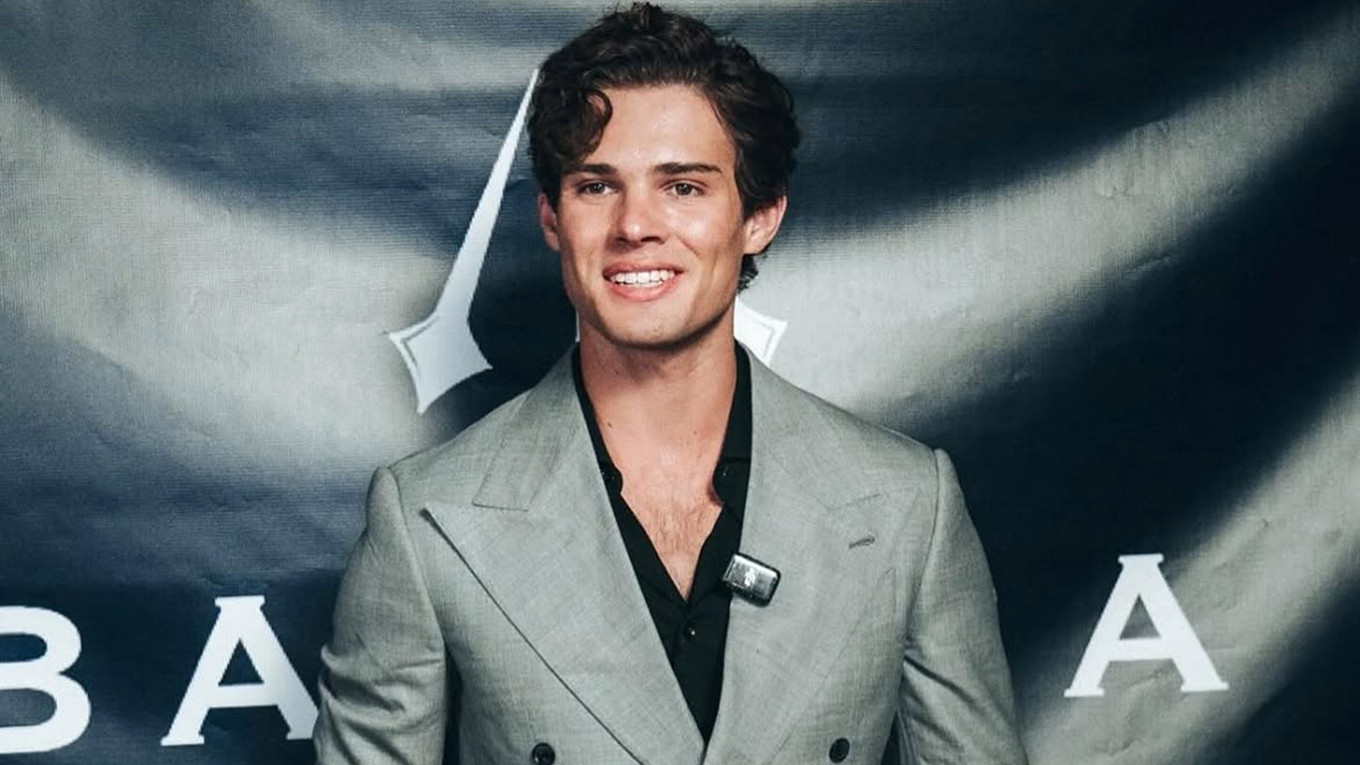
Enter Braden Eric Peters, a 20-year-old better known by his online moniker “Clavicular,” an American livestreamer and influencer who rose to prominence over the past year for his "looksmaxxing" content. In plain English: smashing his face with a hammer to stimulate bone growth and injecting himself with substances to alter his appearance.
In keeping with other Western passport bros, “Clav” — as his fans call him — announced plans to visit Russia as part of his “geomaxxing” world tour. When asked by Piers Morgan about the morals of visiting a country engaged in an illegal invasion of its neighbor and whether he’d consider meeting President Vladimir Putin, Peters’ responses proved that all he cared about was online clout.
And clout, he has. His exploits have taken on an almost mythical quality, drawing almost 2.5 million followers across different platforms, though that audience includes those who tune in just to check whether the town jester is still alive, not just his devoted fans.
Perhaps unsurprisingly for a man who made his name through hypermasculinity, Peters stands accused of fraud, battery and sexual assault, including allegedly injecting a plaintiff with a supposed fat-burning substance that may have contained methamphetamine during a livestream.
After getting a nose job (one that landed poorly even with his own fans), Clavicular traveled in late June to the French capital for Paris Fashion Week, where he thought the local women would fall at his feet. Alas, the effortlessly chic Parisiennes he tried to chat up (in English) had no idea who he was and were unimpressed by his preening and entitlement, leaving Peters to his social media tantrums.
Clavicular then appeared to embark on a spiritual journey to Israel, an interesting choice of destination for a man who went viral for singing Kanye West’s “Heil Hitler.” The trip featured his usual degeneracy and produced little of value for anyone. Israelis gave him a lukewarm reception at best, while his audience learned far less about the country than about Tel Aviv's clubbing scene. Along the way, he managed to get an active-duty IDF soldier fired and reportedly asked about being paid to post pro-Israel content. Clavicular cut the trip short due to local pressure, but not before announcing his next destination: "Russia's actually gonna be probably a pretty mog [cool] place if I could wind up getting my ass over there."
Given the disasters one man can inflict and what we just witnessed in Israel, the announcement sets the scene for a rather sad sequel. Here is someone who is, in many ways, still a child: raised with little parental supervision and few discernible values beyond the raw and primal — money, sex and self-improvement. His audience tunes in precisely for the display of those things and Russia, a supposed land of traditional values, will be more than happy to provide the set.
Clavicular falls neatly in line with the rest of his redpilled kin; men who, often while facing accusations of one sex crime or another, fly to Russia, where an à la carte experience offers escape from accountability and an unlimited supply of attention from attractive women.
The Kremlin has stopped pretending this pipeline is accidental. A 2024 presidential decree created a fast-track residency scheme for Westerners fleeing "destructive neoliberal ideology," with no need for a language test or history exam, just the right grievances. Expect, then, a less sophisticated Tucker Carlson gawking at a Moscow grocery store, marveling at prices only cheap to a foreigner — a useful idiot foreigner.
Part of the problem is that the streamer fundamentally misunderstands women — which is unsurprising for a 20-year-old who has never been in a long-term, loving relationship. The stereotype of the "easy" eastern European woman is a product of the collapse of the U.S.S.R., when women seeking work in the West were tricked into sex trafficking. Times have changed. The cold reception Israeli women gave Clavicular is no different from what awaits him in Russia.
Ironically, the very stereotypes passport bros peddle about Western women (demanding, materialistic, selfish) are precisely the adjectives that will come to define their experience there. Not because anyone is uniquely villainous, but because these men don't read, and never have, about the social and political realities of the places where they hunt for their ideal traditional partner.
The stereotypes simply don't hold water post-2022. Plenty of eastern European, including Russian, influencers openly attest to the high standards they hold their partners to. The ideal partner is an all-round provider expected to fund housing, vacations and beauty procedures. The war has pushed this logic to its darkest conclusion, creating a "Black Widow" economy in which women marry soldiers, or push civilian men to enlist, to collect the state's death payout. In impoverished provinces, those sums equal decades of ordinary wages and a dark path to financial independence. None of this changes the fact that Russia remains a deeply patriarchal society. But whatever ends up on our screens will do little to reflect realities on the ground.
Which raises the question: if ordinary Russian women are unlikely to swoon over a visiting looksmaxxer, who exactly will be filling his streams? Here, the Kremlin has never left things to chance.
In 2021, Radio Free Europe published an investigation into a St. Petersburg medical clinic owned by an insurance group linked to Putin’s daughter, where Russia's ruling elite reportedly received treatment, according to a leaked partial VIP client list. Alongside a Federation Council speaker, a regional governor and Wagner Group mercenaries, the list included young women, supposedly athletes, who were there mostly for gynecological exams rather than sports physicals and often arrived late at night with false names. But what athletes would repeatedly show up to a clinic late at night to verify their virginity, or with minders ensuring no substitutions, and sometimes underage, rarely resembling athletes at all?
None of this is new. The honeypot has been a staple of Kremlin espionage since the Soviet era and hasn’t gone anywhere. Former United States Marine Corps intelligence officer turned pro-Moscow mouthpiece Scott Ritter met his own wife while she served as his guide and translator in the U.S.S.R., a relationship he said the FBI probed over concerns she was a KGB spy.
It isn't hard, then, to guess what a Clavicular trip will be used for. His audience consists largely of young, insecure men who, by virtue of following him at all, already hold a fairly dim view of women. They are exactly the demographic the Kremlin machine is best equipped to exploit with a supply of suddenly interested women who might just happen to bring up "traditional values" and the war in Ukraine between livestream segments. Substantively, the trip will offer nothing, because Clavicular has nothing to offer — but he may be the easiest jester Russia has ever been handed.
He has already shown he will shill for money, having openly shown curiosity about being paid to post pro-Israel content; there is no reason to expect Moscow will get a different version of him. Peters may be a relatively new face online (and not just because of the surgery) but it would be a mistake to assume that’s where his influence will stay. He was invited to hobnob with journalists and politicians at the White House Correspondents Dinner. The broader manosphere, especially Nick Fuentes and Andrew Tate, have well-established connections with key figures in the Trump administration. Having livestreamed with both men, Clavicular may be about to graduate from a danger to young men's self-image into a vector for political propaganda.
So what is to be done? On one level, the honest answer is nothing. The best response to any spectacle engineered for attention is to starve it. We already know what this trip will look like and every outraged reaction clip will only feed the algorithm it lives on.
But ignoring the show should not mean ignoring the mechanism behind it. Clavicular holds an unusual grip on his audience, where millions of young men have tied their sense of masculinity, self-worth and "ascension" to sex god status to his person.
That is precisely the kind of parasocial leverage the Kremlin knows how to manipulate. This audience will not be moved by appeals to human rights or territorial integrity and, uncomfortably, we are badly equipped to offer a counter-message in a language they actually speak. Worse, given how openly Clavicular has entertained accepting payment to promote certain views, it is fair to ask whether deals are already being discussed in the background, arrangements that would turn a jester's vacation into a propaganda contract.
In the end, though, jesters are meant to be jesters. Whether the trip produces anything of value, or happens at all, remains to be seen. But if it does go through, we should be clear-eyed about the outcome: Russia will gain a useful idiot, one fluent in the language of a generation the West has not yet learned to reach. And we have no real means to combat that — yet.

A Message from The Moscow Times:
Dear readers,
We are facing unprecedented challenges. Russia's Prosecutor General's Office has designated The Moscow Times as an "undesirable" organization, criminalizing our work and putting our staff at risk of prosecution. This follows our earlier unjust labeling as a "foreign agent."
These actions are direct attempts to silence independent journalism in Russia. The authorities claim our work "discredits the decisions of the Russian leadership." We see things differently: we strive to provide accurate, unbiased reporting on Russia.
We, the journalists of The Moscow Times, refuse to be silenced. But to continue our work, we need your help.
Your support, no matter how small, makes a world of difference. If you can, please support us monthly starting from just $2. It's quick to set up, and every contribution makes a significant impact.
By supporting The Moscow Times, you're defending open, independent journalism in the face of repression. Thank you for standing with us.

Remind me later.